Songdo for Biotech, Pangyo for IT...Sejong Adds Smart City Features to Its Administrative Base
- Input
- 2026-11-17 09:25:10
- Updated
- 2026-11-17 09:25:10
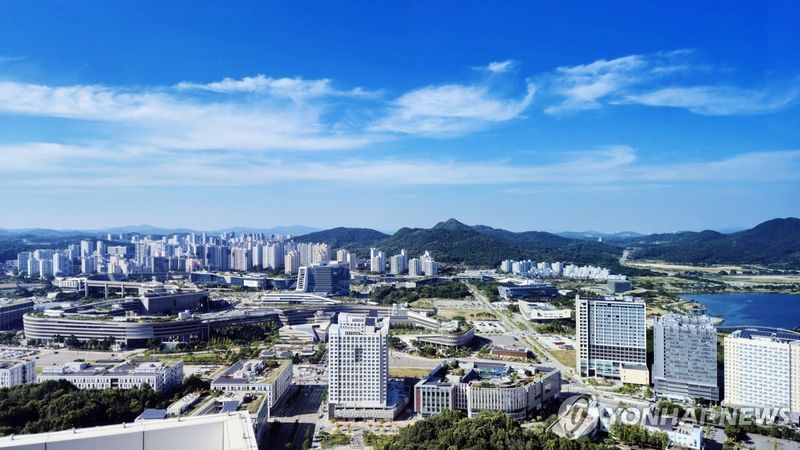
According to industry sources on the 17th, Songdo International City has continued to expand both its biopharmaceutical production facilities and its international business infrastructure. As of 2024, its annual biopharmaceutical production capacity was about 1.16 million liters, exceeding San Francisco’s 340,000 liters and Singapore’s 210,000 liters.
Incheon’s biotech production and exports rose by 118.9% and 135.2%, respectively, over the past four years. Incheon accounts for 78.9% of the country’s biotech exports. Songdo International City is home to 15 international organizations, including the Green Climate Fund (GCF) Secretariat, while Incheon Global Campus hosts five foreign universities, including SUNY Korea and George Mason University.
Of the 367 foreign-invested companies in the Incheon Free Economic Zone, 290—or 79%—are in Songdo International City. Their combined sales amount to 34.1263 trillion won.
Pangyo continues to build a concentration of IT-focused companies and workers. According to Gyeonggi Province’s 2025 Pangyo Techno Valley survey, Pangyo 1 and 2 are home to 1,780 companies and 83,465 employees, with the number of employees up about 6% from the previous year. IT accounts for 61.5% of the businesses, and the average age of employees is 37.9. Pangyo 3, which is receiving an investment of 1.7 trillion won, is also being developed with completion targeted for 2029.
Sejong City is adding smart-city functions to its administrative-city infrastructure. District 5-1, selected as a national pilot city in 2018, covers about 2,744,000 square meters. Development is underway to integrate transport, housing, healthcare, education and energy services. Sejong Smart City is responsible for the project.
The urban plan also incorporates spaces needed to operate the services. Plans call for robot routes linking underground integrated delivery facilities to residential buildings, and for transportation and parking information to be managed centrally using AI. Residents will access the services through a unified app.
The relocation of government agencies and investment in industrial facilities are also planned. Starting in 2027, the government will relocate 44 entities, including central administrative agencies, and 9,929 civil servants to Sejong City in phases. Samsung Electro-Mechanics has finalized an expansion of its semiconductor package substrate production facilities, with the new line scheduled to begin mass production in September 2028.
Over the approximately four years since July 2022, seven of the country’s 17 provinces and municipalities recorded a net inflow of people from the MZ generation. Sejong City also recorded a net inflow of 6,059.
This month, BS Hanyang will begin offering Sejong Smart City L Sujain, the first residential complex to be supplied in the leading district of the national pilot city. The complex consists of 2,191 apartments and 125 officetel units.
An industry official said, “In cities with clearly defined specialized functions, jobs and population move together, allowing housing demand to develop steadily,” and added, “With government ministry relocations, investment in advanced industries and smart-city development all underway at the same time in Sejong City, District 5-1 will be the first place to see the city’s transformation.”
[email protected] Choi Ga-young Reporter