Air Traffic to Halt for 35 Minutes During CSAT English Listening Test... Schedules Adjusted for 130 Flights
- Input
- 2026-11-17 11:00:00
- Updated
- 2026-11-17 11:00:01
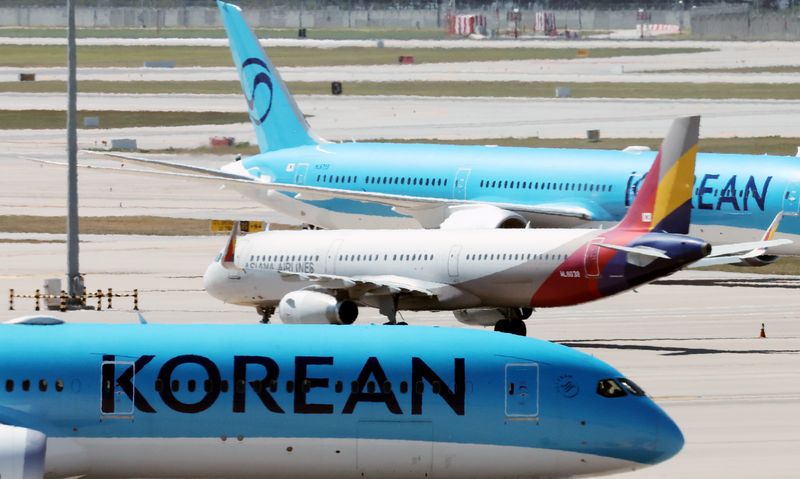
[Financial News] Air traffic nationwide will come to a halt for 35 minutes on the afternoon of the 19th, when the CSAT English listening test is held.
According to the Ministry of Land, Infrastructure and Transport (MOLIT) on the 17th, aircraft takeoffs and landings at airports nationwide will be suspended from 1:05 p.m. to 1:40 p.m. on the 19th, during the English listening test for the 2027 College Scholastic Ability Test (CSAT). Only aircraft responding to emergencies or urgent situations will be allowed to take off. Aircraft already in the air will have to hold at an altitude of more than 3 km above the ground. The measure is intended to reduce aircraft noise that could disrupt the listening test.
To minimize disruptions to flight operations, MOLIT will implement air traffic flow management, adjusting in advance the departure and arrival times of flights scheduled during that period. Airlines will notify passengers of the revised times in advance. MOLIT’s Air Traffic Headquarters plans to maintain coordination with air traffic control agencies, Korea Airports Corporation, Incheon International Airport Corporation, airlines and others to ensure the restrictions are implemented smoothly.
The number of flights subject to schedule adjustments varies from year to year. For the 2025 CSAT, the schedules of 156 flights were adjusted (58 international and 98 domestic); for last year’s 2026 CSAT, schedules for 140 flights were adjusted (65 international and 75 domestic). This year, the total has fallen to 130 flights. However, the number of international flights has risen by more than 20 in three years, to 81, while domestic flights have fallen to 49, roughly half.
Drone enforcement has also been tightened. Drones may not be flown during the restricted period, even if prior flight approval has been obtained. The Korea Transportation Safety Authority will send individual text notifications to licensed drone pilots and those with flight approval. It will also post a notice of the flight ban on the Drone One-Stop Civil Complaint Service. This year’s CSAT is the first since penalties were increased. Following an amendment to the Aviation Safety Act, anyone who flies a drone without approval in a no-fly zone has been subject, since September 17, to up to one year in prison or a fine of up to 10 million won. Previously, the maximum penalty was an administrative fine of 3 million won.
Jeong Chae-gyo, MOLIT’s director general for aviation policy, said, “We will thoroughly implement the necessary measures, including restricting aircraft operations, so that students can focus on the English listening test in a stable environment,” and added, “We ask passengers using flights during that period to check the revised departure and arrival times in advance through notices from their airlines.”
[email protected] Jeong Gyeong-su Reporter