EU Adds Online Retail CEO of Korean Descent, 'Russia's Richest Woman,' to Sanctions List
- Input
- 2026-11-17 08:03:25
- Updated
- 2026-11-17 08:03:25
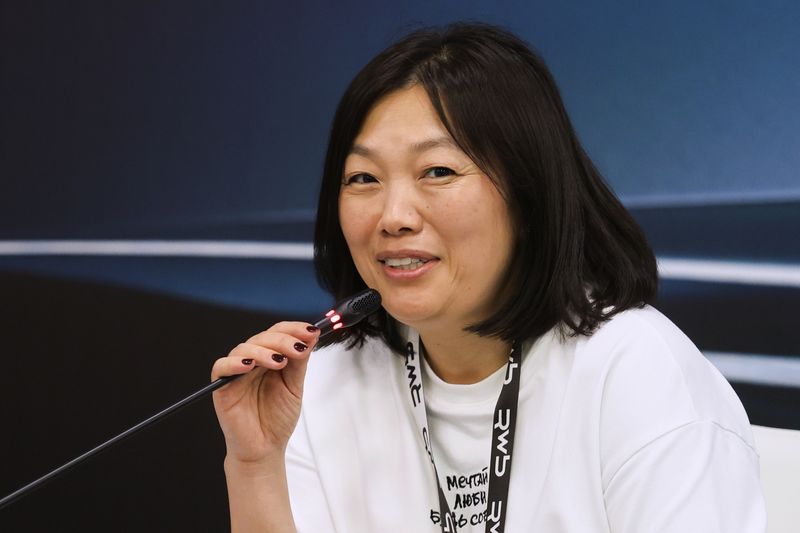
[Financial News] The European Union (EU) has added Tatyana Kim, an ethnic Korean who founded Wildberries, Russia's largest e-commerce company, and is considered the country's richest woman, to its sanctions list targeting Russia.
On the 16th (local time), European media outlets, including Deutsche Welle (DW), reported that the EU had announced additional sanctions targeting individuals and companies supporting Russia's invasion of Ukraine and had included CEO Kim among those sanctioned.
Under the measures, Kim's assets within the EU will be frozen in full, and she will be barred from entering EU member states and conducting financial transactions within the bloc.
Born into an ethnic Korean family in Grozny, Chechen Republic, CEO Kim is a remarkable entrepreneur who founded and built up Wildberries, dubbed the 'Russian Amazon.' Her estimated net worth is $8.1 billion (about 11 trillion won).
EU authorities explained the decision to sanction Kim by saying, "Wildberries is not only one of Russia's largest taxpayers, but also serves as a de facto supply chain for the Russian military by brokering sales of military goods and dual-use items." They went on to emphasize in a statement, "CEO Kim materially and financially supports Russia's military-industrial complex and reaps enormous profits from it."
Earlier, Ukraine's Armed Forces had also added a Wildberries logistics warehouse in mainland Russia to their list of military targets this summer. At the time, Ukraine criticized Wildberries for supporting Russia's illegal war of aggression by distributing military supplies—including night-vision goggles, ammunition pouches and bulletproof helmets—alongside ordinary clothing, cosmetics and electronics.
In response, CEO Kim argued that "the items our company sells are no different from those of other global online retailers, such as Amazon in the United States and Alibaba Group in China." The Kremlin, too, has repeatedly denied allegations that Wildberries is involved in the war effort. Immediately after the sanctions were announced, Wildberries issued a statement dismissing their impact: "We have no assets in the EU and do not conduct business there, so there will be no impact whatsoever on the company's operations."
The EU's sweeping sanctions package also targets about 50 banks and organizations that facilitate oil exports, around 100 businesspeople and propagandists, and major pro-Russian hacking groups. Companies based in China, Oman, Seychelles and the United Arab Emirates (UAE) were also added to the list for their links to crude oil sales by Russia's so-called 'shadow fleet,' a tanker fleet used to evade sanctions.
Since Russia's full-scale invasion of Ukraine in February 2022, the EU has imposed more than 20 rounds of sanctions, tightening pressure on thousands of individuals and companies. It plans to announce an even broader additional sanctions package by the end of the year.
[email protected] Yoon Jae-joon Reporter