Ahead of U.S.-China-Russia and Korea-Japan Summits, Russian Military Aircraft Make Another Unauthorized KADIZ Entry After a Three-Month Gap
- Input
- 2026-11-17 07:55:48
- Updated
- 2026-11-17 08:21:49

An air defense identification zone is a boundary that countries designate unilaterally to identify military aircraft approaching their airspace early and respond to them; it is distinct from national airspace, over which sovereignty applies under international law. It is international practice to submit flight plans in advance and notify the country of entry points and other details before entering another country’s air defense identification zone. Russia, however, argues that KADIZ, established by South Korea, has no basis in international law and repeatedly enters without authorization, refusing to recognize South Korea’s control over the zone.■ Around 430 Chinese and 60 Russian Entries in Five Years... Evolving Into ‘Joint China-Russia Strategic Patrols’Unauthorized entries into KADIZ by Chinese and Russian military aircraft have become a regular means of “gray-zone pressure” in recent years. According to data submitted to the National Assembly by the Ministry of National Defense and the Air Force, Chinese military aircraft entered KADIZ around 80 times in 2017 and around 140 times in 2018. In the five years from 2020 to 2024 alone, they made around 430 entries in total, an annual average of around 80 to 90. Russian military aircraft also entered and left KADIZ without prior notice around 60 times over the same five-year period, an annual average of around 10.
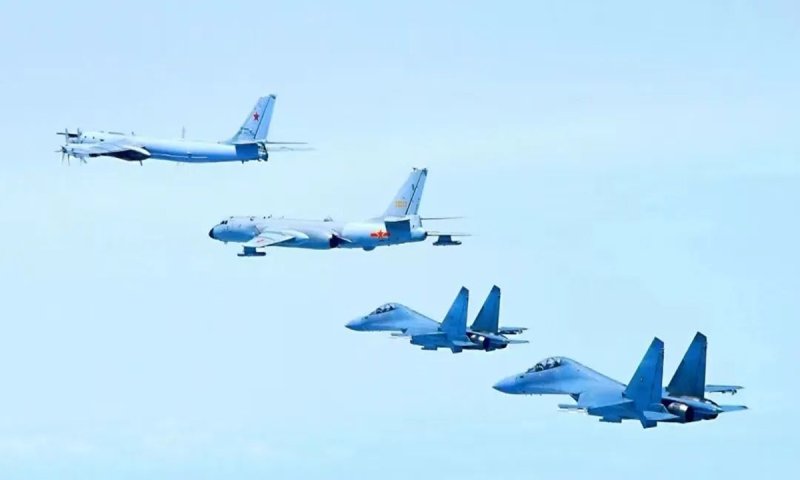
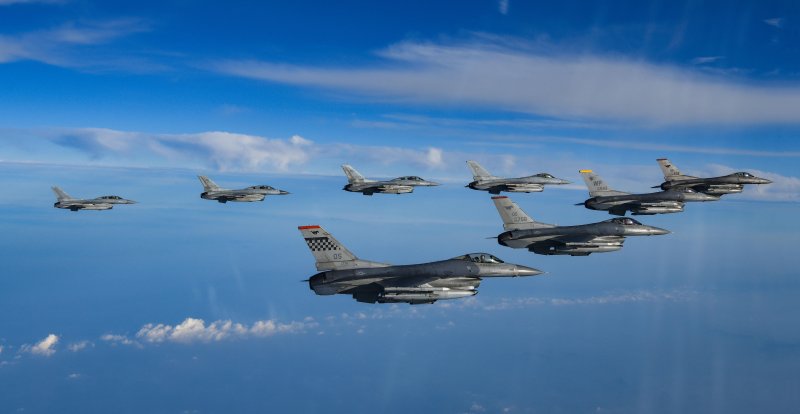
In particular, since 2019 the two countries have widened their operational range by conducting “joint air strategic patrols” once or twice a year, deploying strategic bombers, fighter jets and aerial refueling aircraft, among other assets, to cross the South Sea and East Sea KADIZ simultaneously. This year, too, around 10 military aircraft from the two countries that took part in a joint China-Russia air exercise on June 27 entered the East Sea and South Sea KADIZ in succession, prompting South Korean, U.S. and Japanese air forces to respond simultaneously. At last month's parliamentary audit, however, the South Korean military sparked controversy when it refused for the first time to submit data on the number of KADIZ entries by Chinese, Russian and Japanese military aircraft—a figure it had previously disclosed—citing “the need to prevent the exposure of surveillance capabilities and protect operational activities.”■ Show of Force Amid U.S.-China-Russia Talks and Closer North Korea-Russia Ties; Need to Expand Surveillance and Response AssetsThe prevailing view among military officials and observers is that the Russian aircraft’s dawn flight was a multifaceted show of force aimed at major diplomatic events, including the U.S.-China-Russia summit in Shenzhen, China, on the 19th, and the Korea-Japan summit. Russian President Vladimir Putin recently met with Cho Yong-won, a secretary of North Korea’s Workers’ Party of Korea (WPK) who had visited Russia, and emphasized the “military brotherhood between the two countries,” showcasing closer military ties between North Korea and Russia. Analysts say the flight was also intended to test the detection and response readiness of the South Korea-U.S.-Japan joint air defense network over the East Sea.
Meanwhile, Japan’s Joint Staff Office did not announce any separate emergency scramble related to the Russian military aircraft’s flight over the East Sea early that morning. According to monthly statistics released by Japan’s Ministry of Defense on the 13th, however, the Air Self-Defense Force scrambled 135 times in total last month alone in response to activity in the airspace around the East Sea and the Pacific by Chinese military aircraft and drones (94 times) and Russian reconnaissance aircraft. Both South Korea and Japan face constant pressure from Chinese and Russian military aircraft in Northeast Asian airspace.
Experts said that as Chinese and Russian entries into KADIZ have become an established operational pattern rather than one-off incidents, South Korea needs to continue strengthening its long-endurance and surveillance capabilities, including long-range surveillance radars and aerial refueling aircraft, alongside resolute tactical responses.
[email protected] Lee Jong-yoon Reporter