“The CSAT Shouldn’t Be Held This Way” ... Star Exam-Prep Instructors Issue One Warning After Another
- Input
- 2026-11-17 07:13:39
- Updated
- 2026-11-17 07:13:39
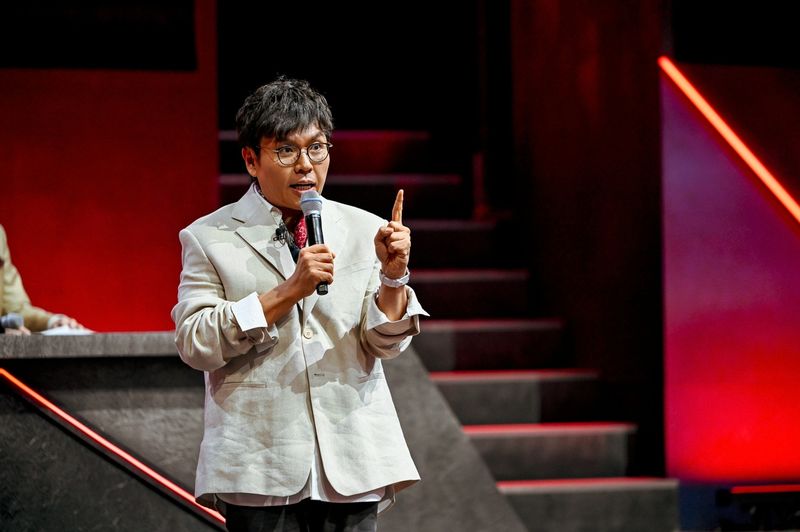
[Financial News] With concerns about AI-assisted cheating growing just three days before the 2027 College Scholastic Ability Test (CSAT), prominent exam-prep instructors have called for postponing the test and strengthening supervision. Math instructor Jeong Seung-je, English instructor Cho Jeong-sik and Korean instructor Yoo Dae-jong, among others, said practical measures are needed to prevent cheating using advanced electronic devices.
On the 16th, math instructor Jeong Seung-je said on social media that measures to prevent AI-assisted cheating should be put in place before the CSAT is held.
He acknowledged that “postponing the CSAT could disrupt test-takers, parents and the college admissions schedule,” but stressed that “ensuring fairness in the exam comes first.”
Jeong Seung-je voiced concern that “when a single question can determine whether someone gets into college, even the possibility of cheating through the misuse of advanced technology can make test-takers who have studied diligently feel anxious.”
As measures to prevent cheating, he proposed that “security screening at the level of airport security, restrictions on bringing electronic devices into test sites, and blocking wireless signals inside them should be considered.” He said the supervision system should be improved so test-takers can sit the exam with confidence.
English instructor Cho Jeong-sik also called for postponing the CSAT on social media that day.
Cho Jeong-sik asked, “If the test is held without strong measures in place to prevent cheating using AI, can anyone trust that the results are fair?” He added that “the inadequacy of the current supervision system has already been exposed,” and argued that postponement should be considered until safeguards against cheating are in place, even if changes to the schedule burden test-takers.
Cho Jeong-sik also said that trust in the results must not be undermined, given that the CSAT is an important exam that symbolizes fairness in society.
Korean instructor Yoo Dae-jong also called on education authorities to put measures in place to prevent cheating.
On social media that day, Yoo Dae-jong stressed, “I have taught students all along that the CSAT is a fair exam,” adding that “preventing cheating is essential to maintaining trust in the education system.”
Yoo Dae-jong said, “Even when educational disparities exist because of economic and social circumstances, the CSAT at least should be an exam where individuals can change their results through their own efforts.”
He went on to argue, “If effective measures cannot be put in place to prevent cheating using AI glasses, miniature cameras and other devices, the CSAT should be postponed.”
Social studies instructor Lee Ji-young raised the possibility that advances in AI could fundamentally change how university applicants are evaluated.
In a lecture titled “On the Future of Education Transformed by Artificial Intelligence,” posted to a YouTube channel on the 8th, Lee Ji-young explained that the possibility of cheating through the misuse of AI devices was heightening test-takers’ anxiety.
She expressed particular concern that even students wearing ordinary glasses could be suspected of cheating or required to undergo additional checks.
She said, “The current system, in which university admission is determined by multiple-choice test scores, could change faster than expected as AI technology advances.”
Exam-prep YouTuber Mimiminu (real name: Kim Min-woo) also called on education authorities to consider postponing the CSAT and to put specific measures in place to prevent cheating.
In a livestream on the 15th and a video released on the 16th, Mimiminu expressed concern that not only smart glasses but also various miniature electronic devices could be used for cheating. He argued that specific inspection procedures should be announced promptly to ease test-takers’ anxiety. He also teared up while describing their concerns.
The controversy began when the top scorer on the 63rd Tax Accountant Examination admitted to cheating with a miniature camera, a smartphone and generative AI.
After it became known that cheating had not been detected in that exam, concerns arose that similar methods could also be used on the CSAT. The difficulty of detecting miniature electronic devices through visual checks by supervisors alone has become a particular point of controversy.
Meanwhile, the Ministry of Education says the CSAT will proceed as scheduled. Education Minister Choi Kyo-jin said at a plenary meeting of the National Assembly Education Committee on the 16th that postponement would cause even greater disruption for test-takers and the admissions schedule as a whole, making it difficult to consider delaying the exam.
Education authorities have decided to strengthen supervision at test sites. They plan to check test-takers’ glasses during every session, assign dedicated staff to each site and respond firmly if cheating is detected. They are also considering additional technical measures, including blocking public Wi-Fi.
Teachers’ organizations called for more specialized personnel and detection equipment, saying there are limits to distinguishing smart glasses and miniature electronic devices by sight alone. They also said measures are needed to address the possibility that supervising teachers could face complaints or lawsuits while checking test-takers suspected of cheating.
[email protected] Han Seung-gon Reporter