“447.3 Billion Won in Purchases Despite Jensen Huang’s Departure”... Korean Retail Investors Bet on NVIDIA
- Input
- 2026-11-17 06:32:13
- Updated
- 2026-11-17 06:32:13
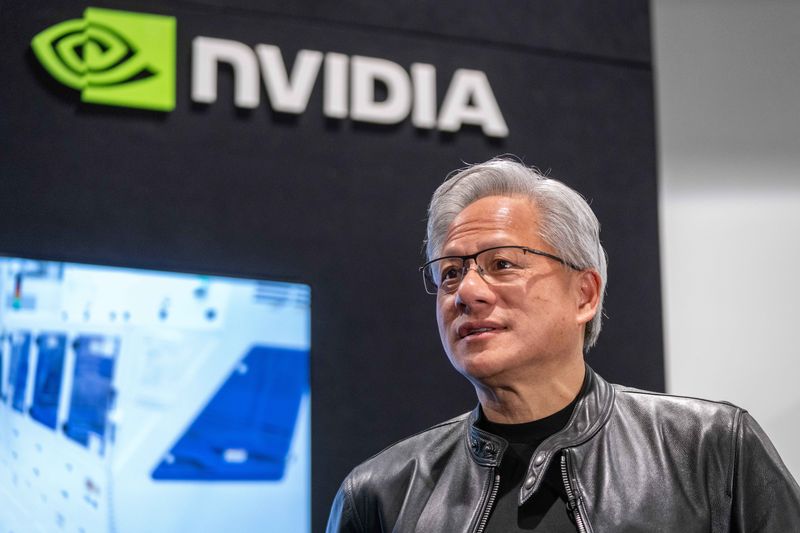
[Financial News] NVIDIA founder Jensen Huang stepped down as chief executive officer (CEO) amid an affair scandal and national security-related allegations, and the company’s stock plunged. But Korean retail investors did the opposite, buying up NVIDIA shares. Their net purchases in just one week came close to 450 billion won.
According to the Korea Securities Depository’s securities information portal (SEIBro) on the 17th, NVIDIA was the foreign stock that Korean retail investors bought the most on a net basis during the week from the 6th to the 13th, with net purchases totaling $334.34 million (about 447.3 billion won).
The second- and third-largest net purchases were both leveraged exchange-traded funds (ETFs) that track three times the daily returns of their underlying indexes.
ProShares UltraPro QQQ (TQQQ), which tracks three times the daily returns of the Nasdaq-100 Index, recorded net purchases of $274.65 million. Direxion Daily Semiconductor Bull 3X (SOXL), which tracks three times the daily returns of a U.S. semiconductor-related index, saw net purchases of $234.90 million.
Some retail investors appear to have taken advantage of the dip after NVIDIA’s stock plunged. There was also a move to invest in leveraged products in anticipation of a rebound in technology stocks and the semiconductor sector.
On the 12th (local time), NVIDIA announced that former CEO Huang would resign immediately as president, CEO and a member of the board. The move came 33 years after he co-founded the company in 1993.
NVIDIA’s board appointed Chief Financial Officer (CFO) Colette Kress as interim CEO and named Harvey Jones, former CEO of Synopsys, as the inaugural chair of the board. The company plans to select a permanent CEO after considering both internal and external candidates.
Former CEO Huang was reportedly previously said to have acknowledged an affair with a woman suspected of having ties to Chinese intelligence agencies. Further allegations later emerged of an extramarital relationship with a senior NVIDIA executive, and the board launched an independent investigation into the matter. The company, however, has not officially disclosed the specific reason for Huang’s resignation.
The stock also fell sharply. NVIDIA shares dropped 10.3% in a week, from $181.60 on the 5th to $162.85 on the 13th. That was about 33% below the intraday high of $243.37 recorded on the 6th of last month.
On the 12th, when former CEO Huang’s resignation was announced, the stock at one point plunged by more than 13% in after-hours trading.
Analysts believe the founder’s abrupt departure could weigh on investor sentiment and management stability at NVIDIA in the short term. There are concerns that uncertainty could persist even after the management change if the independent investigation and U.S. congressional demands to preserve and verify documents continue.
Given the organizational structure, in which decision-making authority was concentrated in former CEO Huang, analysts say it will be important to see how steadily the successor can continue the existing business strategy and support policies for major customers.
There are concerns that changes to the terms of NVIDIA’s investments and financial support for AI infrastructure companies could also affect some cloud providers’ fundraising and semiconductor purchasing plans.
Some also point out that it may be difficult to assess the company’s value until the successor management’s business direction becomes clearer, given the significant role former CEO Huang played in NVIDIA’s growth strategy.
Others, however, argue that NVIDIA’s competitiveness does not depend solely on former CEO Huang. They say its integrated platform, which combines an AI chip’s performance with a software ecosystem and networking technology, is a key factor in maintaining its lead over competitors.
Coverage of the possibility of former CEO Huang’s return has also shifted.
According to The Wall Street Journal (WSJ) on the 17th, NVIDIA’s board is not considering reappointing former CEO Huang. Some investors and employees have called for his return, but the board is reportedly conducting a search for a successor through an external recruitment firm.
For the time being, interim CEO Kress is expected to lead the company while working to appoint a permanent successor and stabilize its management.
The market is also focused on NVIDIA’s fiscal 2027 third-quarter results (August–October), scheduled for release on the 17th (local time). The earnings briefing will be the first official one held since former CEO Huang’s resignation.
According to Business Insider, Wall Street expects NVIDIA’s third-quarter revenue to be about $108.8 billion to $109.1 billion, with earnings per share of around $2.47. Revenue from the data center division is forecast at about $101.85 billion.
Analysts believe that, in addition to the results, the company’s future revenue outlook, demand for AI chips and fulfillment of contracts with major customers will be important factors in assessing its prospects.
Particular attention is on what interim CEO Kress will say at the earnings briefing about continuity in the existing business strategy and the timeline for appointing a permanent CEO.
[email protected] Han Seung-gon Reporter