Fed Chair Warsh: "AI Is Important to the Economy but Could Disappoint"
- Input
- 2026-11-17 02:43:46
- Updated
- 2026-11-17 02:43:46
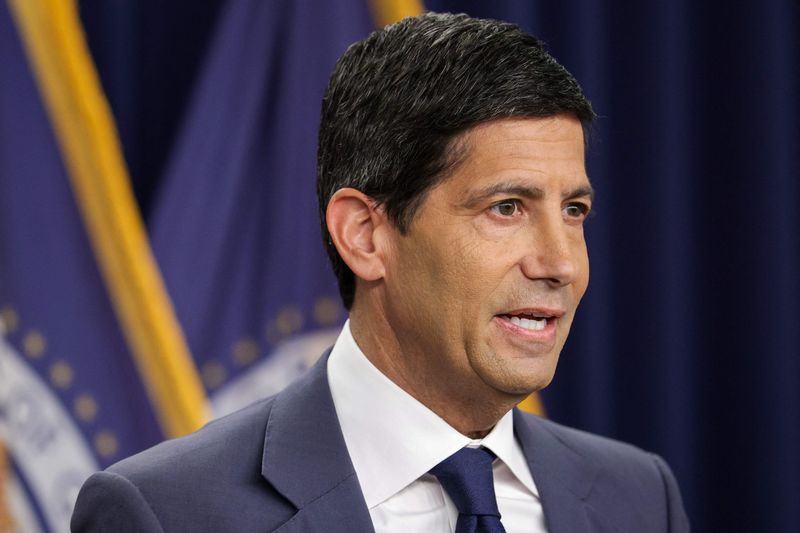
Federal Reserve Chair Kevin Warsh said on the 16th (local time) that artificial intelligence (AI) could have a significant economic impact but might also fall short of expectations and lead to large-scale job losses.
According to CNBC, Warsh made the remarks in San Francisco, California, home to Silicon Valley, a hub for AI.
Warsh said AI “will have a significant impact on the economy” and that “this has important implications for monetary policy along the way.” He made the remarks after saying, “I’m not here to predict the future, but I want to emphasize that I cannot be neutral when it comes to American leadership in this era of both challenges and possibilities.”
In his speech, Warsh used the term “superintelligence,” advocated by President Donald Trump, instead of AI. He said this superintelligence is “a completely new engine for economic life and society” and noted that it has already begun to transform economic activity.
Since becoming chair, he has consistently emphasized the importance of AI, its potential to boost productivity, and its significance as a source of disinflation (a decline in inflation) for the economy.
In his speech on the 16th, Warsh said he hoped AI could boost productivity, helping maintain near-full employment while accelerating the pace at which real economic growth rises beyond its current range. However, he added that this could also be followed by “less productive” outcomes, such as layoffs caused by automation that could increase unemployment.
Warsh also outlined a third scenario in which AI could literally be “disappointing.”
He warned that “after large-scale capital investment and a stock market rally, returns could disappoint and stock valuations could fall,” adding that “in that case, the economy could slow and unemployment could rise more noticeably.” He went on to say, “The economy would recover in the meantime, but there would be no productivity gains.”
On November 30, 2022, OpenAI released ChatGPT-3.5, ushering in the full-fledged AI era, and markets surged on expectations of an economic revolution driven by productivity gains. Recently, however, some related stocks have been hit as awareness has spread that those expectations may have been excessive.
Warnings have also been mounting from the International Monetary Fund (IMF) and others that the AI investment frenzy is concentrating money in one place, leaving other industries struggling to secure funding and increasing risks across the economy.
[email protected] Song Kyung-jae Reporter