Tritium Detected Above Safety Limit in Seawater at Hanul Nuclear Power Plant...NSSC Launches Investigation Into Cause
- Input
- 2026-11-17 00:03:00
- Updated
- 2026-11-17 00:03:00
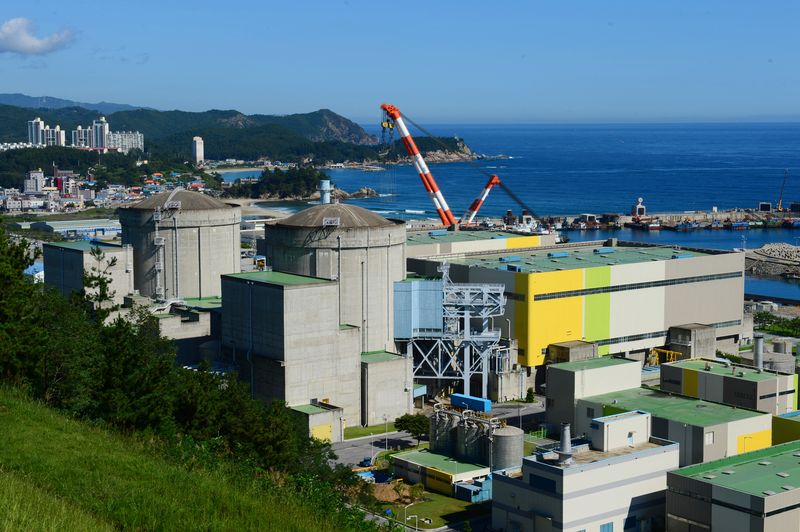
[Financial News] Located in Uljin County, North Gyeongsang Province, the Hanul Nuclear Power Headquarters’ Unit 2 site has seen tritium levels exceeding the safety limit detected in groundwater and surrounding seawater, prompting the Nuclear Safety and Security Commission (NSSC) to launch an urgent investigation. After signs emerged that radioactive material had leaked from a location outside the usual monitoring and discharge routes, authorities halted the operation of the relevant equipment.
According to the NSSC and Korea Hydro & Nuclear Power (KHNP) on the 16th, tritium at a concentration of 30,000 Bq (becquerels) per liter was detected on the 13th in one groundwater monitoring well inside the Hanul Nuclear Power Plant site. This is close to KHNP’s own management threshold of 40,000 Bq per liter.
After receiving this report, the NSSC ordered the immediate shutdown of the relevant equipment, where radioactive material may have leaked, and called for seawater analysis to determine whether any had been released into the external environment. The analysis detected tritium at 117 Bq per liter in seawater at the plant’s intake, exceeding the NSSC’s marine radioactivity safety limit of 100 Bq per liter. This level is close to the tritium concentration of 179 Bq per liter that Japan’s Tokyo Electric Power Company (TEPCO) recently measured in intake seawater during the discharge of Fukushima contaminated water.
The NSSC currently suspects that a pipe carrying treated radioactive material from the liquid radioactive waste system for discharge into the sea was damaged, allowing some effluent to flow out. It has dispatched an investigation team comprising experts from the Korea Institute of Nuclear Safety (KINS) to the site to determine the precise circumstances and cause of the incident.
However, no radioactive material is believed to have leaked outside the site. KHNP reported to the NSSC at around 1 p.m. that no tritium had been detected in seawater samples collected outside the plant’s restricted area. No other radioactive materials, including gamma-emitting nuclides, were detected, and no abnormalities have been found in other groundwater monitoring wells or radiation monitors on the site.
A KHNP official said, “Radiation levels in the surrounding environment are currently at safe levels consistent with normal conditions, and we have substantially stepped up analysis of groundwater and nearby seawater samples,” adding, “We will transparently disclose the findings once the detailed cause has been determined and draw up measures to prevent a recurrence.”
[email protected] Park Ji-hyun Reporter