IMF: “The Global Economy Is Standing on One Leg—AI; If It Wobbles, There Is Risk”
- Input
- 2026-11-16 22:47:17
- Updated
- 2026-11-16 22:47:17
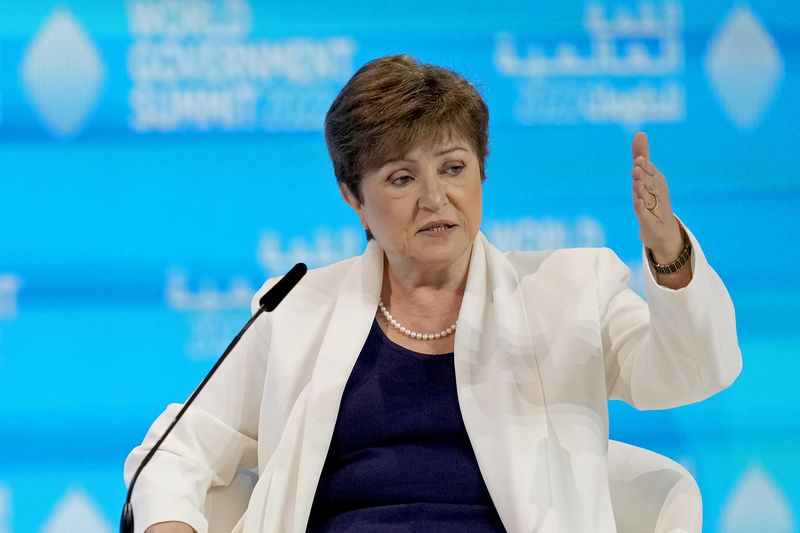
According to CNBC on the 16th (local time), IMF Managing Director Kristalina Georgieva warned in an interview held on the sidelines of the Association of Southeast Asian Nations (ASEAN) summit in the Philippines, “The global economy is standing on one leg—AI,” adding, “If this leg wobbles, it could cause problems for financial stability.” She noted that “global economic growth could weaken if investor confidence suddenly drops and funds leave the AI sector.”
Georgieva singled out the rapid growth in circular financing among AI companies as a risk factor. Circular financing is a structure in which money invested by a company in an AI firm flows back to the investing company through purchases of the firm’s semiconductors or services.
According to the IMF, circular financing among AI companies has topped $1 trillion by a small margin, with about two-thirds of that amount funded through debt. Georgieva expressed concern, saying, “The scale itself is not enormous, but it is growing quickly.”
NVIDIA is at the center of this circular financing structure. Its market capitalization has shed at least $1 trillion over the past month. After a scandal over former CEO Jensen Huang’s extramarital affair and allegations of Chinese espionage surfaced, selling spread across global AI-related stocks, raising questions about NVIDIA’s role as a key source of funding for AI infrastructure investment.
In a recent report, UBS analyst Tim Arcuri estimated that at least $50 billion could exit the AI industry if NVIDIA scales back its financial support. The analysis is that, with rising interest rates pushing up companies’ borrowing costs, a reduction in NVIDIA’s investment could place considerable strain on AI companies’ ability to raise funds.
The IMF’s warning came as AI investment had become a key driver of global economic growth.
Last October, the IMF raised its forecast for global economic growth this year to 3.1%. The decision reflected its view that, although energy supply disruptions caused by the war in Iran are weighing on the global economy, AI-related investment is supporting trade and economic growth.
According to economic research firm Capital Economics, up to 80% of the recent increase in global exports is estimated to have been concentrated in AI-related goods. The IMF expects about 40% of the global workforce to be affected by AI.
The problem is that market expectations for the AI industry are running far ahead of its actual performance.
“We tend to get ahead of ourselves,” Georgieva said, noting that some degree of correction is needed as corporate valuations rise rapidly.
In an analysis released last October, the IMF warned that U.S. stocks could fall by as much as 20% this year if the AI industry fails to meet the market’s high expectations. It estimated that, in the worst-case scenario, global economic output in 2028 could also be 1.1% below the previous forecast.
[email protected] Reporter Lee Byung-cheol Reporter