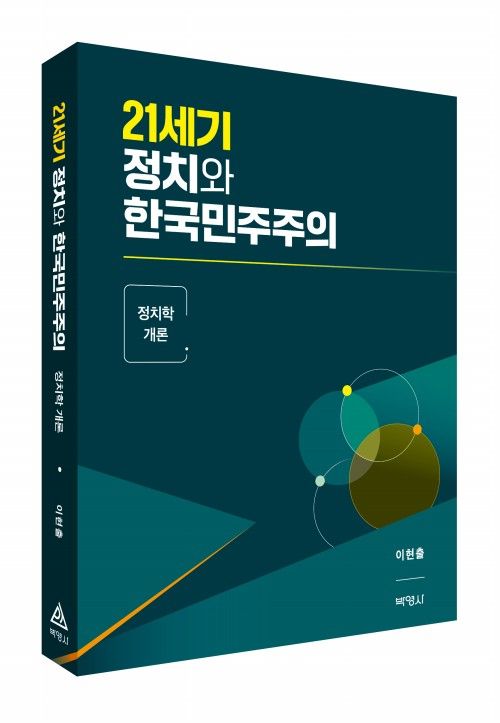
In an Age of Polarization, Seeking Rules for Living Together... Lee Hyun-chul’s 21st-Century Politics and Korean Democracy [New Book]
- Input
- 2026-11-17 08:30:00
- Updated
- 2026-11-17 08:30:01
The question of how far the authority entrusted by citizens can be exercised is also an issue. After distinguishing between the state and the government, the book explains why the Constitution sets limits on power and distributes authority among multiple institutions. In a presidential system, a president elected separately from the legislature leads the executive branch for a fixed term. In a parliamentary system, the cabinet’s continued existence depends on the confidence of the legislature.
The chapter on Korean democracy looks back at the achievements of democratization and the impact of division on Korean politics. The June Democratic Uprising of 1987 is a prominent example of citizens’ demands leading to institutional change. A constitutional amendment that year restored direct presidential elections and abolished the president’s power to dissolve the National Assembly.■ Demographic, Climate and Technological Change and Political ResponsibilityThe author notes that many of the institutions of democracy and the welfare state took root during a period of population and economic growth. As the population declines and society ages, how to share the costs of care and welfare among generations becomes an issue. Maintaining the foundations of daily life, such as transportation and health care, in areas with shrinking populations is another challenge. The book explores a new social contract that takes into account the differing circumstances of regions and generations.
In responding to the climate crisis, decisions must be made about how to distribute the costs of cutting greenhouse gas emissions among households, businesses and regions. If action is delayed, its effects will also reach future generations. This is where the author’s idea of coexistence expands beyond citizens who can participate in policy decisions today to include future generations.
The chapter on digital transformation examines how online platforms affect civic debate and the formation of public opinion. For example, if a government agency uses artificial intelligence (AI) to determine who receives assistance, who will explain the basis for the decision and be held responsible for its outcome? Where can citizens who are denied assistance appeal?
The final chapter sets out five principles of a “democracy of coexistence,” in which people with different interests take part in decision-making and share responsibility for its outcomes. It also discusses how to embed these principles in institutions. 572 pages. 33,000 won.
[email protected] Jang In-seo Reporter