Spend More to Get a Discount, Can't Sell Falling Stocks... Shin Im-cheol’s 'Heuristics' [New Book]
- Input
- 2026-11-17 07:00:00
- Updated
- 2026-11-17 07:00:05
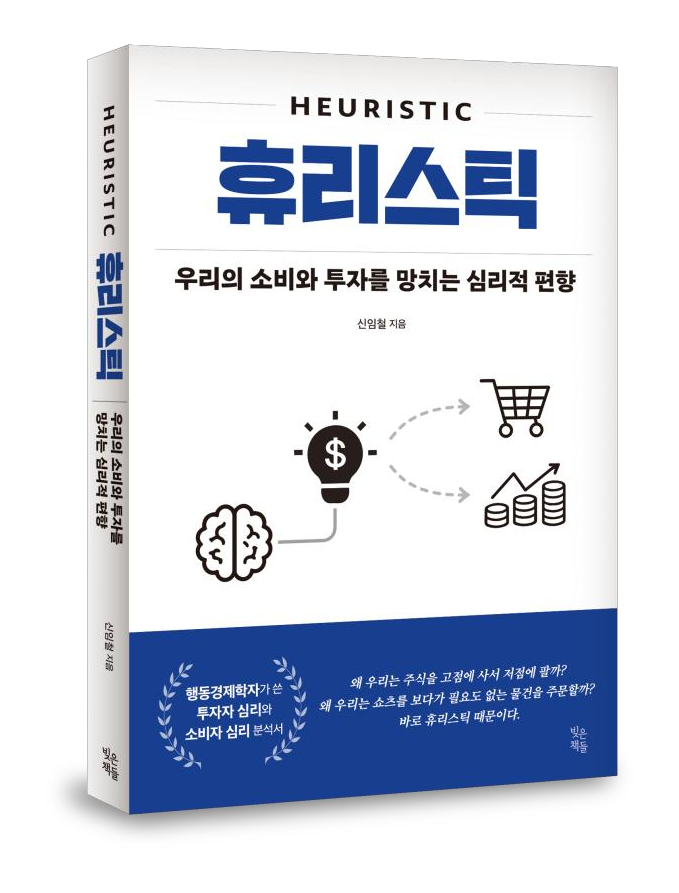
In stock trading, the purchase price serves as the benchmark for determining gains and losses. Investors with unrealized losses delay selling because they think a sale would make the loss final. The tendency to sell stocks at a profit early while holding on to losing stocks for longer is called the “disposition effect.”
The same tendency has appeared in actual trading records. In a paper published in 1998, Terrance Odean analyzed the disposition effect using trading records from 1987 to 1993 for 10,000 accounts at U.S. brokerage firms. On days when stocks were sold, 14.8% of profitable positions were sold, compared with 9.8% of losing positions.■ Cherry-picking information and purpose-specific accountsThe book also examines confirmation bias, which arises when people seek to justify decisions they have already made. After buying a product they like, positive reviews are the first to catch their eye. Paying closer attention to forecasts that a stock they own will rise in an online stock community is much the same. Focusing on information that supports one's choices leaves fewer opportunities to consider a product's drawbacks or the possibility that its stock price could fall.
People scrimp on their hard-earned salaries but readily spend reward points, and boldly reinvest money they have made in stocks. Creating separate accounts in one's mind based on the source or intended use of money is called “mental accounting.”
The author argues that this tendency can help people manage their spending. Giving an account a specific label, such as a child's tuition, retirement savings or a home purchase, makes it harder to withdraw the money for other purposes. The book also describes how to harness the inertia that leads people to put off canceling subscriptions for regular investing. Setting up an automatic transfer or stock purchase once can save the effort of making a new decision each time. 248 pages, 17,000 won.
[email protected] Jang In-seo Reporter