[Editorial] Joint Fact Sheet One Year on: Investment in the U.S. and Security Must Be Balanced
- Input
- 2026-11-16 19:13:59
- Updated
- 2026-11-16 19:13:59
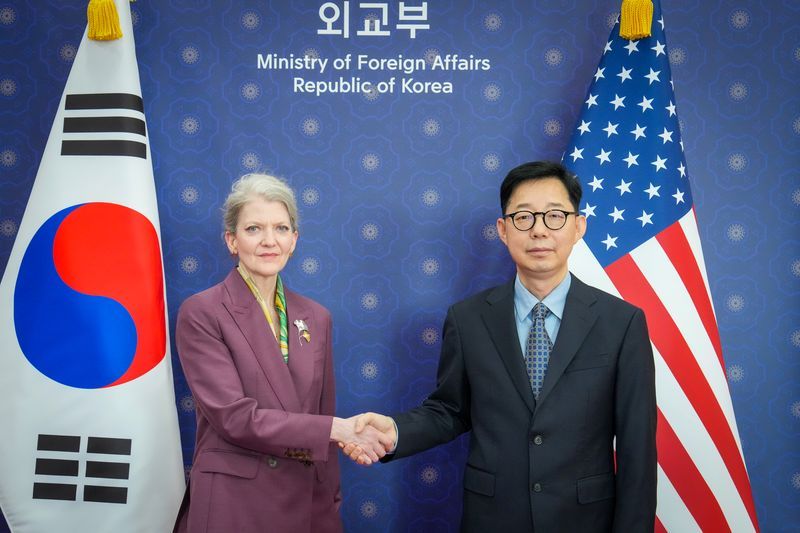
The two countries held their first round of consultations in Seoul on June 2–3 to discuss fuel supplies for the nuclear submarines and revisions to the nuclear cooperation agreement. The problem is that there has been no progress since. The second round, scheduled to take place in Washington, D.C., in July, was postponed once and has yet to be rescheduled. Follow-up talks agreed upon by the two countries’ leaders, who met during the UN General Assembly in New York on September 22, also have not taken place. A government official said on the 30th of last month, “In short, it’s on hold (stalled).”
The changing U.S. political landscape is another factor. In the U.S. midterm elections on the 3rd, the Democrats secured 55 seats in the Senate (including two independents aligned with the party) and 255 seats in the House. Since revisions to the nuclear cooperation agreement and the supply of fuel for the nuclear submarines must go through congressional review, the hurdles could become even higher. That is why former acting U.S. Ambassador to South Korea Joseph Yun predicted in an interview with Voice of America (VOA) on the 7th that “(South Korea’s) nuclear submarines could be put on hold for the next two years.”
Despite these circumstances, preparations for domestic nuclear submarines are moving ahead on their own. On the 6th, the Defense Acquisition Program Promotion Committee approved the basic strategy for pursuing the “Jangbogo N” project. The plan waives a project feasibility study and targets selecting a contractor and signing a contract in the second half of next year. The project cost is estimated at around 28.9 trillion won. There are concerns that if a main contract is signed while fuel supplies and revisions to the agreement remain uncertain, the budget spent could become a sunk cost. The larger the project and the more it bypasses a feasibility study, the more rigorously its fiscal risks should be assessed.
There is also a view that preparations should be made in advance, given the long time it takes to go from construction to operational deployment. That is a point worth heeding amid rising threats, as North Korea has, among other things, released photos of exercises on the 30th of last month in which suicide drones strike Republic of Korea Armed Forces guard posts (GPs) and mock U.S. tanks.
However, nuclear submarines cannot operate without fuel. It is reasonable to continue preparations for design, technology and personnel while aligning large-scale contracts and budget spending with progress in securing fuel and revising the agreement.
There are also concerns that seeking to trade investment for security could heighten tensions with the ally. With tariffs and trade issues at stake, investment in the United States should be made on the basis of each project’s profitability and commercial rationale, and care should be taken not to use it as leverage. However, the asymmetry in which only one side of the Fact Sheet is being implemented must not continue into the new year.
The government should draw up an implementation checklist covering investment in the United States and negotiations on nuclear-submarine fuel and the nuclear cooperation agreement, and review progress regularly with the U.S. side. It should also revisit its diplomatic strategy for dealing with the new faces in the U.S. Congress. The National Assembly should consider making budget spending conditional on progress in securing fuel. Ensuring balanced implementation so that a hard-won agreement does not remain only on paper is the government’s top priority now.