‘AI Cheating’ Sparks Alarm, but National Exam Budgets Are Falling... [Fallout From AI Cheating on Exams]
- Input
- 2026-11-16 18:45:22
- Updated
- 2026-11-16 18:45:22
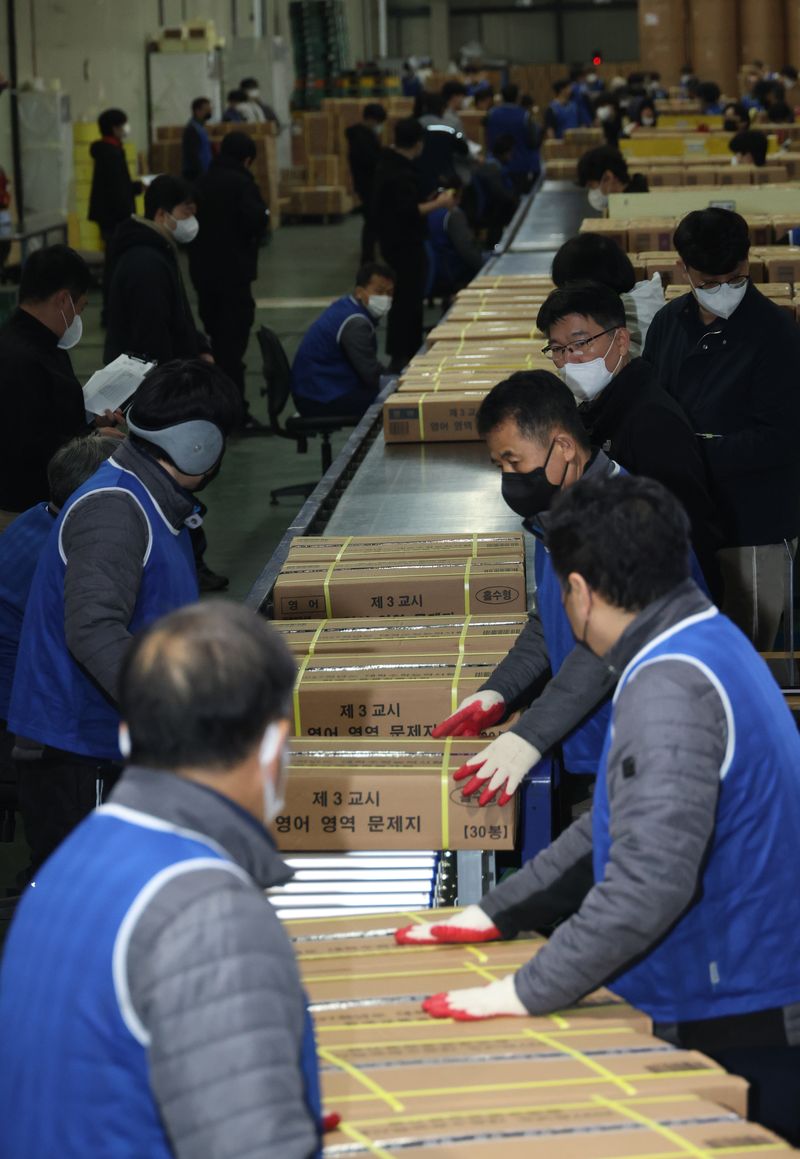
The gap between the registration fee for the tax accountant exam, where cheating using artificial intelligence (AI) was recently uncovered, and the fee for the TOEFL exam is well over 200,000 won. The tax accountant exam costs just 60,000 won for both the first and second rounds combined. This is why the Human Resources Development Service of Korea, which administers most national qualification exams, including the tax accountant exam, has little choice but to struggle to respond to unexpected circumstances at test sites.
Moreover, next year’s budget for qualification testing is set to be cut. This is creating a woefully inadequate testing environment compared with the prestige of national qualification exams, which can be highly important to individuals.
As cheating using advanced devices such as AI becomes more widespread, the need to increase the number of professional proctors and expand detection equipment is growing, but funding is standing in the way.
An analysis by Financial News on the 16th of the 2027 government budget proposal found that the Human Resources Development Service of Korea’s budget for national qualification testing will fall from 138.544 billion won this year to 124.236 billion won next year, a decrease of 14.308 billion won (10.3%).
This is the lowest figure in five years, since 2022. Fees for national qualification exams have also been effectively frozen since 2014, making it difficult to secure the funding needed to administer the tests, according to reports.
The Human Resources Development Service of Korea is a public institution responsible for administering and managing around 530 national technical and professional qualification exams each year. In most qualification exams, fees have been frozen for more than 10 years, leaving expenditures higher than revenue from test takers.
As budgets decline, cheating using AI is on the rise. According to the Ministry of Employment and Labor, the Human Resources Development Service of Korea has caught a total of 12 cases of cheating involving AI devices this year. The cases were detected in national qualification exams, including the Fire Protection System Engineer and Information Processing Engineer exams, and the total is double the number of cases known to date.
Above all, technological advances have made it difficult to identify advanced devices such as smart glasses and miniature cameras through visual inspections alone.
Proctors worry that if they fail to catch cheating using AI, they will be held responsible for lax supervision; yet if they closely monitor test takers, they could end up facing a barrage of complaints. As a result, calls from the front lines are growing to assign additional dedicated proctors and expand the use of metal detectors and radio-frequency detectors.
A shortage of test venues has also been cited as a limitation. According to last year’s figures on the administration of national technical qualification exams by type of test venue, the Human Resources Development Service of Korea accommodated 1,717,731 test takers at its own facilities, just 51% of the total. The rest are accommodated at borrowed venues, including middle and high schools.
Even under these circumstances, the budget for the Human Resources Development Service of Korea’s qualification testing program is caught in the same vicious cycle each year: “cheating and test-related incidents occur → negative assessments in fiscal program evaluations → budget cuts.” The agency is bound to face limits in responding to the various challenges that arise at test sites.
An industry source pointed out, “Proctor pay is also woefully inadequate compared with that for private-sector exams,” adding, “Introducing equipment to screen out cheating or training proctors is out of the question.”
[email protected] Kim Jun-hyeok Reporter