Ulsan Metropolitan Office of Education Chooses 'Dialogue' Over Punishment; Nation's First 'Relationship-Recovery Deliberation Program' Bears Fruit
- Input
- 2026-11-16 18:23:14
- Updated
- 2026-11-16 18:23:14
【Financial News, Ulsan = Reporter Choi Soo-sang】 The Ulsan Metropolitan Office of Education, led by Superintendent Jo Yong-sik, is achieving notable results by strengthening educational approaches that prioritize restoring relationships among students rather than handling school-violence cases mainly through disciplinary action and punishment.
According to the Ulsan Metropolitan Office of Education on the 16th, its “relationship-recovery deliberation program,” launched last September for elementary school students in grades 1–3 as the first of its kind nationwide, has borne fruit: one year after its introduction, 100% of cases submitted to the program were resolved independently by school principals.
The program sets aside a deliberation period of about two weeks before a request for review by the School Violence Countermeasures Committee is made. With help from a victim-recovery support group, it holds “restorative dialogue sessions” to help students who were victimized and those who perpetrated the violence resolve conflicts through conversation.
According to operational results compiled by the Ministry of Education as of the end of August, 11 of the 19 cases of school violence reported among elementary school students in grades 1–3 in Ulsan from March through August this year (57.9%) applied for the deliberation program. All 11 cases were resolved independently by school principals without being referred to the committee, giving the program a 100% resolution rate—13.3 percentage points above the national average of 86.7%.
Behind these results is “restorative life education,” which has emphasized dialogue and communication among members of the educational community. In Ulsan as a whole, the rate of school-violence cases resolved independently by school principals rose from 55.3% in 2024 to 58.6% in 2025, while the number of school-violence reports this year also fell by about 16% compared with last year.
The Ulsan Metropolitan Office of Education is further expanding on-the-ground support for early conflict resolution. It increased the number of “restorative schools,” which work to restore trust within the educational community, from 20 last year to 38 this year. It is also piloting “dialogue sessions to support the restoration of educational capacity,” in which parents, teachers and school police officers work together to find tailored support for students struggling to adjust to school because of their repeated acts of school violence.
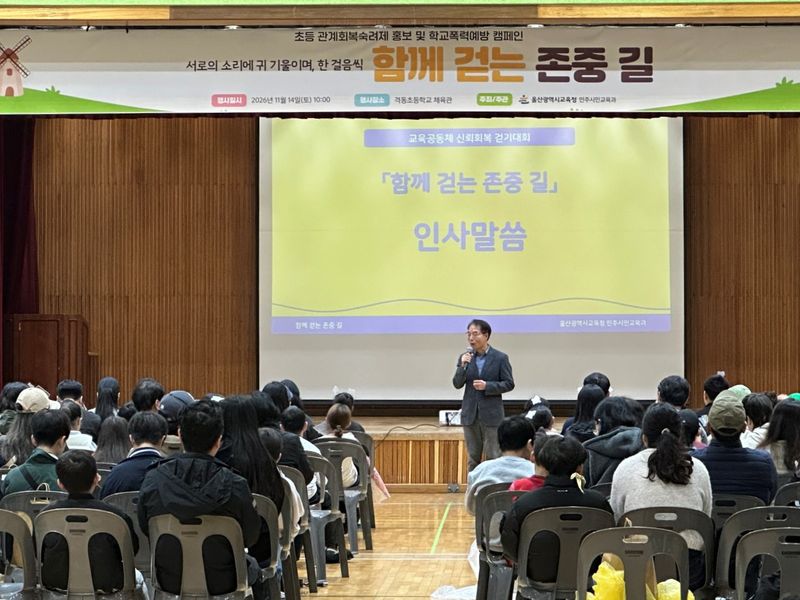
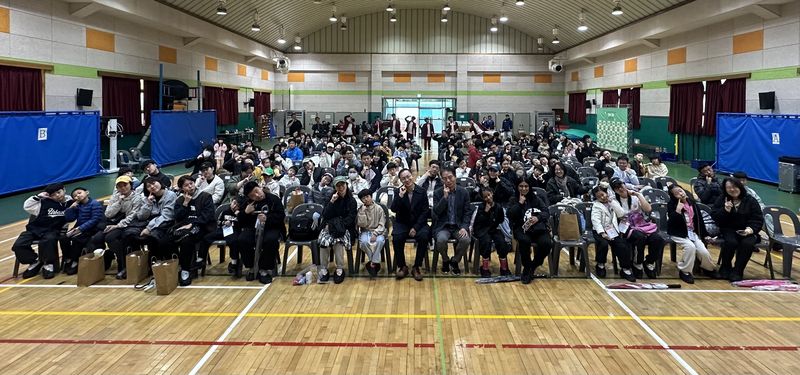
Prevention efforts involving families and local communities are also active. On the 14th, the education office held an experiential event called “Walking Together on the Path of Respect” at Gyeokdong Elementary School and around Ulsan Grand Park, with 200 elementary school students in grades 1–3 and their guardians taking part, to foster a culture of respect and consideration in everyday life.
A Ulsan Metropolitan Office of Education official said, “With school violence, it is more important than anything to go beyond handling individual cases and help students understand one another and restore healthy relationships.” The official added, “We will continue to support the relationship-recovery deliberation program so that it takes root in schools and to spread a restorative school culture.”
[email protected] Choi Soo-sang Reporter