Kim Dae-jung, Gwangju Special City Superintendent of Education: “Jeonnam-Gwangju Will Unite Its Strengths in 2027 and Make a Strong Leap Forward as a K-Education Special City”
- Input
- 2026-11-16 17:47:42
- Updated
- 2026-11-16 17:47:42
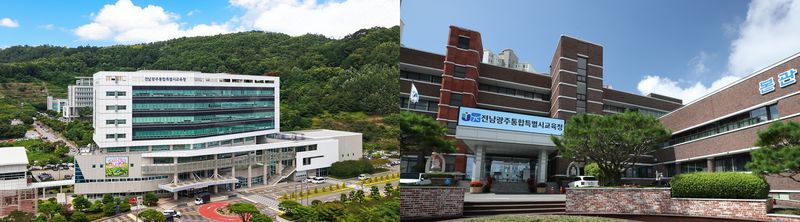
【Financial News, Jeonnam-Gwangju = Staff Reporter Hwang Tae-jong】The Jeonnam Gwangju Metropolitan City Office of Education (Gwangju Special City Office of Education) will make a strong leap forward as “a new standard for education in Korea, a K-Education Special City” in 2027 by realizing five key education indicators and three priority tasks.
Kim Dae-jung, superintendent of education for Jeonnam-Gwangju Integrated Special City (Gwangju Special City), made the remarks on the 16th in an address on education policy for the 2027 budget proposal at the plenary chamber of the Jeonnam-Gwangju Integrated City Council (Gwangju Special City Council).
The five key education indicators are: classrooms where everyone’s potential can blossom; open schools that embrace challenges and build connections; nurturing talent that embraces the region and changes the world; civic education that fosters empathy and action; and educational autonomy in partnership with those on the ground. The three priority tasks to realize these goals are strengthening protections for educational activities; cultivating talent in artificial intelligence (AI) and semiconductors; and transforming the assessment system.
Superintendent Kim Dae-jung emphasized, “The integration of educational administration in Jeonnam-Gwangju is not a completed outcome but the starting point for creating a new future,” adding, “Students must always be at the center of change, and classrooms must be the starting and ending points of education policy.”
According to the Gwangju Special City Office of Education, the 2027 budget proposal submitted to the city council totals 7.7418 trillion won. Revenue from central government transfers stands at 6.719 trillion won, an increase of 501.5 billion won from this year, while revenue from local governments and other transfers totals 856.7 billion won, up 90.8 billion won.
Own-source and other revenue amounts to 135.1 billion won, down 700 million won. To ensure the smooth implementation of education policy programs, the office used 31 billion won in transfers from funds, including the Integrated Fiscal Stabilization Fund, as a revenue source.
To meet the five key education indicators, the expenditure budget allocates 835.4 billion won to classrooms where everyone’s potential can blossom; 212 billion won to open schools that embrace challenges and build connections; 373.3 billion won to nurturing talent that embraces the region and changes the world; 53.8 billion won to civic education that fosters empathy and action; and 1.6562 trillion won to educational autonomy in partnership with those on the ground. A total of 4.6111 trillion won was allocated to inflexible expenditures, including personnel costs for education staff and operating expenses for administrative bodies.
Superintendent Kim said, “I will do my utmost to ensure that the results of integration go beyond administrative efficiency and lead to students’ learning and growth, changes in schools, and regional development,” and urged, “Please show your interest and support so that education in Jeonnam-Gwangju can establish itself as a new model for the future of education in Korea.”
Meanwhile, the Gwangju Special City Office of Education set this year’s first supplementary budget at 8.1116 trillion won, an increase of 1.1 billion won from the original budget of 8.1105 trillion won.
[email protected] Hwang Tae-jong Reporter