“Friday Night, Waiting Two Hours to Eat Amberjack” ... Why Are Koreans So Passionate About Seasonal Food? [Koreans in Line 1]
- Input
- 2026-11-20 18:00:00
- Updated
- 2026-11-20 18:00:03
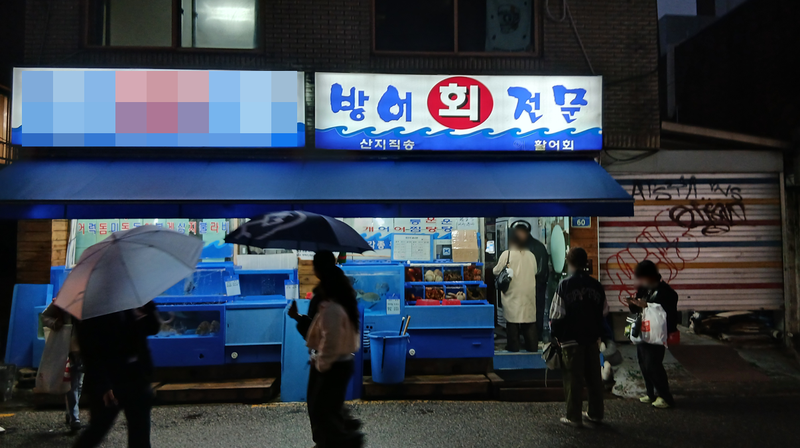
At around 3 p.m. the next day, the 15th, people began gathering outside a sashimi restaurant in Seogyo-dong, Mapo District, Seoul. They registered for a spot on the waitlist through the kiosk outside the restaurant and then left. Despite the awkward lull between lunch and dinner, 27 parties were waiting. People kept arriving at the restaurant, which even had a separate waiting room.
Every winter, searches for restaurants serving large Japanese amberjack soar, and lines form outside famous sashimi restaurants. Social media is flooded with “amberjack proof shots.” With people lining up before opening and reservation platforms emerging, amberjack’s popularity is soaring. Simply succeeding in visiting and eating at a well-known sashimi restaurant that has become famous by word of mouth as an “amberjack spot” can itself become content.
“You can’t miss its brief winter season” ... Consumer psychology shaped by seasonal food
Why does Japanese amberjack become a “must-eat food right now” every winter? And why does consumption concentrate on foods like amberjack, which are widely believed to taste best when eaten in season?
There’s even a saying that “not even dogs eat Japanese amberjack in summer,” and it is a quintessential winter sashimi fish. From December to February, before spawning, Japanese amberjack builds up a layer of fat to withstand the cold water, maximizing its rich flavor and texture. That is why winter amberjack, when its fat content peaks, is considered a delicacy.
Choi, Chul, a professor in the Department of Consumer Economics at Sookmyung Women’s University, explained, “Consumers already have an underlying desire and inclination to try Japanese amberjack when it’s in season.” Choi added, “As living standards have improved compared with the past, people have become more interested in enjoying seasonal foods that others seek out, even if they aren’t going to a fine-dining restaurant.”
Lee Eun-hee, a professor in the Department of Consumer Studies at Inha University, focused on the fact that Japanese amberjack is available for only “one season.” Lee said, “If you say you ate Japanese amberjack in summer, what can you say when someone tells you, ‘That was frozen and then thawed’?” Lee continued, “It means you didn’t miss the brief winter season when Japanese amberjack is caught.” Lee added, “When eaten in season, it’s tasty, fresh, and nutritious.”
From Local Favorite to Nationwide Sensation ... How Social Media Fueled the Crowds
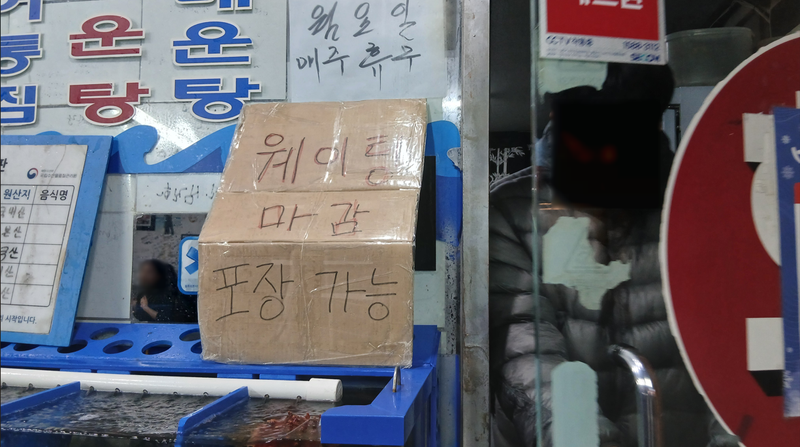
Social media fueled this demand. Person A, in their 30s, said, “Honestly, there’s an atmosphere of ‘if other people try it, I should too,’ so I first tried Japanese amberjack after seeing it on social media.” They added, “I liked it after trying it for the first time, so I find myself going back every year.” Person B, in their 20s, said, “There was an amberjack spot that only local people knew about and quietly frequented, but after word spread on social media, the wait got longer.”
Professor Lee noted, “In the past, only local residents knew which places were good and frequented them. Now that information is shared nationwide and around the world on social media, more people flock to places known for being good.”
Professor Choi also said, “When a place is talked about on social media, even people who weren’t interested become curious and wonder what it tastes like.” Choi observed, “Crowd psychology and the tendency to follow others lead to conformity, and people tend to flock there all at once.” Choi added, “These days, direct experience matters—not just hearing about something or encountering it indirectly.”
The “Self-Efficacy” of Japanese Amberjack Tasted After Waiting in Line
Japanese amberjack tasted after enduring a long line becomes a “great score.” Professor Lee analyzed, “Many people give up because of the long line, but if they succeed, it gives them the satisfaction of securing something that so many people want.” Lee added, “There’s a strong sense of self-efficacy from getting it when demand has exploded, as well as the satisfaction of having experienced it.” Lee explained that this is a kind of “scarcity principle.”
Professor Choi thought a kind of fear of missing out (FOMO) might be at play. Choi said, “Standing in line for a long time doesn’t make you more satisfied.” Choi explained, “People may find waiting tiring and dislike it, but there may also be a tendency to think, ‘I can’t be left out or be an exception here, either.’”
That experience then makes its way back to social media. Professor Lee said, “There’s both a desire to share useful information with others on social media and a desire to show off.” Lee added, “By sharing the information that ‘Japanese amberjack tastes best in winter,’ people also want to show that ‘I know good food and eat only the good stuff.’”
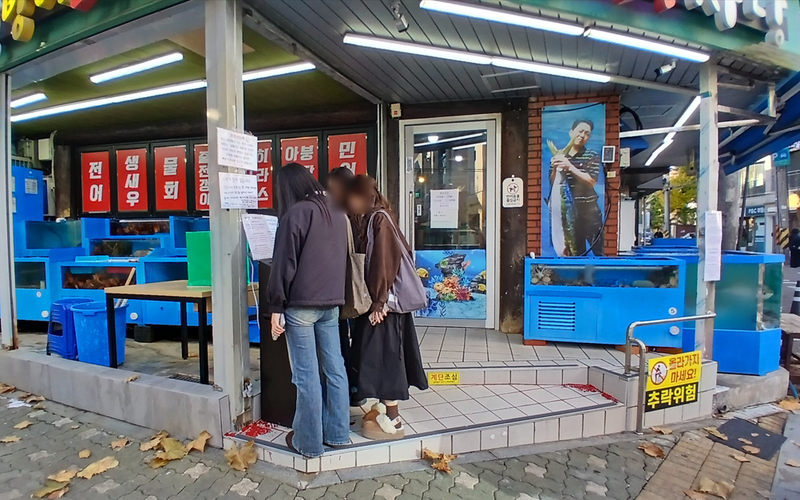
Professor Choi also pointed to the aspect of “relational consumption.” Choi said, “I think it has meaning not only as eating food but also as relational consumption.” Choi added, “When enjoyable interaction with other people is part of it, the pleasure of eating and sharing together grows.”
However, Professor Choi thought few consumers attach great significance to the act of proving they ate something in season. Choi said, “There may be pride in having eaten it in season, but what truly satisfies consumers is the food itself, enjoyed because it tastes good.” Choi added, “It’s not as if they’re eating it just to check off a box and complete an assignment.”
[email protected] Kim Su-yeon, Kim Hee-sun Reporter