“Over 60, It Can Tear Even Without an Injury” ... Beware of Degenerative Meniscal Tears
- Input
- 2026-11-16 17:03:25
- Updated
- 2026-11-16 17:03:25
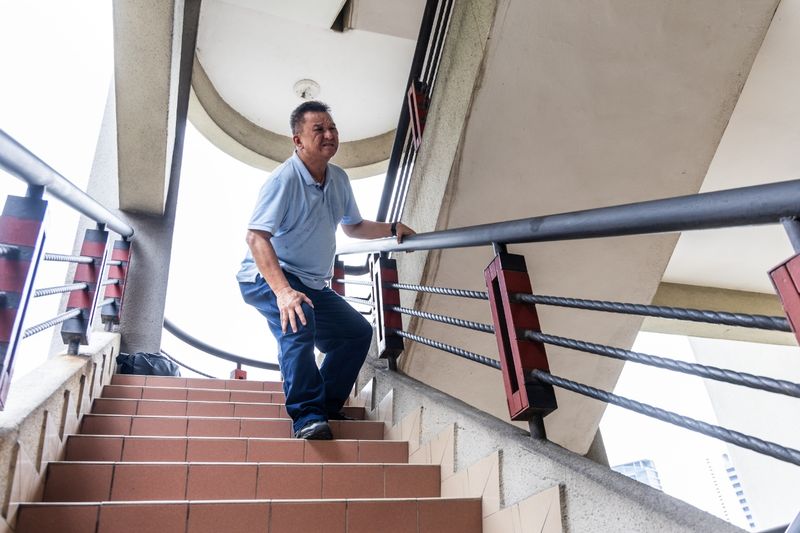
[Financial News] Someone surnamed Im, in their 60s, had consistently looked after their health through walking and exercise. Three months ago, their right knee began giving way whenever they went downstairs. They were fine on level ground. Suspecting arthritis because of their age, they had an MRI, which revealed a different cause.
Im, 62, had experienced weakness in their right knee when descending stairs for about three months, making it difficult to place their foot properly; they also felt pain. Once they had reached the bottom and were walking on level ground, they had no particular discomfort, so at first they thought it would improve with time. But when the symptoms continued, they went to a hospital specializing in knee conditions to find out whether something was wrong with the knee joint.
An X-ray showed signs of narrowing in the knee joint space. The medical team recommended an MRI, suspecting that there might be a problem not only with the joint but also with internal knee structures such as the meniscus. The results showed that the cause of Im’s pain was not degenerative knee arthritis, but meniscal damage caused by degenerative changes.
Over 50, ‘degenerative tears’ can occur without trauma
The meniscus is a crescent-shaped piece of cartilage between the thighbone and shinbone. It absorbs impact on the knee and helps keep the joint stable.
Meniscal injuries are common knee injuries, estimated to occur at a rate of 60 to 70 cases per 100,000 people annually. They are more common in men than in women and usually result from sports injuries among people in their 20s and 30s.
However, ‘degenerative tears’ are common in people aged 50 and older. As people age, meniscal tissue weakens and loses elasticity, so it can tear even without any particular trauma, from everyday movements such as squatting or from repeated micro-injuries. Degenerative tears are often complex, and if left untreated, they can lead to knee osteoarthritis.
Meniscal damage can cause pain when bending the knee or putting weight on it. Discomfort or a feeling of instability is especially likely during movements that put concentrated stress on the knee, such as walking downstairs.
PRP injections reduce pain ... “Get examined if pain on the stairs keeps recurring, even if walking on level ground is fine”
After hearing the specialist’s explanation, Im received an injection of autologous platelet-rich plasma (PRP). PRP treatment involves drawing the patient’s own blood, concentrating the platelets, and injecting the plasma into the injured area. It uses the various growth factors in platelets to help tissue recover.
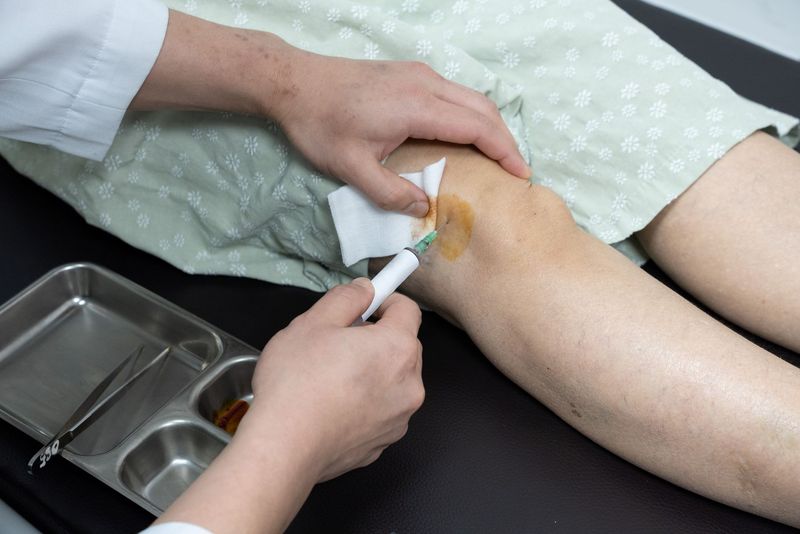
Im said that the pain and weakness they had felt while descending stairs had greatly decreased after treatment, and that they now walk without any particular discomfort.
Research has also reported on the effectiveness of PRP treatment for degenerative meniscal tears. A recent systematic review published in the international journal Arthroscopy, Sports Medicine, and Rehabilitation (ASMAR), published by the Arthroscopy Association of North America (AANA), pooled six clinical studies involving 184 patients who received PRP injections for degenerative meniscal tears. The patients had a mean age of 47.8, and 95.7% had medial meniscal tears.
As a result, four of the five studies that assessed pain found a significant reduction. Knee function scores also improved overall, while return-to-sport rates ranged from 60% to 100% and patient satisfaction from 82% to 100%.
Experts say that, as in this case, knee pain in middle-aged and older adults should not automatically be attributed solely to degenerative arthritis. If someone has no trouble walking on level ground but repeatedly experiences pain or weakness particularly when descending stairs, it may be necessary to check internal knee structures such as the meniscus. X-rays are useful for examining joint space and changes in the bones, but it is difficult to directly identify meniscal damage with them, so a detailed diagnosis using MRI is recommended when necessary.
Jung, Jae Hyun, director of the Joint Center at Yonsei Sarang Hospital and an orthopedic specialist, said, “Knee pain in middle-aged and older adults can have various causes, including meniscal injuries as well as degenerative arthritis,” and explained, “It is especially important to identify the exact cause if symptoms such as weakness in the knee or pain when descending stairs persist.”
Jung added, “Treatment for meniscal injuries varies depending on the extent and location of the damage, degenerative changes, and the condition of the joint, among other factors,” and said, “Treatment options, including PRP injections, should be selected carefully to suit the patient’s condition.”
[email protected] Jeong Myeong-jin, medical correspondent Reporter