Lee and Takaichi to Hold Bilateral Talks in Manila on the 17th... South Korea-Japan Coordination Ahead of U.S.-China-Russia Summit
- Input
- 2026-11-16 17:15:05
- Updated
- 2026-11-16 17:20:22
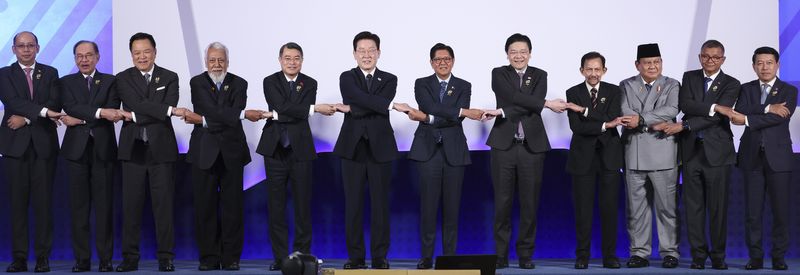
With a summit among the leaders of the U.S., China and Russia expected during the Asia-Pacific Economic Cooperation (APEC) Summit in Shenzhen, China, immediately after the ASEAN summit concludes, concerns have been raised that it must not become a “second Yalta Conference,” where major powers discuss security issues while excluding the parties concerned. Attention is focused on what views the two leaders will exchange on their assessment of the situation and their response. The Yalta Conference refers to the 1945 meeting at which the United States, Britain and the Soviet Union discussed the postwar order following World War II, excluding the parties concerned.
Kim Seong-wan, a spokesperson for the Blue House, said in a press notice on the 16th that President Lee and Prime Minister TAKAICHI would hold a summit in Manila, Philippines, on the 17th. The two leaders are expected to discuss South Korea-Japan relations and regional and international affairs.
Japan is wary that its position could be sidelined as its ally, the United States, adjusts its relations with China and Russia. With diplomatic tensions with China and Russia continuing, Japan appears to be watching closely to see how discussions among the U.S., China and Russia might affect the security order in Northeast Asia.
South Korea is focused on whether the Korean Peninsula issue will be discussed at the summit among the U.S., Chinese and Russian leaders. It has not been disclosed whether the Korean Peninsula issue will be included on the agenda, but there is speculation that U.S. President Donald Trump may ask China and Russia to help restart dialogue between North Korea and the United States. Concerns have been raised that, in the process, denuclearization of North Korea could be pushed down the list of priorities or South Korea’s position might not be adequately reflected. There is also concern that the discussions could move toward effectively accepting North Korea as a nuclear-armed state. The South Korean government has conveyed to the United States and China its position that the summit among the U.S., Chinese and Russian leaders must not become a “second Yalta Conference”—in other words, that the “Korean Peninsula” issue must not be put on the table without South Korea.
South Korea and Japan share an interest in ensuring their security concerns are not sidelined in the process surrounding the summit among the U.S., Chinese and Russian leaders. Attention is therefore focused on whether President Lee and Prime Minister TAKAICHI will assess the impact of discussions among the three countries on regional security and what views they will exchange.
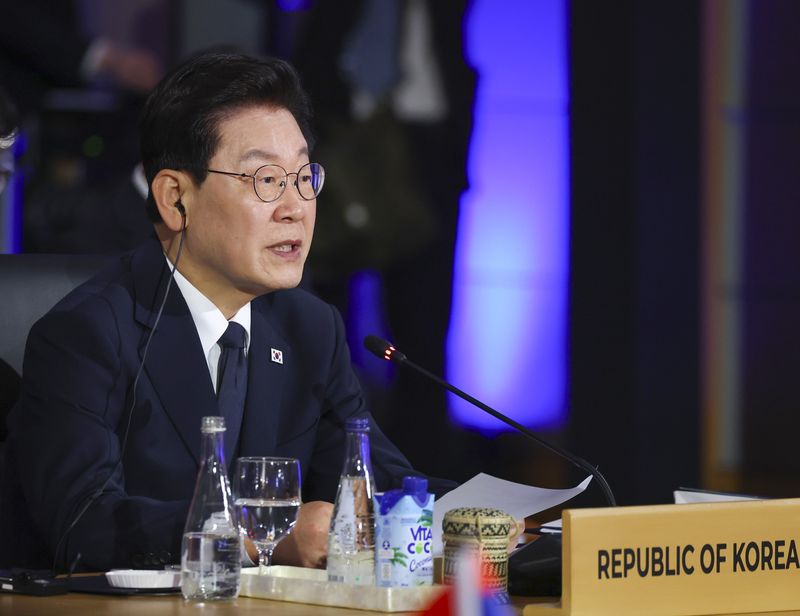
Earlier that day, President Lee arrived in Manila aboard Code One with First Lady Kim Hye-kyung and began a four-day, three-night trip. After the ASEAN summit concludes, he will travel to Shenzhen, China, on the 18th for the APEC Summit.
In his opening remarks at the 27th ASEAN-Republic of Korea Summit in Manila that day, President Lee said talks to improve the Korea-ASEAN Free Trade Agreement (FTA) had also begun, and expressed his goal of ushering in an era of $300 billion in annual trade by proactively responding to changes in the global trade environment.
President Lee first set the $300 billion trade goal at the 26th ASEAN-Republic of Korea Summit in Malaysia last October, which he attended for the first time since taking office. The two sides agreed at last year’s summit to begin talks to improve the FTA, and held the first formal round of negotiations in Seoul this June. The second round, held in Singapore in late September, covered 13 areas, including digital issues, critical minerals, supply chains and intellectual property rights. The negotiations aim to reflect in the agreement changes in the trade environment since the goods agreement took effect in 2007. President Lee also said there had been progress in implementing the “Korea-ASEAN Comprehensive Strategic Partnership (CSP) Vision,” announced last year, including in efforts to counter transnational crime.
President Lee also proposed a “Korea-ASEAN AI Partnership Initiative” and a “Korea-ASEAN Cultural and Creative Industries Initiative.” He said, “The Republic of Korea will take the lead so that everyone can share in the benefits of advances in artificial intelligence (AI), and so that the cultural creativity of ASEAN’s young people can lead to new opportunities.”
Whether a meeting between the South Korean and U.S. leaders will take place during this trip is also drawing interest. U.S. President Donald Trump is also scheduled to attend the ASEAN and APEC summits, raising the possibility that he and President Lee will meet face to face for the first time since the U.S. midterm elections.
[email protected] Seong Seok-woo, Choi Jong-geun Reporter