Winter Norovirus Spread Raises Concern... Seoul to Step Up Infection Prevention at Daycare Centers and Kindergartens
- Input
- 2026-11-16 15:45:38
- Updated
- 2026-11-16 15:45:38
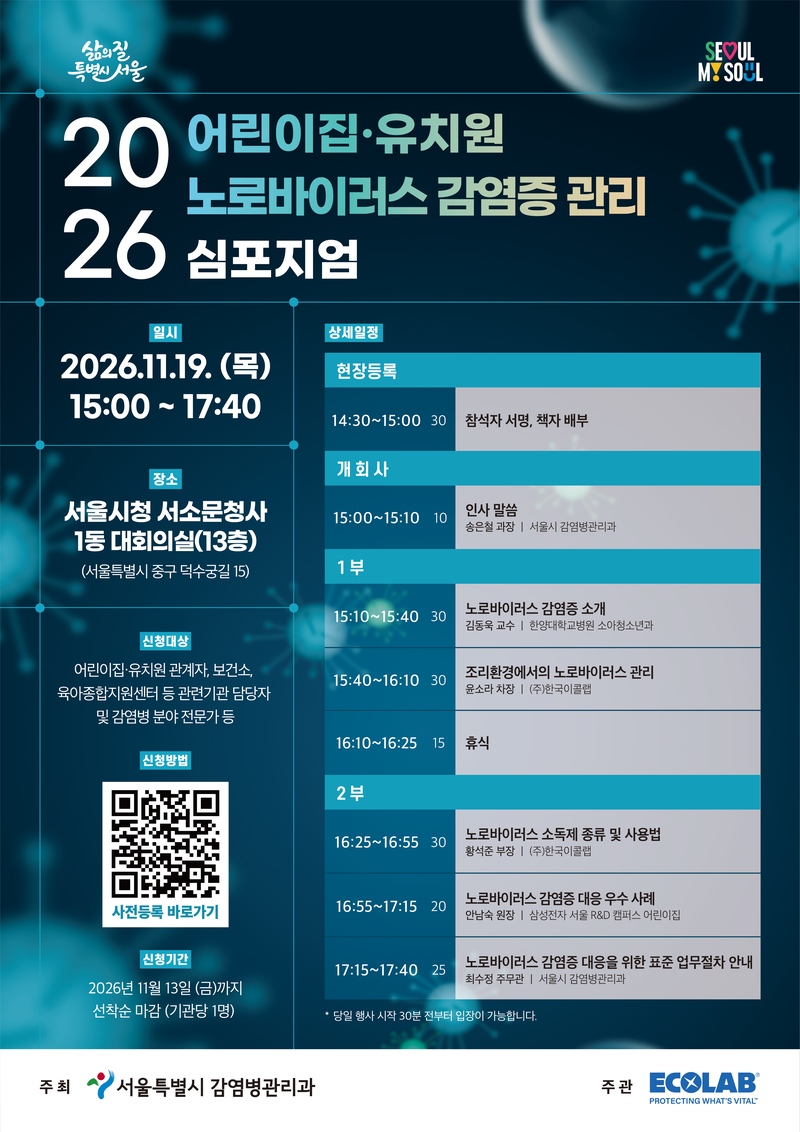
[Financial News] Ahead of the winter norovirus season, the Seoul Metropolitan Government will step up infection prevention and response systems at daycare centers and kindergartens. Last year, at least half of norovirus infection patients were infants and young children, and detections this summer also rose sharply from a year earlier, increasing the need for infection control at congregate living facilities. The Seoul Metropolitan Government said on the 16th that it will hold the “2026 Norovirus Infection Management Symposium for Daycare Centers and Kindergartens” at 3 p.m. on the 19th in the main conference room at Seoul City Hall’s Seosomun Annex.
Norovirus is a major cause of acute gastroenteritis, which can cause vomiting and diarrhea. Patient numbers tend to rise from November as temperatures fall, with outbreaks continuing through January of the following year. Early response is especially important at daycare centers and kindergartens, where infants and young children are concentrated, to prevent the spread of infection.
According to sentinel surveillance conducted by the Korea Disease Control and Prevention Agency at 210 hospital-level medical institutions nationwide, 814 norovirus detections were recorded from June to August this year, about 2.2 times the 377 recorded during the same period last year. With detections rising sharply even in summer, when outbreaks are typically less common, preparations for the winter outbreak are needed.
At the symposium, infectious disease experts and frontline workers will share the main transmission routes of norovirus and ways to prevent and manage infection. They will also provide guidance on managing food-preparation environments at daycare centers and kindergartens, as well as on the types of disinfectants, including sodium hypochlorite, and their proper use.
Cases of infection at daycare centers and the response process will also be presented. In particular, the symposium will explain standard operating procedures for promptly handling bodily fluids such as vomit and disinfecting the environment, and will offer response methods that can be used on site.
About 120 people are expected to attend, including daycare center and kindergarten staff, officials from district public health centers, and infectious disease experts. Members of the general public may also participate.
The Seoul Metropolitan Government plans to produce video training materials covering the symposium’s key content and post them on the city’s website. It also plans to distribute infection prevention and management guidelines and standard operating procedures to daycare centers and kindergartens by the end of the year.
Cho Young-chang, head of the Seoul Metropolitan Government’s Citizen Health Bureau, said, “Norovirus infections are prevalent in winter, and infants and young children account for a high proportion of infections, making advance prevention and a rapid initial response at daycare centers and kindergartens especially important. We will continue our education and public outreach efforts to ensure that the expert knowledge and frontline experience shared at this symposium lead to effective infection prevention and management.”
[email protected] Seong Cho-rong Reporter