"No Sores, So Why Does the Tongue Feel Like It's Burning?" ... What Is Behind This Hard-to-Describe Oral Discomfort? [Health Talk]
- Input
- 2026-11-16 15:39:46
- Updated
- 2026-11-16 15:39:46
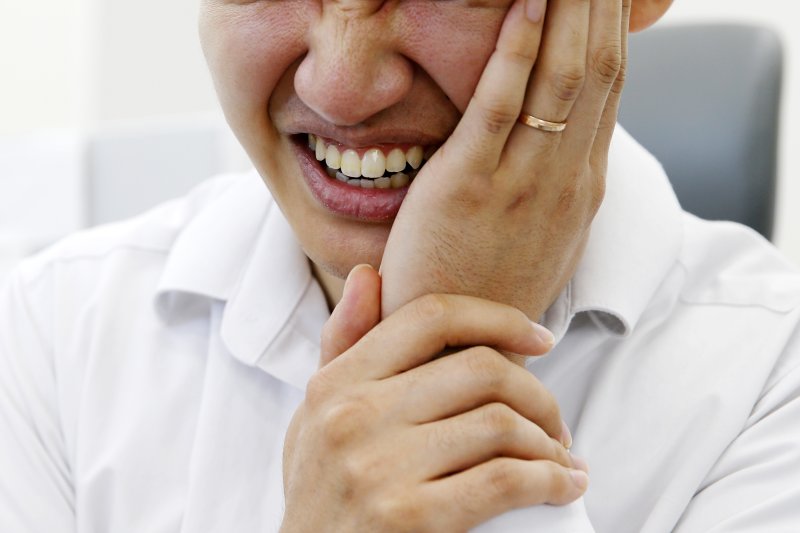
[Financial News] "My tongue feels hot, as if it has been burned," "It feels like my teeth don't fit together."
If this discomfort continues even after a dentist says there is nothing wrong, the cause may lie not in the mouth but in the brain's sensory processing.
Dysfunction in the nervous system's sensory processing and regulation was found to be associated with both burning mouth syndrome, in which the tongue feels hot despite there being no sores in the mouth, and occlusal dysesthesia, in which the teeth feel misaligned despite there being no problem with the bite.
Professor Choi Eun-hye of the Department of Oral Medicine at Kyung Hee University Dental Hospital at Gangdong published a paper comparing the mechanisms underlying the two conditions in the international journal Journal of Oral Rehabilitation. After searching for relevant literature in three academic databases—PubMed, Scopus and Google Scholar—Professor Choi compared and analyzed the mechanisms and commonalities of the two conditions, focusing on neuroimaging, sensory testing and drug treatment studies. The paper was a narrative review, not a systematic review, and proposed a hypothetical conceptual model to explain the relationship between the two conditions.
The tongue: 'pain amplification'; the teeth: 'sensory regulation error'
Burning mouth syndrome is a condition in which pain that feels hot or burning persists on the tongue, palate or elsewhere in the mouth despite there being no clear lesions. Changes in taste or dry mouth may also occur, and symptoms sometimes ease temporarily while eating.
Occlusal dysesthesia is a condition in which people feel that their teeth are misaligned or fit together uncomfortably even though there is no objective problem with their bite. Unlike those with burning mouth syndrome, people with occlusal dysesthesia often become more aware of their bite while eating. As the discomfort persists, patients may repeatedly check the condition of their teeth or request dental treatment such as occlusal adjustment. Both conditions are difficult to diagnose and treat because visible abnormalities alone cannot readily explain the symptoms.
The analysis identified dysfunction in the small nerve fibers of the trigeminal nerve that transmit pain, along with amplification of pain signals in the brain, as key mechanisms of burning mouth syndrome.
By contrast, the proposed key mechanism of occlusal dysesthesia is that the brain perceives the bite as excessively uncomfortable, even though the sensory nerves around the teeth are relatively normal. One study found that patients with occlusal dysesthesia had an ability to detect tooth contact similar to that of healthy people, but a lower threshold for finding the same stimulus uncomfortable.
In short, the difference is that burning mouth syndrome makes pain feel excessive, whereas occlusal dysesthesia makes even a normal bite feel uncomfortable.
A common link in the brain's sensory regulation ... "Accurate assessment before grinding teeth"
Although the two conditions differ in their main symptoms and underlying mechanisms, changes in the functioning of the nervous system involved in sensory regulation—including the brain's prefrontal cortex and frontostriatal circuits—may be associated with both. These neural systems help assess the importance of sensory information and regulate pain or discomfort.
Both conditions may be associated with paying excessive attention to sensations in the mouth or perceiving normal sensations as overly uncomfortable. However, further research is needed to clearly confirm these commonalities.
Because the underlying mechanisms differ, the treatments should differ as well. For burning mouth syndrome, drug treatment to reduce neuropathic pain and improve the brain's pain-regulation function may be considered. For occlusal dysesthesia, treatment focused on the brain's sensory processing and regulation, rather than the teeth themselves, is important. However, evidence for the effectiveness of drug treatment remains limited, so care should be taken to tailor the approach to each patient's condition. In particular, repeatedly grinding down teeth or adjusting the bite when there is no clear problem with the teeth may worsen symptoms, so caution is needed.
The significance of this paper lies in its comparison of the commonalities and differences between the two conditions from a neurological perspective and its emphasis on the need for tailored treatment based on each patient's symptoms and underlying mechanisms.
Professor Choi said, "Burning mouth syndrome and occlusal dysesthesia are not cases of malingering or simply a matter of mood; they may be real symptoms arising from the way the nervous system processes sensations in the mouth." Choi added, "If discomfort continues despite there being no clear problem with the teeth, it is advisable to get an accurate assessment from an oral medicine department first rather than undergo repeated tooth grinding or occlusal adjustments."
Choi added, "Since the common mechanisms underlying the two conditions are still at the hypothesis stage, it is important to develop treatments tailored to each patient's characteristics through further research."
[email protected] Jung Myung-jin, medical writer Reporter