Autonomous Driving to Be Introduced for Ground Handling at Incheon Airport...Level 4 Commercialization from 2030
- Input
- 2026-11-16 14:49:44
- Updated
- 2026-11-16 14:49:44
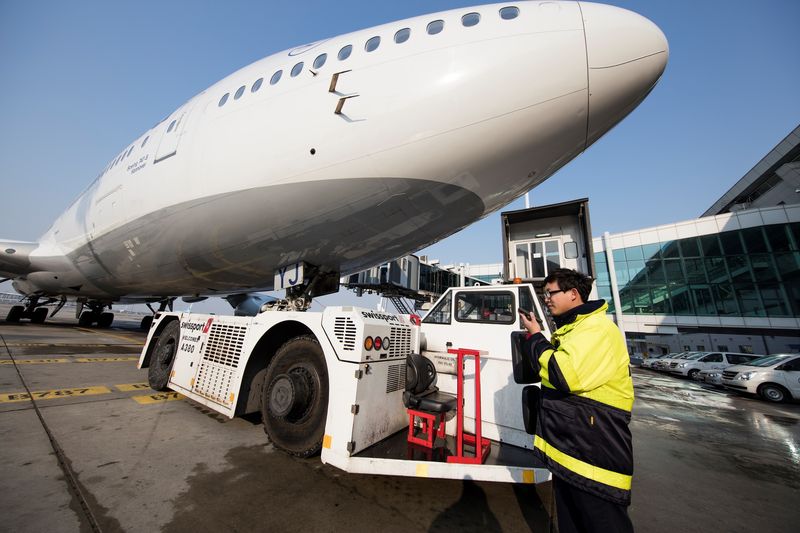
[Financial News] Incheon International Airport has laid the institutional groundwork for introducing autonomous vehicles to aircraft ground-handling operations. Starting with Level 3 autonomous vehicle operations, which require a driver to be on board, it will pursue the phased commercialization of Level 4 vehicles, which require no driver intervention, starting in 2030.
Incheon International Airport Corporation said on the 16th that it had established the “Operating Standards for Autonomous Vehicles in the Aircraft Movement Area” to ensure the safe operation of autonomous vehicles in the aircraft movement area.
Under the new standards, which took effect on the 20th of last month, Level 3 autonomous vehicles can now operate in Incheon Airport’s aircraft movement area with a driver on board. Level 3 is a conditional autonomous driving stage in which a vehicle drives itself under certain conditions, but the driver intervenes when necessary.
Incheon Airport’s aircraft movement area is a space where aircraft, vehicles, and ground handling equipment move around the clock. About 15,400 vehicles and pieces of equipment are currently in operation there, requiring a higher level of safety management than on ordinary roads.
Accordingly, the corporation has divided the movement area into four zones according to risk and required autonomous vehicles to demonstrate their safety sufficiently in low-risk zones before expanding their operating range into high-risk zones.
The operating standards set out details for the safe operation of autonomous vehicles, including approval procedures, areas where operations are permitted, safety rules, and emergency response methods.
In particular, the standards were drawn up following consultations with the government and relevant agencies, based on the principles of the International Civil Aviation Organization’s (ICAO) Aviation Safety Management System (SMS). The corporation also drew on examples from major overseas airports, including Singapore Changi Airport, where autonomous vehicles are in operation.
The corporation has also established a mid- to long-term roadmap to expand the introduction of autonomous vehicles in phases. First, during the 2026–2027 introduction phase, it will approve Level 3 vehicle operations on the principle that a driver is on board and accumulate related data.
Then, during the 2028–2029 expansion phase, the corporation plans to allow test runs of Level 4 autonomous vehicles, focusing on low-risk zones, and build a separate autonomous vehicle operations control system. Level 4 is an advanced autonomous driving stage in which a vehicle drives itself without driver intervention under designated operating conditions.
During the stabilization phase from 2030 onward, the corporation will commercialize Level 4 vehicle operations in phases and further upgrade the control system. It will also continue to update the operating standards and roadmap in line with changes in relevant domestic and international regulations.
The corporation expects the new framework to improve operational efficiency in aircraft ground handling while also helping prevent safety accidents in the movement area, where vehicles and equipment are concentrated.
Jo Yong-su, head of the Operations Division at Incheon International Airport Corporation, said, “We will continue to make aircraft operational safety our top priority, work with the government and relevant agencies to respond proactively to technological changes, and provide safe airport services that give the public peace of mind.”
[email protected] Kim Dong-ho Reporter