Blending In Is a Competitive Edge... AI Glasses Makers Face an 'Identification' Challenge
- Input
- 2026-11-16 17:15:13
- Updated
- 2026-11-16 17:15:13
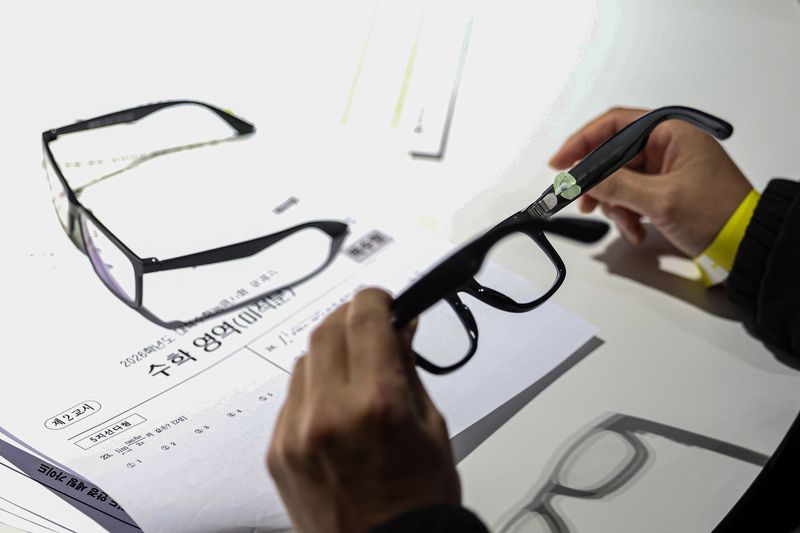
[Financial News] Artificial intelligence (AI) glasses manufacturers are facing competing challenges: maintaining a competitive edge through design while preventing cheating. A look that is difficult to distinguish from ordinary glasses has become a product advantage, but the need to identify the devices is also growing as cases of cheating on exams using AI glasses continue to emerge.
According to industry sources on the 16th, companies including Samsung Electronics, Google and Meta are increasingly concerned as cases of cheating on exams using AI glasses continue to emerge in South Korea. Equipped with cameras and voice features, AI glasses look similar to ordinary glasses, making them difficult for exam supervisors to distinguish with the naked eye. The safeguards manufacturers have already put in place also have limits when it comes to preventing cheating on exams.
Manufacturers’ design strategy, pursued to expand the market, is also proving a challenge when it comes to preventing cheating. Manufacturers including Samsung Electronics, Google and Meta are focusing on improving the design and comfort of AI glasses to make them more widely available. Samsung Electronics’ partnership with Gentle Monster and Warby Parker, and Meta’s collaborations with global eyewear brands such as Ray-Ban and Oakley, are part of the same strategy. The aim is to establish AI glasses not simply as information technology (IT) devices, but as fashion items worn in everyday life.
The problem is that the more manufacturers minimize the differences from ordinary glasses, the harder it becomes to address cheating. Manufacturers have introduced technologies that signal when recording is taking place or prevent unauthorized use of the camera, but they have yet to offer a clear way to identify AI glasses themselves at exam venues.
Samsung Electronics has secured 10% of its smart-glasses-related patents for privacy-protection technology and operates a dedicated engineering team. The AI glasses scheduled for release next month will have an LED indicator that lights up during recording, as well as a feature that disables the camera if the indicator is covered or fails to work properly. Meta also limits camera operation when its recording indicator is covered, while China’s Rokid has likewise put in place a recording indicator and a privacy policy.
However, most of these safeguards are focused on preventing illegal filming and invasions of privacy. A recording indicator only alerts people that the camera is being used; it does not give exam supervisors a way to determine whether someone is wearing AI glasses.
At the same time, it is not easy to make AI glasses more visually distinctive in order to identify the devices. Doing so would conflict with manufacturers’ product strategy of minimizing the differences from ordinary glasses. Restricting AI functions in specific places such as exam venues could be another option, but issues including its practical effectiveness, the possibility of circumvention and infringement of users’ rights would need to be addressed.
An industry official said, “As various technologies, including cameras, smartphones and AI glasses, become part of everyday life, the importance of using them responsibly is also growing. It is important for a culture of proper use among users to take root alongside companies’ technological efforts.”
[email protected] Yoon Hong-jip Reporter