“If AI Cheating Can't Be Stopped, Delay the CSAT” vs. “Who Will Bear That Anxiety?” [AI Cheating Shock]
- Input
- 2026-11-16 15:20:16
- Updated
- 2026-11-16 15:32:17
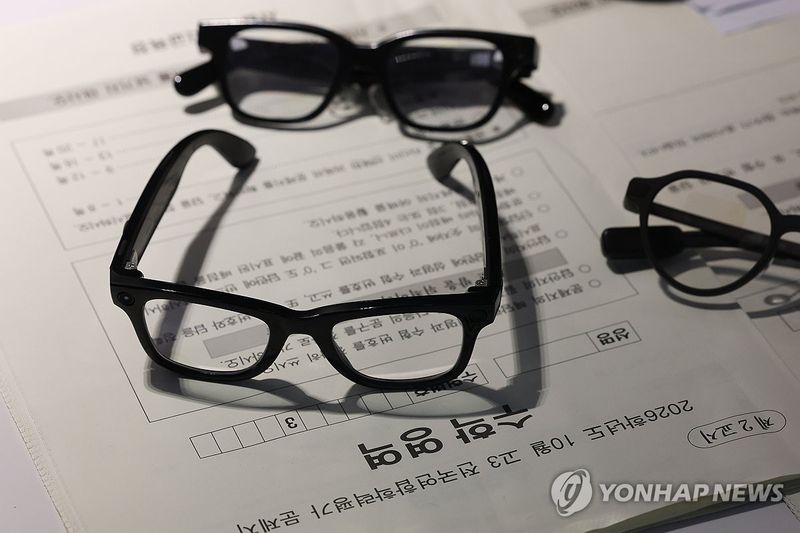
[Financial News] The College Scholastic Ability Test (CSAT), now just three days away, has been swept up in an unexpected controversy over artificial intelligence (AI) cheating. Anxiety is spreading that the CSAT may not be safe either, after the top scorer on the tax accountant exam confessed to cheating with miniature cameras and other devices.
College admissions YouTuber Mimiminu, followed by Korean language instructor Yoo Dae-jong and others, have called for strong measures, including postponing the CSAT. Some in the education community, however, say that even if the exam is postponed with only three days to go, it would be difficult to devise measures in such a short time to completely prevent new forms of AI cheating. They argue that, rather than changing the CSAT schedule, proctoring and inspections at exam sites should be strengthened as much as possible.
“The CSAT must be the fairest system... if there are no reliable measures, it should be postponed”
In a video posted to his YouTube channel on the 15th, Mimiminu referred to the cheating incident on the tax accountant exam and called on education authorities to come up with specific measures to prevent AI cheating.
“This is evidence that exams administered by the state, such as certification and licensing tests, have not been managed or supervised at all,” he said. “Examinees are the most anxious.” He added, “I hope specific measures are officially announced, with acceptable safeguards and inspection procedures in place, so that examinees taking the CSAT and those around them can feel as little anxiety as possible.”
Korean language instructor Yoo Dae-jong also posted a statement on social media on the 16th and mentioned the possibility of postponing the CSAT. “In South Korea, the CSAT admissions system must be the fairest system,” he said. “If the situation allows someone with malicious intent to easily get a high score through cheating or illegal acts, all such conduct must be prevented.”
In particular, he argued, “The CSAT should be postponed unless reliable measures are in place to ensure that all students can take the test fairly at every exam site.” However, he urged examinees to “stick to your routine without disruption, in line with the original schedule of November 19.” His point was that, for now, examinees should focus on preparing for the test while bearing in mind the possibility that the CSAT will go ahead as scheduled.
Calls to postpone the CSAT are also gaining traction among some examinees and parents. Posts demanding measures against AI cheating and a delay to the CSAT have appeared one after another on the Korea Institute for Curriculum and Evaluation's bulletin board. Similar reactions have been voiced on Sumanhui, a major information site for examinees, including, “It makes no sense to take the CSAT as scheduled without any measures,” and “I hear 8,000 miniature cameras are sold out—is the CSAT really going ahead like this?”
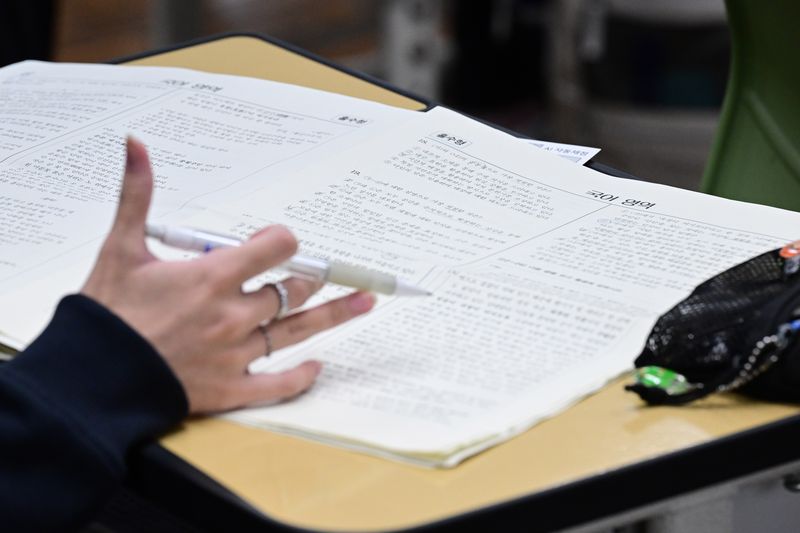
“Would delaying the CSAT solve the problem? It is difficult to devise comprehensive measures in a short time”
Others, however, argue that postponing the CSAT itself cannot solve the problem of AI cheating. They say the exam should remain on schedule while its proctoring and detection systems are improved, rather than postponing it without measures in place.
Jang Seung-hyeok, a spokesperson for the Korean Federation of Teachers' Associations (KFTA), told Newsis that day, “It is not realistically easy to completely prevent cheating using AI.” He added, “Ultimately, unless a new assessment system that can replace the CSAT is established, we will have no choice but to maintain the existing exam system and respond by reducing the possibility of cheating as technology advances.” He argued that technical tools to detect cheating should be considered alongside measures to ease the burden on proctors.
The Korean Teachers and Education Workers Union (KTU) likewise said that the problem of AI cheating would be difficult to solve simply by increasing proctoring for a day or two around the CSAT. Hyun Kyung-hee, a KTU spokesperson, said that “exam-site defenses are lagging behind the pace of competitive pressures and advances in high-tech devices,” and noted that technical measures alone have their limits. She also stressed the need for a broader social discussion of testing methods, including not only the CSAT but also school grades and various qualification exams.
Even postponing the CSAT by a week would not completely eliminate the possibility that new methods of cheating could emerge. Some online commenters said that “delaying it by a few weeks won't solve the fundamental problem.” Sumanhui users also voiced comments such as, “Even if the CSAT is postponed, I don't think they'll be able to come up with proper measures in the meantime”; “I'm retaking the exam, and I could accept it if I could keep my Grade 1, but things are already hard enough, so I hope they avoid postponing the CSAT as much as possible”; and “Do people think there was no cheating on previous exams? I wonder what the point would be of postponing only this year's CSAT.”
Government moves to require smart devices to be handed in and block Wi-Fi
Education authorities say they will strengthen measures on the assumption that the test will be held as scheduled. At a briefing on current issues at Government Complex Sejong that day, Shin Jin-yong, head of the Ministry of Education's University Admissions Policy Division, categorically ruled out a postponement when reporters asked whether the CSAT might be delayed, saying, “There will be no postponement of the CSAT.”
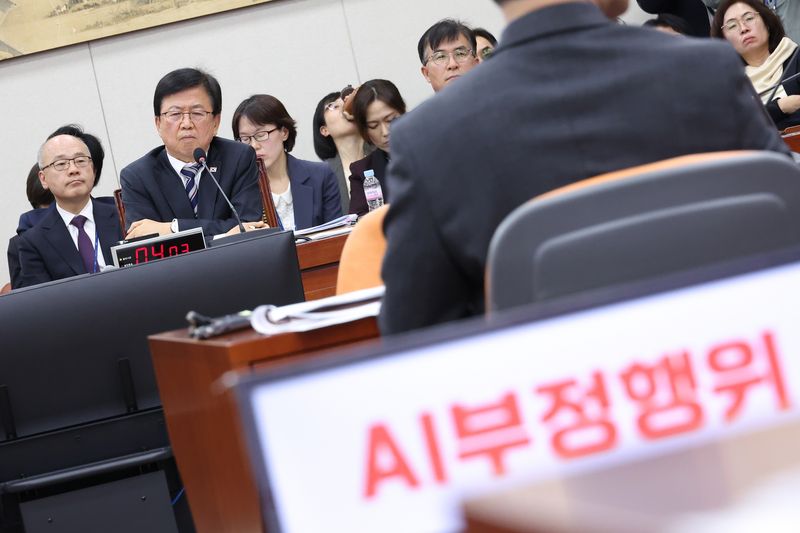
The government, which has begun drawing up measures, said it plans to require smart devices to be handed in and block public Wi-Fi at exam sites to prevent cheating using AI.
The Prime Minister's Office said Prime Minister Han Seong-suk issued these instructions while discussing related measures at an interagency meeting held at Government Complex Seoul that day.
Han instructed the Ministry of Education to require examinees to hand in all smart devices at exam sites and to thoroughly check whether they are carrying any devices during the test.
The Prime Minister's Office added that Han had also asked the Ministry of Science and ICT to actively consider, together with relevant agencies, blocking public Wi-Fi at all exam sites during the CSAT.
[email protected] Kim Hee-sun Reporter