Unauthorized Music Played at Franchise Stores... Supreme Court Says Headquarters Owes No Restitution
- Input
- 2026-11-16 13:24:16
- Updated
- 2026-11-16 13:24:16
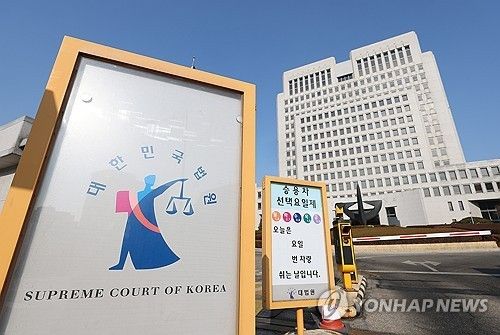
[Financial News] The Supreme Court has ruled that headquarters is not required to return a benefit even if music is played without authorization at a franchise or dealership store. Liability for damages as an aider and abettor of copyright infringement is separate from unjust enrichment, which requires the return of a benefit actually obtained without legal cause.
According to legal circles on the 16th, the First Division of the Supreme Court of Korea on the 27th of last month vacated both lower court rulings on appeal in separate lawsuits filed by the Korea Music Copyright Association (KMCA) against Hankook Tire & Technology Co., Ltd. and LG Electronics seeking damages and restitution of unjust enrichment, and remanded the cases to the Seoul Central District Court and the Seoul High Court, respectively. The lower court rulings, which had awarded KMCA 9,424,157 won and 40,188,000 won, respectively, were overturned. Justice Cheon Dae-yeop presided over the Hankook Tire case, and Justice Shin Sook-hee over the LG Electronics case.
The two cases followed the same pattern. KMCA authorized in-store music service providers to deliver musical works under its trust management to stores via webcasting. KT Music and Shopcast sent audio files to Hankook Tire’s T’Station stores from September 2009 to September 2016, while Plantynet sent files to LG Electronics’ LG Best Shop stores from April 2014 to September 2016. The stores played the files on playback devices as background music but did not obtain separate licenses for public performances. In January 2020, KMCA sought 146,920,000 won and 267,920,000 won from the two companies, respectively. The three-year statute of limitations on the damages claims had run, leaving only the claims for restitution of unjust enrichment.
The lower-court proceedings took different paths. In the Hankook Tire case, the Seoul Central District Court, the court of first instance, recognized headquarters’ liability for performances not only at company-operated stores but also at franchise stores and partially granted the claim in February 2023. The appellate court upheld that ruling last June. In the LG Electronics case, the court of first instance dismissed all claims in September 2022, and the appellate court before remand dismissed the appeal in September 2023. However, in January last year, the Supreme Court overturned the appellate ruling that had treated the audio files as phonograms for sale. On remand, the Seoul High Court changed its decision and partially granted the claim last September. Both sides appealed in both cases.
There were two issues: whether the audio files provided to the stores qualified as “phonograms for sale” under Article 29(2) of the former Copyright Act, and whether headquarters, which did not directly operate the stores, was required to make restitution for unjust enrichment arising from the performances.
The lower court’s ruling on the first issue was upheld. Citing a precedent from January last year, the panel said that “if sounds were fixed not for the purpose of selling the phonogram on the market, but solely to provide it to someone seeking to perform by playing the phonogram,” it did not qualify as a phonogram for sale. This means the infringement of the public performance right itself was recognized.
It was the second issue that was overturned. The panel first set out the principle that a benefit in the context of unjust enrichment means an actual benefit, and that no duty to make restitution can be imposed if no benefit has actually accrued. It then found that, since the franchisees and store operators ran the stores, they were also the parties responsible for the performances. The panel added, “Given that the defendant cannot be regarded as a party to the performance, to establish a duty to make restitution for unjust enrichment, it must be alleged and proven specifically what actual benefit the defendant received apart from the benefit of the performance itself.”
The arguments cited by the appellate court—attracting franchisees and earning franchise fees, as well as attracting dealers and increasing product sales—were rejected. The panel said these were “business effects arising from the combination of various factors, including the public recognition and reputation of the business mark, product quality, transaction terms, store location, and the recruitment and management of franchisees.” It said specific circumstances would be needed to support a finding that these had actually increased because of the in-store performances and that the resulting benefit had accrued to headquarters. The panel also said, “The analysis is no different simply because headquarters bears liability for a joint tort as an aider and abettor.”
In the LG Electronics case, the benefits received by a subsidiary wholly owned by the company were also at issue. The lower court had found that those benefits could accrue to LG Electronics through dividends and other means. However, the panel held that this alone was insufficient to establish that the benefits had actually accrued to LG Electronics, noting that the subsidiary “has a legal personality separate from the defendant.”
Although the grounds for reversal concerned the portions of the rulings against the defendants, the Supreme Court vacated the entire lower court rulings so that the scope of restitution for unjust enrichment could be reconsidered. It did not address KMCA’s grounds for appeal. The Supreme Court said the courts on remand should examine further whether headquarters had obtained an economic benefit from franchisees or store operators in exchange for providing in-store music services, and whether the number of franchise stores or product sales had actually increased after the performances took place.
[email protected] Kim Dong-gyu Reporter