Cho Jeong-sik Appoints Kim Hyung-oh and Chung Sye-kyun as Co-Chairs of Constitutional Revision Advisory Committee, Seeks Breakthrough
- Input
- 2026-11-16 11:06:47
- Updated
- 2026-11-16 11:06:47
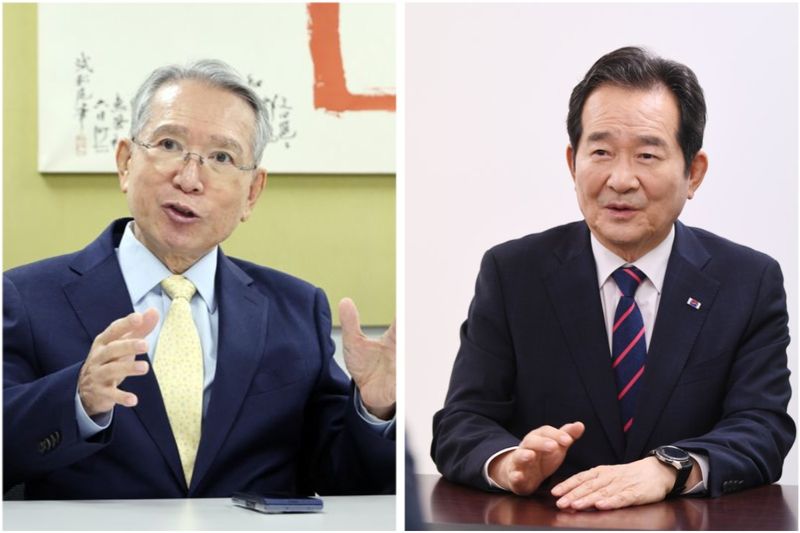
At a press conference at the National Assembly that day, Cho explained the reason for the appointments, saying, “The two are respected senior figures in our politics who led the National Assembly, the representative body of the people, and have deep knowledge of constitutional revision and experience in advancing it.” He added, “They made a difficult decision, saying it was for the future of the country.”
The appointments are seen as an attempt to find common ground through political elders from both camps, as differences between the ruling and opposition parties over constitutional revision remain unresolved. Although there is broad political consensus on the need for constitutional revision, significant differences remain over its specific direction and timing. The aim is to build momentum for discussions through the advisory committee.
Cho also reiterated the three key principles for pursuing constitutional revision that he laid out at a recent Kwanhun Club forum. The National Assembly should lead discussions on constitutional revision, but no amendment should be pursued to allow the incumbent president to serve consecutive terms, and any revision should be based on agreement between the ruling and opposition parties and public consent.
To that end, the Constitutional Revision Advisory Committee plans to broadly gather public opinion on major constitutional revision issues, including the Constitution’s preamble, fundamental rights and the structure of government. The results of the committee’s discussions will also be conveyed to a special committee on constitutional revision to be jointly formed by the ruling and opposition parties.
A support system at the National Assembly level will also be established. A working-level support team headed by the deputy secretary-general for legislation will be set up at the National Assembly Secretariat, and around 40 expert staff members from the National Assembly will be assigned to support the advisory committee’s work.
Immediately after the press conference, Cho spoke with reporters and gave details of his plans for pursuing constitutional revision and operating the advisory committee.
He explained, “The advisory committee will bring together a range of views on constitutional revision issues,” adding, “This could include the ‘one-point constitutional amendment’ pursued during the previous first half of the National Assembly’s term, as well as broader topics such as the Constitution’s preamble, fundamental rights, restructuring the government and reforming the National Election Commission (NEC).”
Regarding the People Power Party’s passive stance toward discussions on constitutional revision, stemming from its concerns about the possibility of an amendment allowing President Lee to serve consecutive terms, Cho said, “I don’t think there is much opposition to constitutional revision itself across the political sphere.”
He continued, “When controversy arose last time over whether an incumbent president could serve consecutive terms, the ruling and opposition parties each had their own positions, but I believe the controversy over an incumbent president serving consecutive terms has been resolved.” He stressed, “President Lee has said so several times, and I also made the principle clear at the Kwanhun Club forum.”
He added, “If distrust and concerns about the controversy over an amendment allowing the incumbent president to serve consecutive terms still remain, I believe it can be explicitly stated, when a special committee on constitutional revision is later formed following the advisory committee process, that ‘the amendment will not apply to the incumbent.’” The remark is seen as an effort to clearly resolve the issue of an incumbent president serving consecutive terms, considered one of the biggest obstacles to constitutional revision discussions, and draw opposition parties into the process. However, the extent to which the ruling and opposition parties can narrow their differences over specific constitutional revision issues and the timing of the process after the advisory committee is launched is expected to determine whether revision is ultimately achieved.
[email protected] Kim Hyeong-gu Reporter