Jeju Education Reorganization Stalls ... Personnel Authority Still Unresolved Despite Council–Education Office Meeting
- Input
- 2026-11-16 10:43:45
- Updated
- 2026-11-16 10:43:45
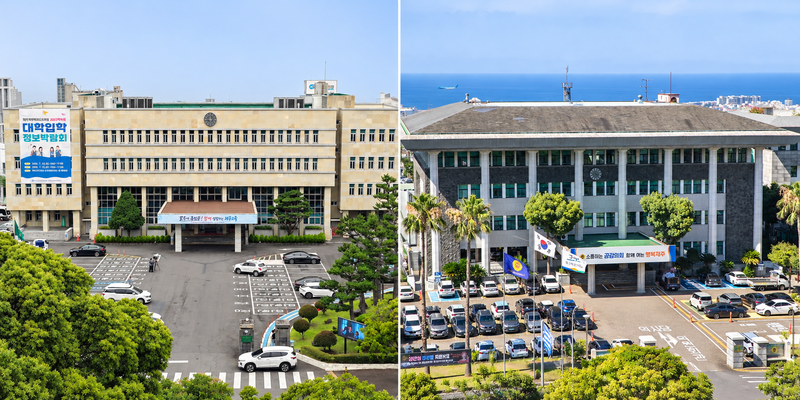
【Financial News, Jeju = Reporter Jeong Yong-bok】 The provincial council and the education office, which had clashed over the rejection of the education office’s reorganization plan, met in person and pledged to cooperate. However, the issue of personnel authority over the six civil servants in the council secretariat—the core of the dispute—still requires a final resolution and amendments to the relevant ordinances.
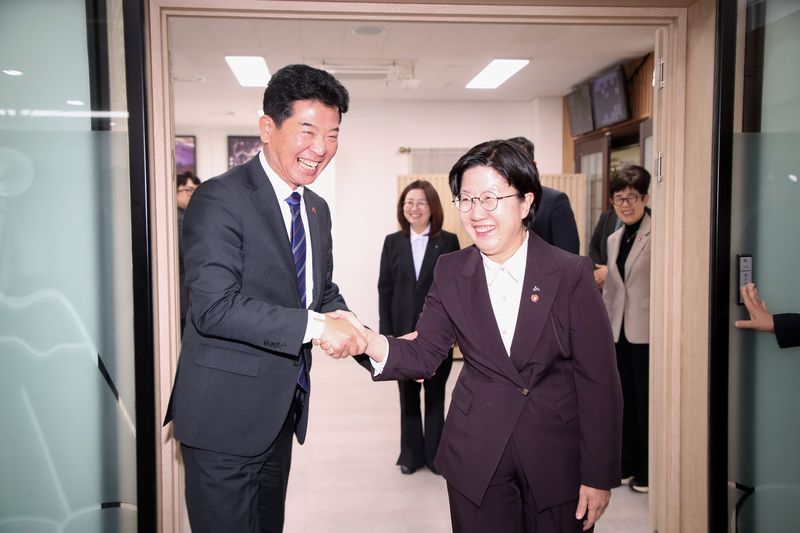
According to the Jejudo Office of Education and the Jeju Special Self-Governing Provincial Council on the 16th, Council Chair Song Young-houn and Jeju Superintendent of Education Ko Eui-suk met on the afternoon of the 13th in the council chair’s office to discuss ways for the two institutions to respect each other’s authority and work together to resolve education-related issues.
The meeting took place after the heads of the two institutions had publicly clashed following the defeat of two ordinances related to the education office’s reorganization at the provincial council’s plenary session on October 23.
At the center of the dispute is personnel authority over the office of expert advisers to the provincial council’s Education Committee. The office reviews bills and budget proposals submitted by the education office and analyzes problems with education policy, supporting council members in their deliberations and oversight.
Article 2 of the current ‘Ordinance on the Quota of Local Public Officials under the Jeju Special Self-Governing Provincial Superintendent of Education’ stipulates that six local public officials under the superintendent are to be assigned to the provincial council secretariat.
The personnel authority structure differs from that for ordinary staff of local councils. Article 29-3 of the ‘Local Education Autonomy Act’ stipulates that employees who support education and arts affairs are appointed by the superintendent based on the recommendation of the chair of the city or provincial council. The chair has the right to recommend candidates, but final appointment authority rests with the superintendent.
By contrast, Article 103 of the ‘Local Autonomy Act’ stipulates that the chair of a local council handles matters concerning the appointment and dismissal, education and training, service, and discipline of council staff. It is the legal basis for the independence of local councils’ personnel authority, which has been in effect since 2022.
In Jeju, the system of education council members ended this year, and Article 73 of the Jeju Special Act—which provided for a support organization for the Education Committee and the superintendent’s appointment of its staff—was also deleted. However, the provision in the Local Education Autonomy Act allowing the superintendent to make appointments remains in force.
Article 44 of the Jeju Special Act provides an exception allowing provincial ordinances to set procedures for appointing council secretariat staff, as well as staffing quotas and related standards. Adjusting the personnel system for the office of expert advisers on education requires reviewing both how these laws apply and the relevant ordinances.
The provincial council maintains that having the superintendent exercise personnel authority over a support organization that scrutinizes and checks the education office could constrain the council’s independence. It has called for the staffing quota and appointment system to be revised so that the office of expert advisers on education falls under the council chair’s personnel authority.
The education office, meanwhile, has maintained that the expertise of education administration and continuity in personnel management must be taken into account. At a meeting of the provincial council’s Education Committee in July, the education office also said it believed the current personnel system should be maintained.
The education community has likewise expressed concern about how changing the personnel system for the office of expert advisers could affect the Education Committee’s ability to scrutinize policy. The view is that staff with expertise in education budgets, school operations, and education administration systems should provide stable support to the council.
The issue is how to secure both the council’s independence in personnel matters and expertise in the scrutiny of education policy. The disagreement came to the surface when two ordinances related to the education office’s reorganization were rejected at the provincial council’s plenary session on October 23.
At the time, the ‘Partial Amendment to the Ordinance on the Establishment of Administrative Organizations of the Jeju Special Self-Governing Provincial Office of Education’ was rejected, with 4 votes in favor, 28 against, and 9 abstentions among the 41 members present. The ‘Partial Amendment to the Ordinance on the Quota of Local Public Officials under the Jeju Special Self-Governing Provincial Superintendent of Education’ also failed to pass, with 5 votes in favor, 28 against, and 8 abstentions.
Both ordinances had previously passed the Education Committee, but the outcome was reversed at the plenary session. Ha Seong-yong, chair of the provincial council’s Steering Committee, spoke in opposition and criticized the lack of independence in personnel authority for the office of expert advisers on education and the education office’s failure to consult in advance. Issues including the operation of the deputy superintendent for policy affairs position were also raised.
The rejected reorganization plan was not a bill that would itself decide whether to transfer the staffing quota for the office of expert advisers on education. Rather, the issue of personnel authority over the council’s support organization emerged as a separate point of contention during deliberations on ordinances to reorganize the education office’s administrative bodies and staffing.
After the reorganization plan was rejected, tensions between the two institutions turned into public differences of opinion. After Superintendent Ko expressed regret over the defeat of the ordinances, Council Chair Song stressed in the opening remarks at the regular session on the 10th that the council’s authority to deliberate and decide must be respected.
As the tensions continued, the heads of the two institutions met in person on the 13th to discuss ways to cooperate.
Council Chair Song said, “It is true that there were disappointing aspects in the process so far,” adding, “My position that the council’s judgments and procedures must be respected has not changed.”
Song continued, “The provincial council and the education office have different roles and responsibilities, but ultimately share the same goal: the development of education in Jeju and the future of its students,” adding, “The council’s oversight also means that we should communicate more and work together to find solutions.”
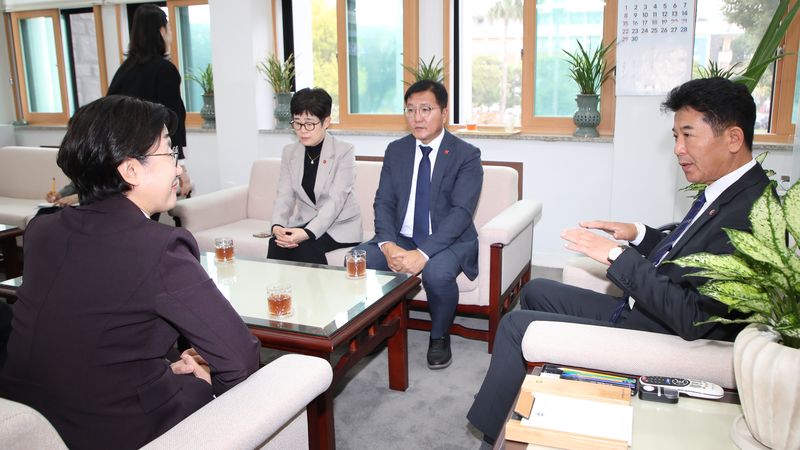
Superintendent Ko also explained that expressing regret over the rejection of the reorganization plan was not intended to show disregard for the council.
Superintendent Ko said, “I understand the concerns of the provincial council and its members well,” adding, “There was no other meaning or intention behind my expression of regret. My position remains that, as someone responsible for the education field, I will work actively to resolve the issue.”
Ko continued, “The situation facing education in Jeju right now is more than a crisis,” adding, “I will listen more closely to voices from the education field, including those of schools and parents, and strengthen communication and cooperation with the council to find a way to address Jeju education’s difficulties together.”
However, the two sides’ pledge to cooperate does not mean they have reached a final agreement on adjusting the staffing quota. Adjusting the six council secretariat positions designated as belonging to the education office will require discussions not only between the education office and the provincial council but also on Jeju Province’s management of staffing quotas.
Adjusting the quota is different from a personnel action that immediately transfers the six civil servants currently working there to other institutions. It would instead be a change to the system: reducing the quota for council support staff allocated to the education office and overhauling the council secretariat’s staffing system.
The adjustment process will require consideration of staffing quotas by rank, personnel costs, how appointment authority is exercised, and ways to secure staff with expertise in education administration.
In particular, even if the council secretariat’s staffing quota is adjusted, legal review will be needed to determine how to apply the Local Education Autonomy Act’s provisions on staff supporting education and arts affairs, as well as the Jeju Special Act’s exception concerning autonomous organizational authority.
The education office’s reorganization schedule also remains to be addressed. In a policy address to the provincial council on the 10th, Superintendent Ko said, “I will pursue the reorganization again, targeting implementation on March 1, 2027.”
The reorganization plan includes restructuring administrative bodies to support schools, protecting educational activities, and adjusting staffing arrangements related to after-school programs and care. To proceed as planned, a revised ordinance must be drafted and submitted again for the provincial council’s deliberation and approval.
The public confrontation between the provincial council and the education office has eased following a meeting between their leaders, but the issues of personnel authority and staffing quotas for the office of expert advisers on education remain unresolved. Finding an institutional solution that strengthens local councils’ independence in personnel matters while preserving the Education Committee’s professional scrutiny function will be central to the follow-up discussions.
[email protected] Jeong Yong-bok Reporter