“Just Say the Word, and AI Analyzes the Data”... Salesforce Launches ‘Tableau Studio’
- Input
- 2026-11-16 10:09:53
- Updated
- 2026-11-16 10:09:53
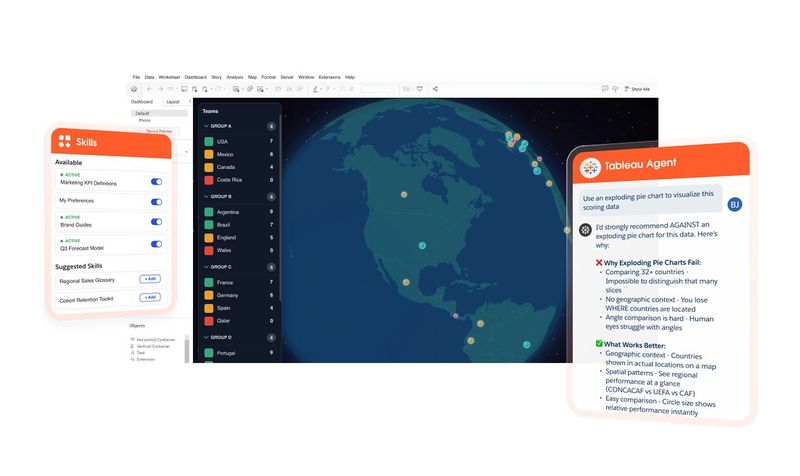
According to industry sources on the 16th, Salesforce will officially launch Tableau Studio, an AI-powered data analytics environment, in Korea. The cloud version will be available starting on the 17th of this month, and the server version starting on the 19th.
Tableau Studio is a service that helps analysts create data analytics content by letting them describe their desired results to an AI agent in natural language. It uses the Visual Query Language (VizQL) technology and metadata that Tableau has accumulated over about 20 years to understand the structure of existing workbooks and relationships among data, and incorporate them into its analysis.
Its core features are Tableau Agent and Tableau Skills.
When users request an analysis task in natural language, Tableau Agent creates or modifies visualizations, calculations, worksheets, and dashboards based on the data connected to the current workbook. Users can create analytical results by conversing with AI and, if they need to make fine adjustments, edit them directly using the familiar drag-and-drop method.
Tableau Skills enable AI agents to use the expertise and best practices needed for tasks such as checking data quality, designing dashboards, writing and troubleshooting calculations, and analyzing performance. Around 50 skills created by Salesforce and approved partners are expected to be available through Tableau Exchange.
The new AI features are available to customers with Creator licenses for Tableau Plus, Tableau Cloud Plus, and Tableau Server Plus. Users can also try the features in a Tableau Cloud trial.
Tableau Data Apps, launching alongside Tableau Studio, lets users turn analytical results into custom applications for use in their day-to-day work. Users can create data analytics apps based on HTML, JavaScript, and CSS by making natural-language requests to Tableau Studio or an external AI agent.
Completed apps can be included in Tableau workbooks and deployed and shared on the platform. Access permissions can be applied at the user, role, and data-field levels, just as with existing workbooks, allowing companies to maintain their security and management systems.
[email protected] Jang Min-kwon Reporter