North Korea Races to Build a 10,000-Ton Cruiser and East Coast Naval Base, Fast-Tracking Strategic Naval Power Linked to Nuclear and Missile Capabilities
- Input
- 2026-11-16 10:31:23
- Updated
- 2026-11-16 10:31:42
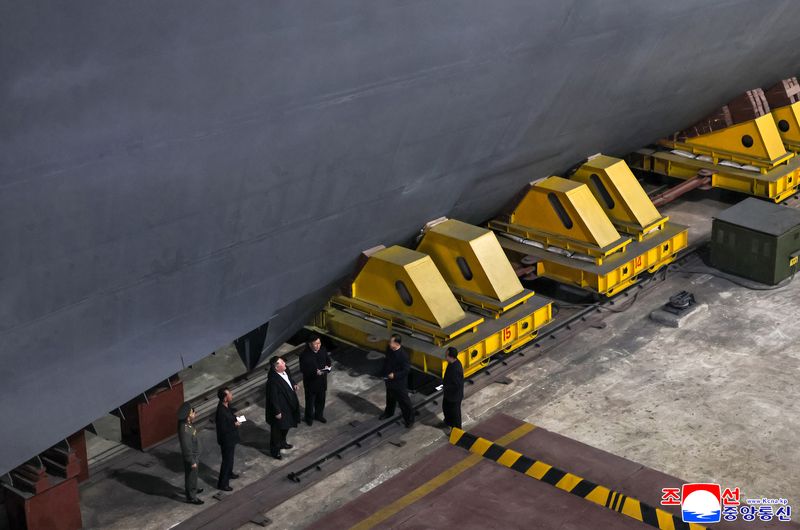
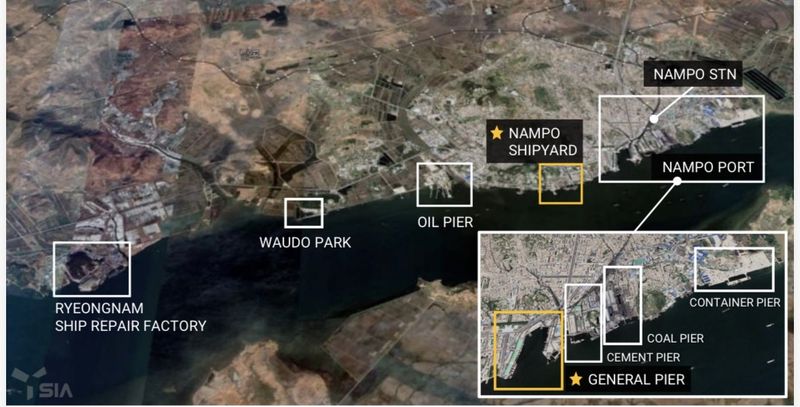
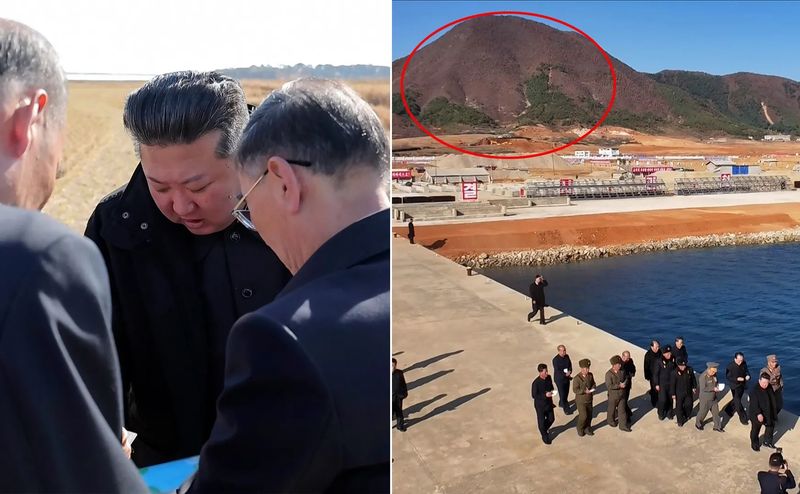
The expansion of these naval ports is seen as a follow-up measure intended to support the operational deployment of large combat vessels that North Korea has launched in succession. After launching the 5,000-ton-class destroyers Choe Hyon and Kang Kon last year, North Korea released footage early this month of Kim Jong Un visiting Nampo Shipyard on the west coast and inspecting construction of a new large vessel believed to be a 10,000-ton-class strategic guided-missile cruiser. The expansion appears intended to meet the maintenance needs of vessels of 5,000 tons or more, which existing North Korean port facilities—focused on small coastal-defense vessels—cannot accommodate. North Korea appears to be racing ahead, applying new land-based assembly techniques not previously observed in its shipbuilding.■ North Korea’s new construction method: 170-meter onshore rail construction spotted for the first time; “External technology transfer must be verified”Satellite imagery analysis by the U.S.-based North Korea-focused outlet 38 North and the U.S. Naval Institute (USNI), among others, points to an unconventional construction method and uncertain sources of technology in North Korea’s effort to acquire large vessels. Rather than excavating a new deep dry dock at Nampo Shipyard, North Korea is using land-based slipway rails measuring 30 meters wide and 170 meters long, laying trolleys and thick double support beams on them to assemble and move hull sections on land. The unusual “build first, infrastructure later” approach avoids the limitation of dry docks taking years to complete and seeks to make up for past incidents in which vessels ran aground or were damaged during side launches.
Specialists say North Korea would find it difficult to independently acquire in a short time the shipbuilding capabilities required to distribute the load of a 10,000-ton-class hull and achieve precise welding, and are focusing on the possibility of outside technology transfers. In a recent issue brief, the Institute for National Security Strategy (INSS) said, “There are significant technical constraints on building the hulls of large vessels and integrating their propulsion systems, phased-array radars and vertical launch systems in a short period using only North Korea’s existing indigenous defense technology.” It added, “It is necessary to verify whether there has been external technical assistance or cooperation, including from Russia, in the process of expanding North Korea’s naval capabilities.” Military and industry observers are closely monitoring not only the possibility of Russian ship-design and shipbuilding advice provided in exchange for North Korea’s troop deployment and arms support for the war in Ukraine, but also indirect procurement from China of specialty steel and control equipment, as well as the possibility that North Korea used data on on-ground construction methods for large vessels and related designs—data its hacking groups have previously tried to steal from major South Korean shipbuilding and defense companies.■ “Beyond coastal defense, turning naval forces into strategic strike assets ... an integrated response through undersea warfare and combined surveillance is needed”Experts say North Korea has moved beyond replacing aging vessels and entered a substantive phase of military modernization aimed at completing a sea-based nuclear deterrent. Yoo Ji-hoon, a research fellow at the Korea Institute for Defense Analyses (KIDA), said, “The strengthening of North Korea’s naval forces has moved beyond declarations and entered a substantive phase of force modernization, including shipbuilding, expansion of naval bases and establishment of operational support systems.” He added, “This is part of putting into practice the policy of strengthening naval power set out at the 9th Workers’ Party Congress last February, and it confirms the intent to develop naval forces, alongside nuclear and missile capabilities, into a key instrument of the country’s military strategy.”
Yoo described the significance of the naval base construction as follows: “This is not simply an expansion of a naval port, but the development of infrastructure to support an expanded operational reach using large surface combatants and submarines, and stronger sea-based strike capabilities, moving beyond the existing focus on coastal defense and small vessels.” He said the aim was “to improve operational endurance by securing the ability to berth and maintain large vessels, provide logistical support and command and control, and defend the base.” However, he noted, “For expanded infrastructure to lead to an actual improvement in combat capability, it must be accompanied by advances in crew proficiency, maintenance capabilities and command-and-control systems. Significant technical and operational constraints remain on acquiring, in a short period, comprehensive maritime operational capabilities comparable to those of the South Korean and U.S. navies.”
As the development of a frontline base on the East Sea coincides with the construction of large vessels, calls are growing for the South Korean military to shift its response strategy from a focus on individual weapons systems to an integrated maritime defense system. Yoo said, “If North Korea expands the activities of large surface vessels and submarines in and around the East Sea and strengthens its ability to operate sea-based missiles, this could place additional burdens on the South Korea-U.S. combined forces’ maritime surveillance, anti-submarine operations and missile defense.” He added, “Rather than competing quantitatively in individual force capabilities, we should strengthen the South Korean Navy’s undersea-warfare advantage and integrated maritime operational capabilities, and respond by closely linking them with the combined operational capabilities of the South Korea-U.S. alliance.”
[email protected] Lee Jong-yoon Reporter