Polestar 4's High-Performance Strategy Pays Off...South Korean Sales Surge 73%
- Input
- 2026-11-16 14:59:36
- Updated
- 2026-11-16 14:59:36
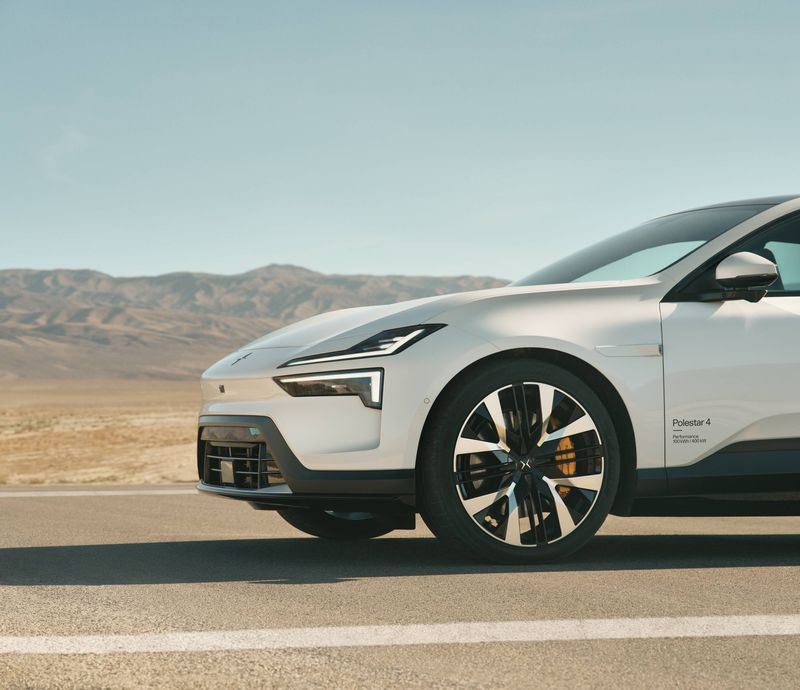
[Financial News] Polestar 4 is rapidly boosting sales in South Korea’s premium electric vehicle market by leading with its high-performance model. With 7 out of 10 domestic buyers choosing the dual-motor model, which has a maximum output of 544 horsepower, cumulative sales this year have risen 73% year over year. This is seen as the result of targeting demand from premium EV consumers who prioritize driving performance and technology over price.
On the 16th, according to the Imported Car Purchase Journey Survey, released last month by the Korea Automobile Importers & Distributors Association (KAIDA), 42.8% of buyers of imported cars priced below KRW 50 million cited economic considerations, such as fuel efficiency and maintenance costs, as their top purchasing factor. By contrast, among cars priced at least KRW 70 million but less than KRW 100 million, the largest share of respondents, 42.0%, said they prioritized driving performance and technology.
Differences in consumer choices by price are also evident in actual sales. Tesla registered a total of 9,165 new vehicles in South Korea last October. Of these, the Model Y Premium (5,501 units) and Tesla Model 3 (2,199 units) accounted for 7,700 vehicles, or 84.0% of the total. Both models are available starting in the KRW 40 million range.
At China’s BYD, too, sales were led by EVs that compete on price. Of the 1,594 vehicles registered in October, 1,586, or 99.5%, were models priced below KRW 50 million. In particular, 676 units of the Dolphin, an EV in the KRW 20 million range, were registered. Volvo’s small electric sport utility vehicle (SUV), the EX30, whose starting price was lowered to KRW 39.91 million, also sold 400 units, making it the brand’s best-selling model.
By contrast, competition in the premium market, where vehicles cost at least KRW 70 million, is increasingly focused on ride comfort and driving performance rather than price. Lexus’s ES 350e electric sedan, launched in South Korea last month, had 483 registrations, while the Volvo ES90 had 431. The BMW i5 also sold 253 units.
Demand for high-performance versions of the Polestar 4 was particularly strong. According to Polestar Korea, 71% of Polestar 4 buyers in South Korea chose the dual-motor model, which has a maximum output of 544 horsepower. The starting price in South Korea is KRW 66.9 million, but the actual average purchase price is about KRW 83 million. This indicates that buyers prefer models with higher performance and more features than the base version.
Sales growth has continued. From January through October this year, 3,753 Polestar 4s were newly registered in South Korea, up 73.2% from the same period a year earlier. During the same period, the model ranked first in sales among electric vehicles from European brands, measured on a single-model basis.
Last month, however, new registrations were limited to 145 after the sales allocation secured for this year sold out early. To shorten delivery wait times, Polestar Korea secured about 1,000 units ahead of schedule from next year’s planned sales volume and plans to deliver them to customers in phases starting this month.
The 2027 Polestar 4 has improved cornering stability and ride comfort through revised chassis settings. High-capacity passive dampers, along with newly designed springs and anti-roll bars, are standard on the rear-motor and dual-motor models, enhancing both driving performance and comfort.
A Polestar Korea representative said, “The fact that 7 out of 10 Polestar 4 buyers in South Korea choose the dual-motor model shows their strong preference for high-performance specifications.” The representative added, “We will continue to build on our customers’ driving experiences to enhance both the enjoyment drivers feel behind the wheel and passengers’ comfort.”
[email protected] Kim Dong-ho Reporter