'8-Week Rule' and Honam Semiconductor Industrial Complex: MOLIT Awards 33 Policy Achievements
- Input
- 2026-11-16 11:00:00
- Updated
- 2026-11-16 11:00:01
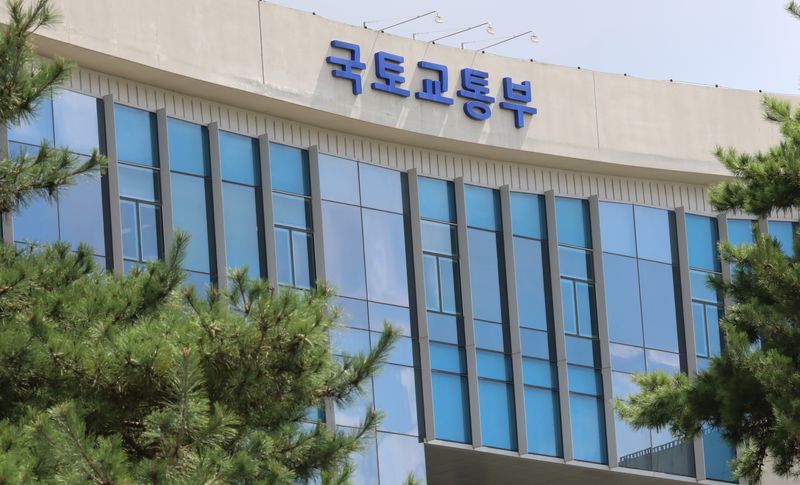
[Financial News] The Ministry of Land, Infrastructure and Transport (MOLIT) will award special achievement bonuses for 33 policy achievements, including the introduction of the auto insurance “8-week rule” and efforts to establish a national semiconductor industrial complex in the Honam region.
According to MOLIT, the second Land, Infrastructure and Transport Special Achievement Bonus Awards ceremony was held on the morning of the 16th in the main auditorium at Government Complex Sejong. The winning initiatives were selected after experts from within and outside the ministry verified and evaluated their results. In the “Advancing the Interests of the Nation and Its People” category, the judging was livestreamed, and scores from a public review panel were also taken into account.
Nine people, including Kim Jun-sik, an official with the Automobile Insurance Policy Team, were recognized for creating a measure to prevent improper insurance claims. Under the measure, the Korea Automobile Damage Compensation Promotion Agency assesses whether patients with minor injuries from traffic accidents need to continue treatment beyond eight weeks. The aim is to curb insurance payouts and ease the burden on policyholders. This system, known as the “8-week rule,” took effect on September 10. It applies to patients with sprains or bruises among those with minor injuries classified as grades 12 to 14; pregnant women and infants and toddlers are generally exempt from review. The government cited the fact that 92% of patients with minor injuries complete treatment within eight weeks of an accident as the basis for setting the threshold. The measure was originally due to take effect in January this year, but was postponed three times amid opposition from the Korean medicine community and consumer groups before finally taking effect.
Seven people, including Kim Bo-ram, an official with the Industrial Location Policy Division, developed a “Plan for Creating Corporate-Style High-Tech Cities.” Its key elements are allowing companies to choose where to locate and how to invest, and significantly shortening the time needed to build an industrial complex. They also helped make the area around the Gwangju Military Airport site, about 8.26 million square meters (about 2.5 million pyeong), a candidate site for a high-tech national semiconductor industrial complex in the Honam region. They were credited with laying the groundwork for balanced regional growth.
Nine people, including Byeon Seong-eun, an official with the Overseas Construction Policy Division, supported the securing of a contract for a lithium and boron plant in Nevada, accelerating expansion into the United States. Seven people, including Im Chae-hyeon of the Autonomous Driving Policy Division, led city-level autonomous-driving trials and regulatory easing, while seven, including Choi Gyu-yong of the Railway Investment and Development Division, led the partial opening of the Bujeon-Masan Double-Track Railway. Six people, including Park Tae-hyeon of the Construction Industry Division, responded swiftly to prevent construction sites from grinding to a halt amid the fallout from the war in the Middle East. Five people, including Kim Yeong-du of the Road Policy Division, introduced toll discounts for drivers who took the wrong exit on an expressway, as well as discounts for households with multiple children.
Eighteen people, including Kim Jong-hyeon, an official with the Fair Construction Support Division, were recognized for using artificial intelligence (AI) to uncover illegal subcontracting worth 5.1 billion won. Also on the list of winners were seven people, including Choi Jin-ho, an official with the Aviation Policy Division, who improved parking services at Incheon Airport; 11, including Kim Sa-jung, an official with the Construction Management Division of the Seoul Regional Office of Construction Management, who helped overcome a construction-materials supply crisis triggered by the situation in the Middle East; and six, including Jeong Jae-yeop of the Housing Fund Division, who helped eliminate the marriage penalty through measures such as special housing allocations for newborns.
Notable recipients included six people, including Kim Se-muk, an official with the Automobile Operations and Insurance Division, who developed consumer-protection measures for used-car buyers; and four, including Kim Cheol-gyun of the Air Traffic Division, who designed a satellite-based curved approach procedure that eliminated landing risks at Gimhae Airport. Also among the recipients were five people, including Yang Seung-gil of the Urban Economy Division, who allowed single-room operations at residential lodging facilities, and four, including Kim Yong-seon of the Housing Redevelopment Policy Division, who revised the housing redevelopment system to shorten project timelines.
“These achievements are all the more meaningful because they have been vetted by experts from inside and outside the ministry and by the public review panel,” Minister Hong Ji-seon of MOLIT said. “We will foster a culture in which people are recognized in proportion to the work they do, and continue to deliver results that the public can feel in their daily lives.”
[email protected] Jeong Gyeong-su Reporter