U.S. Aviation Chaos Could Happen Again at Any Time... Aging Equipment, Including 60-Year-Old Copper Wire and 25-Year-Old Equipment
- Input
- 2026-11-16 06:16:37
- Updated
- 2026-11-16 06:16:37
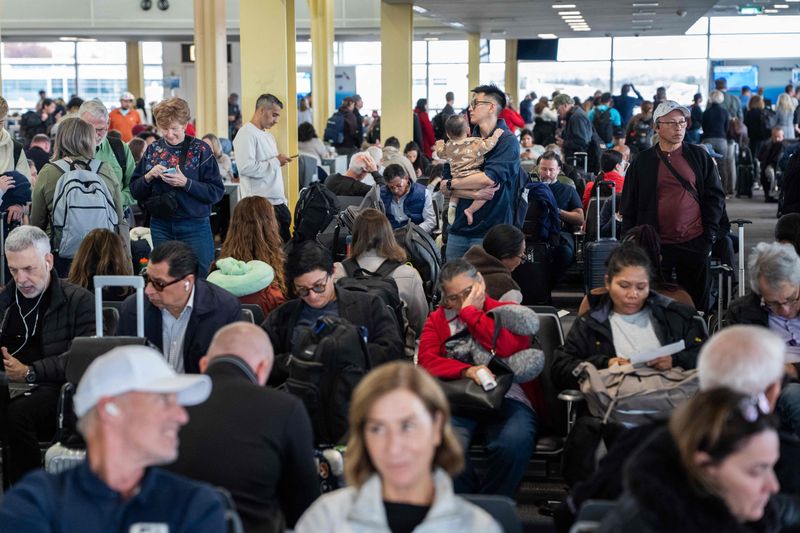
[Financial News] The U.S. aviation crisis was caused by aging equipment and is highly likely to happen again at any time. The communications failure in the air traffic control network, which halted all aircraft takeoffs across the United States for more than four hours, once again exposed the vulnerability of a U.S. air traffic control system that has long relied on decades-old copper wires and aging equipment.
According to reports by The Washington Post (WP) and the U.S. Government Accountability Office (GAO), a congressional watchdog, on the 15th (local time),
Warnings had been raised for years that aging communications networks could suffer nationwide outages during replacement because of problems with outdated equipment. Critics say this aviation crisis was an incident that could have been foreseen.
Facilities based on copper wiring installed in the 1960s have long been used in the U.S. air traffic control communications network.
The U.S. air traffic control system relies on 1960s copper wiring and facilities repaired with insulating tape
Some equipment has remained in use after being repaired with insulating tape, and some routers, key components of the communications network, are about 25 years old and should originally have been replaced in 2006.
The report said the U.S. air traffic control system had relied on copper wiring installed in the 1960s and equipment repaired with insulating tape. WP reported that the copper-wire-based network is so technologically outdated that even telephone companies no longer support the related technology.
At some air traffic control facilities, staff have even turned to the online resale site eBay to find parts that manufacturers have discontinued.
An air traffic controller who requested anonymity told WP about recently finding on eBay a part needed for ground radar equipment at an air traffic control tower. “After ordering the part on eBay, I had to wait two weeks for it to be delivered,” the controller said.
This aviation crisis, too, occurred during the replacement of an aging communications network.
According to the Federal Aviation Administration (FAA), on the 13th, excessive data was generated at two facilities in Arkansas and Texas as new equipment was being installed to modernize the aging network, overloading the nationwide air traffic control communications network.
More than 1,000 connection signals flooded the network every 4–5 seconds, destabilizing communications at 17 of the country’s 22 air route traffic control centers. The FAA ultimately issued a nationwide ground stop order.
However, the risk of major disruptions during the replacement of outdated systems had already been flagged repeatedly.
A 2023 report warned of the risk of communications outages across the air traffic control network during the transition to a new communications system
A report commissioned by the FAA and published by aviation safety experts in November 2023 warned that communications across the U.S. air traffic control network could be cut off if unforeseen problems arose during the transition to a new communications system, a process expected to take at least 10 years.
The FAA had also identified the air traffic control communications network in July that same year as one of the highest-level risk factors for the safety of the national airspace.
In a report last September, the GAO also criticized the FAA for prioritizing the pace of its modernization program despite uncertainty over costs and the risk of disruptions to air traffic.
The FAA’s modernization program includes more than 11,000 individual tasks, but no integrated schedule has even been drawn up to manage them as a whole.
The GAO warned that without an integrated schedule, it could be difficult to resolve conflicts between tasks, optimize timelines and reduce disruptions to air traffic control operations.
An FAA technical official also pointed to the risks of replacing an aging system while it is operating, saying, “You wouldn’t just put a new engine in a moving car.”
Questions have also been raised about the fact that the equipment replacement work related to this incident took place on a Friday afternoon, when air traffic was heavy.
The FAA’s modernization program has no integrated schedule for comprehensive management
Transportation Secretary Sean Duffy said the work was carried out at a facility far from major air routes and that replacing the aging equipment was urgent, but added that he would review the timing of future work.
There have also been criticisms that safety reviews were inadequate during the equipment replacement process.
The FAA safety professionals’ union (PASS) said, “In the past, when outside contractors replaced equipment, FAA employees assessed the risks and coordinated the maintenance work. But union technicians did not take part in the equipment replacement work that led to this aviation crisis.”
Authorities maintain that work to replace the aging system must continue despite this incident.
Secretary Duffy said he viewed the incident as an isolated problem caused by a mistake by an outside contractor or an equipment defect.
FAA Administrator Bryan Bedford also stressed that modernization work must continue, saying, “If we don’t replace it, it will keep breaking down.”
[email protected] Lee Seok-woo, International Affairs Correspondent Reporter