Without Negotiations or Attacks... Trump Waits for Iran to Collapse Under Economic Sanctions
- Input
- 2026-11-16 05:59:51
- Updated
- 2026-11-16 05:59:51
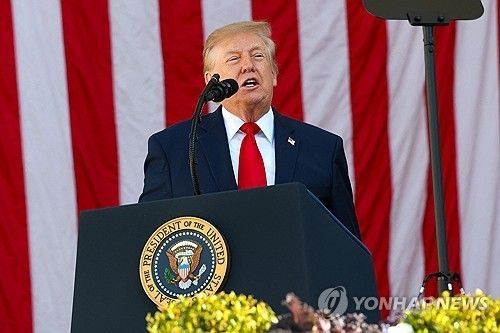
[Financial News] U.S. President Donald Trump appears to be leaning toward waiting for Iran to collapse without negotiations or attacks.
The picture is of waiting for the Iranian regime to eventually throw in the towel as U.S.-led economic sanctions are intensified. Whether things will turn out as President Trump hopes remains uncertain.
On the 12th (local time), President Trump said there was no need for an agreement with Iran and effectively instructed Vice President JD Vance, who had been seeking negotiations to end the war, to focus on attacking the Democrats.
By identifying the Iran war as a key reason for the midterm election rout, Trump sidelined Vance from negotiations with Iran, even though the vice president had been seeking a swift end to the war as a path to the presidency.
The New York Times (NYT) reported that President Trump appears to have rejected the military option, at least for now.
In other words, he opted to wait it out, hoping the war would recede from the top of the agenda, while waiting for economic sanctions to bring down the Iranian regime, without negotiations or attacks.
CNN also noted that President Trump appears content to sit back and watch as economic sanctions against Iran take effect. The expectation, in the end, is that Iran will grow weary of the economic pressure and ease its demands.
Karim Sadjadpour, an Iran expert at the U.S. think tank Carnegie Endowment for International Peace, told NYT that Trump “started the Iran war thinking he would become a hero, but now he is looking for a way to end the war without appearing to be a loser.”
He added: “He began the war with maximalist goals: ending Iran’s nuclear program and missile production, its regional proxy forces, and possibly even the Iranian regime. But for now, he appears to be preparing for a minimal outcome: accepting it as long as the nuclear material remains buried beneath the rocks.”
President Trump is likely to seek cooperation on economic sanctions against Iran at the U.S.-China-Russia summit being held in conjunction with the Asia-Pacific Economic Cooperation (APEC) summit on the 19th. The apparent calculation is that even cutting off China’s and Russia’s support for Iran would deal the country a significant blow.
However, NYT noted that “if Iran’s nuclear material remains where it was when the war began and poses no threat, a serious question arises: Why did the United States go to war?”
It went on to warn that President Trump could walk away from the Iran war and leave the subsequent response to Middle Eastern allies or European countries. It also pointed out that Iran could eventually pursue nuclear development, which Trump had cited as a justification for launching the war.
As President Trump takes a wait-and-see approach, Iran is provoking the United States by resuming attacks on U.S. military facilities in the Middle East.
While it is true that economic sanctions have dealt Iran a significant blow, many also believe they will not lead the regime to surrender.
Senior researcher Dani Citrinowicz of Israel’s Institute for National Security Studies, a think tank, told CNN: “The United States should not assume that Iran will capitulate over time. Iran’s leadership has repeatedly shown that it is willing to bear enormous economic costs rather than give up its fundamental interests.”
[email protected] Lee Seok-woo, international affairs correspondent Reporter