[Editorial] Measures Needed to Ensure the Reliability of National Exams Amid AI-Assisted Cheating
- Input
- 2026-11-15 19:28:47
- Updated
- 2026-11-15 19:28:47
Han scored full marks in three subjects, including Introduction to Tax Law, in which candidates averaged just 30.18 points. It was an exceptional result: Han got only one of the 160 questions wrong. At first, Han argued that it was unfair to be suspected solely for a high score, saying, “Guessing is a skill, too.” But later, appearing on the YouTube channel of Han’s legal representative, Han admitted to cheating in both the first and second stages of the tax accountant exam, as well as in the first stage of the certified public accountant exam.
What is shocking is where the cheating took place. Han sat in the center of the second row in front of the lectern during the first-stage tax accountant exam, and in the center of the front row during the second-stage exam. Han photographed the questions with a miniature camera and sent them to AI, then checked the answers on a smartphone, but the proctors noticed nothing unusual. The weaknesses of the existing analog exam management system were laid bare.
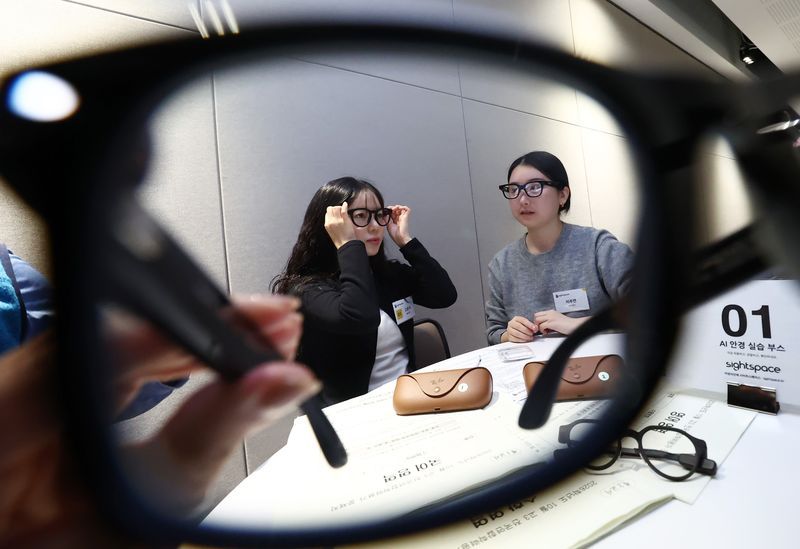
This is not the first time AI has been used to cheat on exams. This year, six cases of cheating with AI smart glasses were uncovered in national qualification exams administered by the Human Resources Development Service of Korea. Four cases were also confirmed in middle and high school internal exams, and last month cheating with smart glasses was uncovered at essay exams at Yonsei University and the University of Seoul.
When cheating continues like this, trust in exams—where fairness is essential—collapses. Even the first-ever perfect scorer on the Law School Admission Test (LEET) and exceptional high scores on various professional qualification exams are now viewed with suspicion. Online communities for test takers are filling with posts expressing dismay, alongside reactions saying it is hard to trust even the scores of other successful candidates. The fact that even high scorers with no connection to actual cheating are coming under suspicion shows the extent of distrust in the fairness of exams.
The exam authorities’ complacent response deserves criticism. Cheating methods have rapidly evolved into wearable devices combining miniature cameras and AI, yet for decades the authorities have relied only on “invigilators’ eyes” and “test takers’ conscience.” The problem could have been anticipated, but the response did not come in time. For the CSAT on the 19th, the authorities say they will assign personnel specifically to identify smart glasses, but the exam still appears unlikely to move far beyond an analog proctoring system. The Ministry of Education has announced plans to introduce radio-wave detectors, but they reportedly will not be available until next year.
National exams and the CSAT have long been regarded as the fairest and most transparent assessment systems in our society. If even these lose public trust, the value of honest effort and the social selection system could be shaken. But there must not be a witch hunt in which exceptional high scorers are automatically branded as cheaters. Exam security and proctoring must be overhauled so that test takers are confident that cheating is difficult to attempt and impossible to get away with. This means introducing advanced equipment, strengthening the expertise of proctors, and establishing an ongoing inspection system to counter new cheating methods. Emergency measures must be put in place starting with the CSAT, which is just around the corner, and the management and proctoring systems for national exams overall must be fundamentally redesigned.