[Field Report] "Another Fab Inside a Semiconductor Factory"... Why SK hynix Is Building a "Win-Win Outpost" in Yongin?
- Input
- 2026-11-16 09:00:00
- Updated
- 2026-11-16 09:00:04
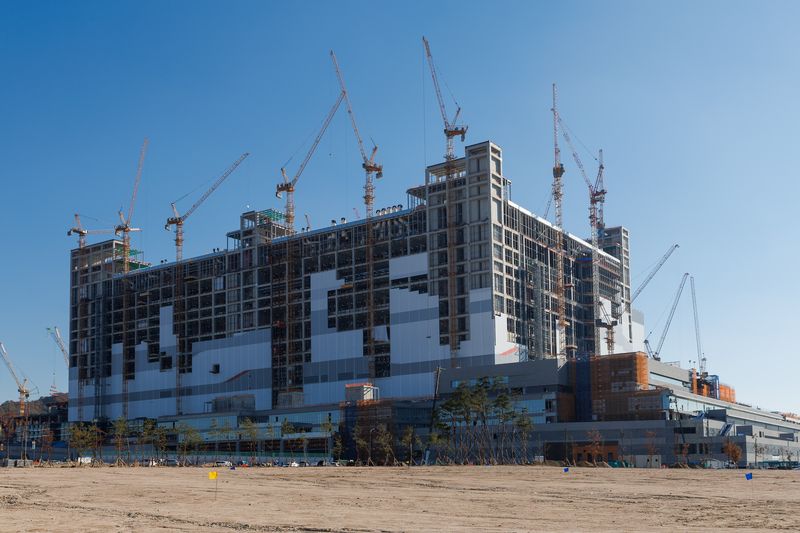
This is Trinity Fab, which SK hynix is building with the central and local governments. Rather than producing semiconductors itself, the facility will test technologies developed by domestic materials, parts and equipment companies under actual mass-production conditions. Its goal is to lower barriers to entry for small and medium-sized businesses that have struggled to commercialize their technologies because they could not secure testing facilities, even after successfully developing them.■Building the World's Only Open Testbed
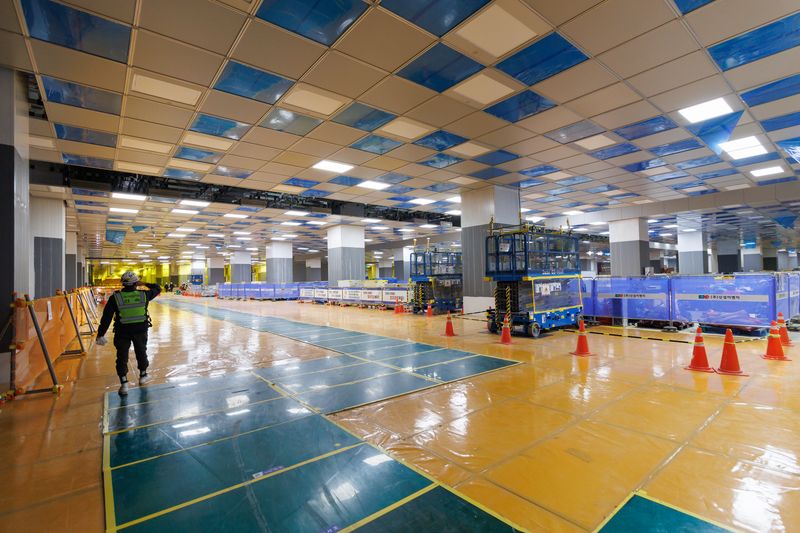
Trinity Fab is being built on the third floor of the first fab at the Yongin Semiconductor Cluster, covering about 1,000 pyeong (3,305 square meters). It is slated to house around 50 pieces of semiconductor process and metrology equipment for 12-inch wafers, including equipment for lithography, etching, deposition, cleaning, analysis and measurement. It is the world’s only open testbed for validating materials, parts and equipment companies’ technologies under actual semiconductor mass-production conditions. The total project cost is 874.6 billion won, to be jointly funded by SK hynix and the central and local governments. It is scheduled to open in May next year.
Unlike existing research and development (R&D) facilities, Trinity Fab will allow companies to verify a technology’s performance and yield (the proportion of good products) before actual mass production. Until now, even when small and medium-sized materials, parts and equipment companies successfully developed prototypes, they struggled to secure production facilities to test them. This is because semiconductor manufacturers’ production lines run on tight schedules, leaving limited opportunities to test new materials or equipment.
In addition, an independent nonprofit entity, the Trinity Fab Foundation, will operate the facility so that materials, parts and equipment companies can focus solely on R&D without worrying about technology leaks or intellectual property (IP) infringement. “It typically takes equipment manufacturers three to four years to conduct R&D and then get their products onto the mass-production lines of customer companies,” said Lee Gi-jeong, head of the Trinity Fab Foundation. “Our goal is to cut that period by at least 30% through Trinity Fab.”
At the site, we also heard from partners who were looking forward to the project. Lee Jae-ho, vice chairman of semiconductor equipment maker TES, cited the difficulty of testing equipment they had developed in conditions identical to actual mass-production lines as a major challenge. Metrology equipment, in particular, costs 1 billion to 5 billion won per unit, making it difficult for individual companies to acquire, he explained, adding that shared infrastructure was needed. He expected Trinity Fab to cut equipment development time by nearly a year once it begins operating.
A 451,000-square-meter cooperation complex for materials, parts and equipment companies is also being built about a two-minute walk from Trinity Fab. Around 50 partner companies are expected to move into the 55 lots, creating a semiconductor ecosystem where technology development and testing can all take place in one location.■Compensating for Failed Technology Development
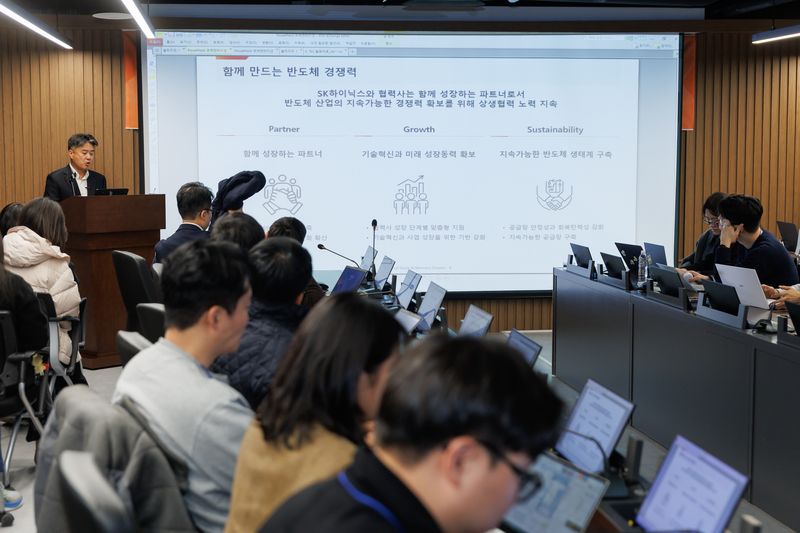
Financial support is also being expanded. SK hynix will operate a 2-trillion-won export supply chain strengthening guarantee program over the next five years with four commercial banks and the Korea Trade Insurance Corporation (K-SURE). It has also doubled its fund supporting payment for deliveries, from 50 billion won to 100 billion won.
Lee Hyun-cheol, SK hynix vice president in charge of procurement strategy, expected partners’ technological competitiveness to translate into stronger competitiveness for SK hynix and the semiconductor ecosystem as a whole. Regarding the R&D Challenge Rewards Program, he explained, “The program operates on the premise that SK hynix will bear the costs incurred if development fails.” SK Group Chairman Chey Tae-won also reportedly stressed the need to create an environment where partners can boldly take on technology development.
There are also examples of growth through mutually beneficial cooperation. Semiconductor specialty gas company TEMC successfully localized the production of rare gases in 2022 through joint technology development with SK hynix. Its revenue rose from 3.2 billion won in 2015 to about 300 billion won last year. Yu Won-yang, TEMC’s chief executive, said that testing materials takes anywhere from six months to two years and predicted that Trinity Fab would greatly accelerate evaluation schedules once it begins operating. “Materials companies also need a leading company to emerge, and I believe Trinity Fab will play that role in creating one,” he said.
[email protected] Lim Su-bin Reporter