Fed Warns of AI-Driven Financial Risks; NVIDIA Faces Its First Test on the 17th
- Input
- 2026-11-15 16:14:01
- Updated
- 2026-11-15 16:14:01
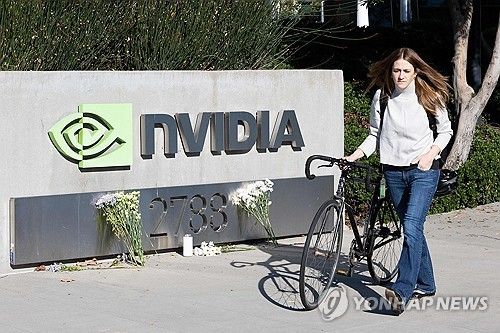
[Financial News] Shares of big tech companies, including AI firms, have plunged following the departure of Jensen Huang, former CEO of NVIDIA, as the Federal Reserve System (Fed), the U.S. central bank, warned of AI-driven financial risks.
On the 14th (local time), the Fed identified overvalued asset prices amid the AI boom and the rapid rise in debt tied to investment in AI infrastructure, including data centers, as potential vulnerabilities in the financial system. It singled out “circular financing” as a particular risk.
In its semiannual financial stability report published the previous day, the Fed said, “Financing to support investment in AI data centers and advanced computing infrastructure is growing rapidly,” warning that “interconnections among companies, including circular financing, could leave large firms with actual risk exposures far greater than their balance-sheet debt.”
Fed: “Actual risk exposures from circular financing may be far greater than balance-sheet debt”
The Fed said debt issuance related to advanced computing had exceeded $680 billion (911 trillion won) as of October this year, five times the total issued in 2023. Related debt, payment guarantees and lease commitments that have not yet commenced are estimated to exceed $3 trillion. The Fed compared this with the late-1990s boom in investment in broadband networks, noting that the current pace of investment is likely to surpass that period’s pace soon.
The assessment is that if returns on AI investment fall short of expectations, falling asset prices, tighter credit and reduced investment could combine to weigh on the U.S. economy. The Fed noted that such an economic downturn could worsen because of relatively high leverage (investment financed by borrowing), and that leverage among large hedge funds is at its highest level since data collection began in 2013.
The Fed’s warning came amid concern and close attention over whether the circular-financing system Jensen Huang designed and built across the AI industry would remain intact in his absence—or whether it could become a powder keg that passes a crisis on to markets.
Jensen Huang has supplied liquidity across the AI industry through investments in and financial guarantees for AI developers such as OpenAI and Anthropic, and neocloud companies such as CoreWeave, using the astronomical sums generated by GPU (graphics processing unit) sales. He has built a web-like “circular financing” structure that supports data center operators’ funding through long-term contracts, leases and payment guarantees. NVIDIA’s role as the “AI central bank” is now at risk of disruption with the departure of Jensen Huang, its “chief architect and operator.”
NVIDIA’s third-quarter results on the 17th are likely to be its first test
Amid the Fed’s warning, the market is now focused on NVIDIA’s third-quarter results announcement on the 17th. It will be the first test for NVIDIA and the broader AI industry in Jensen Huang’s absence. Rather than the results themselves, the market is watching the forward guidance and leadership message from Colette Kress, CFO and interim CEO. It wants to see whether future funding policies and the circular-financing system will continue to function, rather than focus on past performance. Kress has shown her determination to turn things around, including by holding an all-hands meeting on the 18th. Financial information provider LSEG forecasts that NVIDIA’s revenue will surge 91% from a year earlier to $108.9 billion. That is 18 times the figure for the same quarter in 2022, just before ChatGPT launched.
The Fed said that day that “pressure on asset valuations remains high,” adding that “equity valuation measures are elevated, partly due to market enthusiasm for ‘superintelligence’ (SI).” SI is a term used by the Trump administration in place of AI.
Concerns about circular financing continue to mount...87% of respondents cite AI as a major risk factor
Market concerns about circular financing continue to grow. In a survey the Fed conducted in September and October among financial market participants, 87% of respondents cited AI as a major risk factor for the financial system. That was a sharp increase from 50% in the May survey.
Respondents were concerned about the possibility of a broad market correction if AI-related returns fall short of expectations, as well as cyberattacks enabled by advances in AI technology and complex financial transaction structures. They also viewed a correction in risky-asset prices (52%) and rising long-term interest rates (48%) as major risk factors.
Meanwhile, if disruptions to circular financing lead to reduced financial support, the companies likely to be affected first include CoreWeave, Nscale and Pamus. NVIDIA simultaneously serves as investor, supplier and customer to CoreWeave; Nscale relies on NVIDIA for 60% of its investment; and Pamus depends entirely on NVIDIA for its GPU supply. OpenAI receives the largest amount of support, but has diverse funding sources.
The disclosed sums involved in NVIDIA’s circular financing are astronomical. Its investment assets alone totaled $99 billion (about 133 trillion won) as of the end of the second quarter this year, alongside $25 billion in additional investment commitments and $36 billion in cloud service commitments. Bloomberg estimated that major AI deals announced or under discussion by NVIDIA exceed a minimum of $750 billion (about 1,004 trillion won).
[email protected] Lee Seok-woo, international affairs correspondent Reporter