821 Trillion-Won Budget Review Begins...Can Parties Find Common Ground on Future Response Fund?
- Input
- 2026-11-15 16:15:33
- Updated
- 2026-11-15 16:15:33
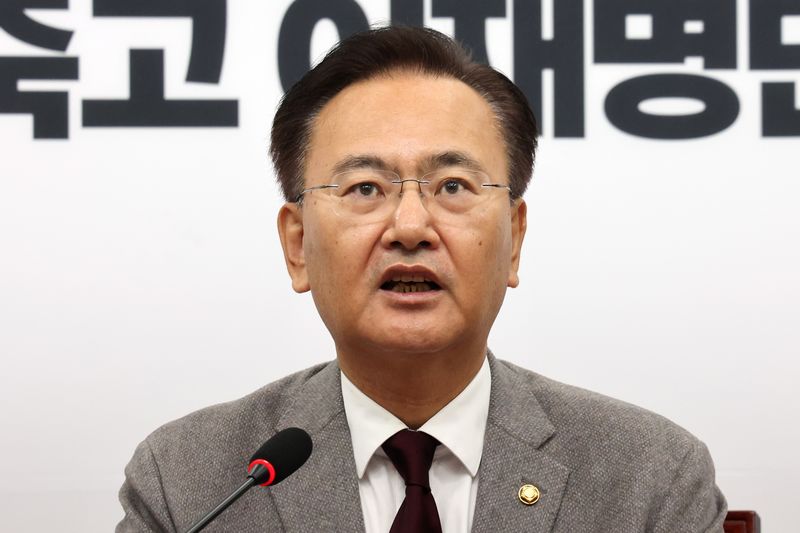
[Financial News] As deliberations on next year’s government budget proposal, worth 820.9 trillion won, gather pace, the People Power Party held an emergency press conference on Sunday, the 15th, and vowed to fully cut six “spending-spree” budget items. It called the 162 trillion won Future Response Fund “an evil spawn” and urged its complete abolition. Although 17 days remain before the statutory deadline for handling the budget proposal, the ruling and opposition parties are locked in a standoff over the fund, making it increasingly likely that the National Assembly will not pass the proposal by the statutory deadline of the 2nd of next month.
According to the National Assembly, the Special Committee on Budget and Accounts will get its Budget Bill Adjustment Subcommittee fully underway on the 16th. The subcommittee is set to closely scrutinize the government’s budget proposal, including increases and cuts to individual programs. On the same day, the Finance, Economy and Planning Committee will also hold a meeting of its Economy and Finance Subcommittee to continue reviewing the Future Response Fund Act.
The Democratic Party of Korea (DPK) plans to defend the government’s budget proposal as submitted while increasing spending on “livelihood” programs. The aim is to ensure that the benefits of the semiconductor boom reach everyone. The DPK designated infrastructure, support for local government finances, three major livelihood projects and investment in a safe society as its “four areas for increased spending.” Lee Joo-hee, the party’s floor spokesperson, said, “We will carefully weed out programs that continue out of habit and ensure that funds are properly spent where they are essential to people’s lives.”
The People Power Party, meanwhile, is vowing to fully cut six “spending-spree” budget items. Its budget committee has labeled programs including the Rural Basic Income (about 1.17 trillion won), the National Growth Fund (about 1 trillion won) and the Youth Culture and Arts Pass (about 800 billion won) as problematic, and has announced plans to cut programs worth about 27 trillion won.
The biggest point of contention is the Future Response Fund. The government plans to establish the 162 trillion won fund to expand investment in securing future growth engines. It will allocate 45.4 trillion won to four areas—youth, growth engines, local areas and education talent—and use 12.5 trillion won to reduce new government bond issuance. The remaining 104.4 trillion won will be set aside as reserve funds.
The People Power Party, however, is strongly opposing the fund, calling it a “fund to plunder the people.” The party’s lawmakers on the Special Committee on Budget and Accounts and the Finance, Economy and Planning Committee, the standing committees overseeing the fund, held an emergency press conference that day and called for its complete abolition. Yoo Sang-bum, the opposition secretary on the budget committee, said, “If tax revenues increase, the government should first repay its debt by paying off government bonds,” and criticized the plan, saying, “They are inventing an unprecedented concept called ‘additional tax revenue’ to build up an election slush fund and try to increase national debt permanently.”
They focused in particular on concerns about the government’s discretion in managing the fund. Under the government’s proposed Future Response Fund Act, the government can change program spending on its own within a 30% range; the party says this amounts to a “permanent supplementary budget.” Bae Jun-young, the opposition secretary on the Finance, Economy and Planning Committee, said, “This disregards the National Assembly’s budgetary control and the principle of gross budgeting,” adding, “The reserve funds could be entrusted to an asset manager and invested in stocks, raising concerns that they could be misused to prop up share prices.”
The fund’s creation has also sparked controversy because it could reduce the Local Grant Tax and Local Education Subsidy Grants, leading to lower spending on local areas and education. The People Power Party claims that, if the fund is established as proposed by the government, 30.5 trillion won and 32.5 trillion won that would otherwise go to local governments and education offices, respectively, would be incorporated into the fund. The party says it intends to uphold the policy set out under current law.
Concerns about the Future Response Fund raised within the DPK itself are also likely to be a factor. Local government heads affiliated with the party and some education superintendents have voiced concerns about reductions in grant funding. DPK members of the Finance, Economy and Planning Committee are also understood to favor curbing the government’s discretion and strengthening National Assembly oversight. Against this backdrop, attention is focused on whether the ruling and opposition parties can find common ground during deliberations on the Future Response Fund Act and the budget proposal.
[email protected] Lee Hae-ram, Reporter
[email protected] Lee Hae-ram Reporter