Korea Zinc Wins Approval for Power Use at U.S. Integrated Smelter...230 MW Supply to Begin in 2029
- Input
- 2026-11-15 14:59:00
- Updated
- 2026-11-15 14:59:00
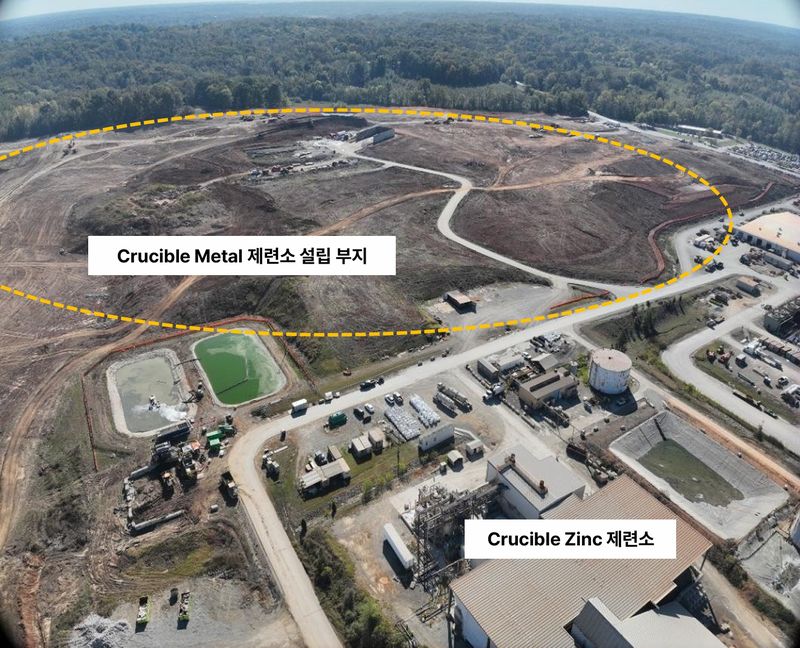
[Financial News] Korea Zinc has received approval from a local power supplier for large-scale power use in connection with its $7.4 billion (about 10 trillion won) project to build an integrated critical minerals smelter in Tennessee, United States. The approved contracted capacity is 230 megawatts (MW), with power supply expected to begin in 2029.
According to Korea Zinc on the 15th, the Tennessee Valley Authority (TVA) held a board meeting on the 10th (local time) and approved a request by Crucible Zinc, Korea Zinc’s U.S. subsidiary, to use power. TVA is a federally owned public corporation that supplies electricity to seven southeastern U.S. states.
The approval covers large-scale power use exceeding 100 MW. The integrated smelter Korea Zinc is developing has a contracted capacity of 230 MW, and TVA plans to begin supplying power in 2029.
Project Crucible is a project in which Korea Zinc, together with the U.S. government and others, plans to invest a total of $7.4 billion to build an integrated critical minerals smelter in Tennessee. It plans to produce 12 nonferrous metals, including 11 critical minerals designated by the U.S. government, as well as sulfuric acid for semiconductors and other products.
In April, Korea Zinc was designated by the Federal Permitting Improvement Steering Council for coverage under FAST-41, an expedited permitting program. In September, it received a “Finding of No Significant Impact (FONSI)” in the U.S. Department of War’s Final Environmental Assessment (Final EA). The power-use approval has also advanced the process for securing the electricity needed to operate the smelter.
Korea Zinc plans to break ground in 2027 and begin commercial production of some products in 2029.
[email protected] Kim Mi-hee Reporter