Seoul Metropolitan Area–Sejong Commuter Buses for Civil Servants to Return After Five Years Ahead of Central Government Relocations
- Input
- 2026-11-15 14:41:15
- Updated
- 2026-11-15 14:41:15
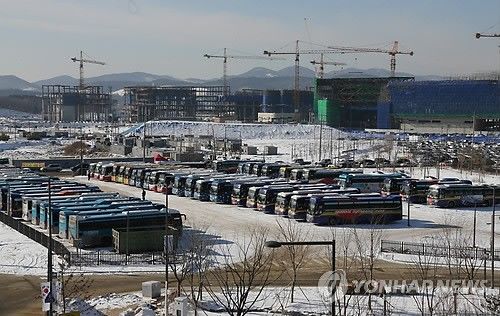
[Financial News] Ahead of the start of major relocations of central government agencies from the Seoul metropolitan area to Sejong City next year, the government is seeking to resume commuter bus services for civil servants traveling between the two. The move is intended to help officials commute while they are unable to relocate their homes immediately, as some 1,800 civil servants from 23 agencies, including the Broadcasting and Media Communications Commission and the Personal Information Protection Commission, are scheduled to move to Sejong City by next year. If the budget is approved by the National Assembly of the Republic of Korea and services begin next year, it will be the first time the buses have run in five years, following their suspension in 2022.
According to the Ministry of the Interior and Safety on the 15th, the government has separately requested funds from the National Assembly to operate commuter buses between the Seoul metropolitan area and Government Complex Sejong. The ministry is discussing a plan to operate around 30 buses for about two years, until housing for civil servants relocating to Sejong City is stabilized. The estimated operating cost for next year is about 3.7 billion won.
From 2012 to 2021, the government operated commuter buses linking the Seoul metropolitan area and Sejong City as it relocated 43 central government agencies there. At the time, buses departed from Seoul Station, Sadang and Yangjae-dong, among other locations. The Ministry of the Interior and Safety suspended the service in 2022, citing improved living conditions in Sejong City, among other reasons.
Under the revised relocation plan unveiled at a public hearing on the 3rd, the 23 agencies moving by next year will lease private buildings and other premises in Sejong City. Their authorized civil-service headcount is 1,831. Eight agencies, including the Board of Audit and Inspection, the Corruption Investigation Office for High-ranking Officials (CIO) and the National Police Agency, with a combined authorized headcount of 3,629, plan to build new offices and relocate by 2031. The remaining 13 agencies, including the Ministry of Foreign Affairs, the Ministry of Unification and the Ministry of National Defense, with a combined authorized headcount of 4,469, will pursue relocation after amending the relevant laws and regulations.
Since the government announced its plan to relocate agencies to Sejong City, calls have been made for commuting measures to help civil servants who cannot move their homes right away.
Concerns have also been raised that travel difficulties could worsen as more agencies relocate, given that tickets on high-speed trains between Seoul and Osong are already hard to get.
The Ministry of Personnel Management asked civil servants at agencies slated to relocate whether they would be willing to use commuter buses.
The service is expected to operate much like the commuter buses that previously linked the Seoul metropolitan area and Sejong City. At the time, buses ran from various hubs across the metropolitan area, including Seoul Station, Sadang and Yangjae-dong.
The government’s proposed budget for next year’s government-office commuter bus services is 3.588 billion won. That is 2.105 billion won (37.0%) less than this year’s 5.693 billion won. All of the cuts are at the Seoul and Gwacheon government complexes. The proposal would reduce the number of buses at the Seoul complex from 30 to 7, and at the Gwacheon complex from 20 to 6. The Gwacheon complex plans to eliminate 14 routes, including those serving Mok-dong, Wirye and Gwanggyo. Commuter buses connecting nearby areas such as Cheongju and Gongju with the Sejong and Daejeon government complexes will remain at 53, with 2.567 billion won budgeted, the same as this year.
If the existing government proposal remains in place and the projected operating costs for buses between the Seoul metropolitan area and Sejong City are included as estimated, next year’s budget for commuter buses will total about 7.288 billion won, an increase of about 1.6 billion won from this year.
A Ministry of the Interior and Safety official said, “If the budget is secured, we will survey demand again and draw up a detailed operating plan.” Departure points, routes and the number of buses will be determined in line with each agency’s relocation schedule.
[email protected] Lee Bomi Reporter