Tax Accountant Exam Top Scorer Turns Self In for 'AI Cheating'... Oversight Lapses in National Qualification Exams Under Scrutiny
- Input
- 2026-11-15 16:00:50
- Updated
- 2026-11-15 16:00:50
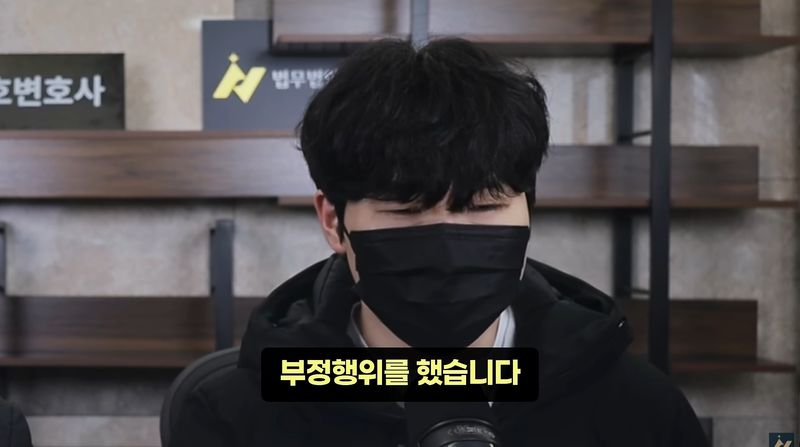
[Financial News] The exam management system came under scrutiny after this year’s top scorer in the tax accountant exam turned themself in to police for cheating using artificial intelligence (AI).
According to police on the 15th, the Seoul Metropolitan Police Agency assigned the case to the Public Crime Investigation Unit of the Metropolitan Investigation Unit immediately after receiving a written confession of AI cheating from Han, the top scorer in the 63rd Tax Accountant Examination. Police plan to continue the investigation swiftly, pursuing charges including obstruction of official duties, obstruction of business and fraud.
Han had come under suspicion of cheating using AI after posting exceptionally high scores: missing just one of the 160 questions on the first-stage exam and scoring 663 out of 800 on the essay-based second-stage exam.
Appearing that day on a YouTube broadcast hosted by legal representative Attorney Lee Don-ho, Han admitted to cheating using electronic devices and generative AI, among other things, on the first- and second-stage tax accountant exams and the first-stage exam for the 61st Certified Public Accountant Examination. However, Han was found to have failed the first-stage CPA exam.
Han said, “I cheated by using a tiny camera to photograph the exam questions, sending them to AI, and checking the answers on a smartphone.” Attorney Lee did not disclose the specific methods used to bring in and operate the equipment, citing concerns that others might imitate them.
Han said some of the devices used had been damaged, but added, “I will submit the remaining materials and devices to investigators as evidence, just as they are. I will give a full account of everything, including how I prepared for and practiced cheating.” Han cited poor performance in self-employment after leaving a job and anxiety over the prolonged exam preparation as motives, and also apologized to test takers several times.
The problem is that the Human Resources Development Service of Korea, which administers the exam, did not identify any signs of cheating before Han confessed. According to the agency, Han sat in the center of the second row for the first-stage exam and the center of the first row for the second-stage exam, counting from the teacher’s platform. Two proctors were assigned to each exam room.
The agency has said that ahead of the exam it strengthened proctor training materials covering procedures for checking smart glasses and major models, and that identity checks and checks for possession of electronic and communications devices were carried out as usual on the day of the exam.
After the suspicions emerged, the agency received responses from four proctors for the first- and second-stage exams saying there had been “no suspicious behavior or unusual circumstances.” It also found no relevant signs in the candidate roster or first-stage grading materials. Han admitted to cheating while the agency was conducting an expert review of the second-stage answer sheet.
In addition, there was no closed-circuit television (CCTV) in the classroom where Han took the exam, so the situation at the time could not be checked on video. Mobile phones were not collected from all candidates; they were simply told to turn them off and put them in their bags.
Beginning on the 25th of last month, after Han had taken the exam, the agency deployed dedicated personnel called “AI inspectors” to identify smart glasses and carry out other tasks. It plans to introduce radio-frequency detectors after on-site testing and expand CCTV coverage. The Financial Supervisory Service (FSS), which administers CPA exams under contract, has also been providing proctor training on AI glasses and physically inspecting every pair of glasses starting with this year’s second-stage exam.
For the 2027 College Scholastic Ability Test (CSAT), to be held on the upcoming 19th, candidates will be required to hand in their mobile phones before the first period begins, and at least one dedicated smart-glasses screening officer will be assigned to each test site. The Ministry of Education is reportedly considering rolling out radio-frequency detectors starting next year.
The agency issued a statement that day saying, “We deeply apologize for failing to prevent cheating in our role as the body responsible for exam administration,” and decided to file a complaint against Han for obstruction of business. The Ministry of Finance and Economy (MOEF) is reviewing whether to suspend the validity of Han’s tax accountant certificate. Taking the confession into account, it plans to move quickly through the necessary procedures, after which the Tax Accountant Qualification Deliberation Committee under the National Tax Service (NTS) will deliberate and decide.
Meanwhile, Lee Jong-bae, a former Seoul city council member, filed a complaint with the Seoul Metropolitan Police Agency through the e-People portal, accusing former MOEF Minister Koo Yun-cheol and incumbent MOEF Minister Lee Hyoung-il of dereliction of duty for failing to fulfill their responsibility for exam administration and supervision.
[email protected] Park Seong-hyeon Reporter