Financial Authorities Seek to Ban Moneylender Credit Loans by Year-End, Including 'Loyalty Loans' and 'Sergeant Loans'
- Input
- 2026-11-15 14:24:01
- Updated
- 2026-11-15 14:24:01
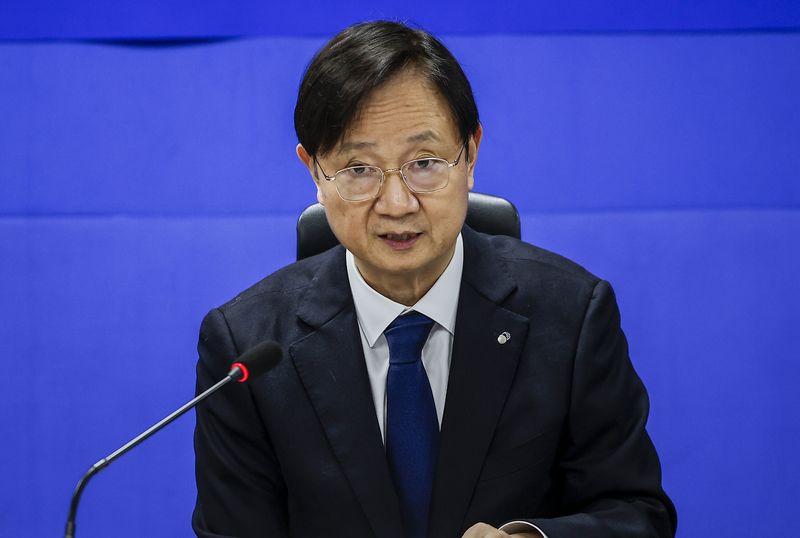
According to the FSS on the 15th, seven agenda items were discussed at the fifth meeting of the Financial Consumer Protection Advisory Committee, held on the 12th under the chairmanship of FSS Governor Lee Chan-jin. They included improving systems to prevent excessive debt among active-duty soldiers, revising insurance policy terms and product descriptions, expanding flexible-hours bank branches, and strengthening post-loan management of Sunshine Loans in the non-bank financial sector.
The financial authorities plan to complete a standard business procedures manual by year-end that will restrict moneylenders from extending general credit loans to active-duty soldiers, just as commercial banks and savings banks do. However, secured loans and emergency loans will remain available under current rules, as they do at other financial institutions, to meet urgent cash needs such as family living expenses and medical bills and to prevent borrowers from turning to illegal private lenders.
Use of high-interest moneylenders by active-duty soldiers is on the rise. The volume of loans to active-duty soldiers handled by the top 30 moneylenders registered with the Financial Services Commission surged from 350 million won at the end of 2022 to 24.2 billion won at the end of last year. Indiscriminate use of funds for high-risk investments, such as online gambling and virtual assets, has been identified as one of the main causes. Moneylenders have aggressively targeted service members, aided by the widespread use of mobile phones in military units and the availability of ways to verify income as soldiers’ monthly pay has risen. This year, monthly pay is 1.5 million won for sergeants and 1.2 million won for corporals. FSS Governor Lee Chan-jin stressed, “Financial institutions, too, must act responsibly by providing financial counseling and education so that active-duty soldiers do not take on excessive debt before taking their first steps into civilian life.”
Post-loan management of Sunshine Loans in the non-bank financial sector will also be strengthened. The authorities believe that if a financial company delays a claim for reimbursement without a valid reason, delinquent borrowers could suffer from delays in getting back on their feet financially and from the added burden of overdue interest. They will therefore regularly review delinquent Sunshine Loans and cases where claims for reimbursement have not been filed, and strengthen guidance for delinquent borrowers on debt adjustment programs.
Measures to improve the effectiveness of flexible-hours branches were also discussed in response to the decline in bank branches. These are branches that operate outside the regular hours of conventional bank branches, with their hours adjusted flexibly to account for their location and customer demand. Examples include airport currency exchange centers, branches located in government offices, and advanced unmanned automated machines. There are currently 991 such locations nationwide. Meanwhile, the number of bank branches has continued to fall, from 5,831 at the end of 2022 to 5,466 at the end of last September. Concerns have also been raised that consumers will face inconvenience when branch opening times are pushed back from 9 a.m. to 9:30 a.m. starting next April. The authorities plan to improve the operation of flexible-hours branches, including by expanding the services they provide and their operating days and hours, after consulting with the Financial Services Commission, the banking sector and others, in order to ensure consumers’ access to financial services. Lee said, “Flexible-hours branches must be operated effectively so that consumers, including vulnerable groups and those who have difficulty visiting banks during business hours because of work or other livelihood demands, can use counter services and have better access to financial services.”
[email protected] Jo Eun-hyo Reporter