One Dose of Vaccine Given a Day After Expiration... Supreme Court: 'Not Grounds for License Suspension'
- Input
- 2026-11-15 13:34:37
- Updated
- 2026-11-15 13:34:37
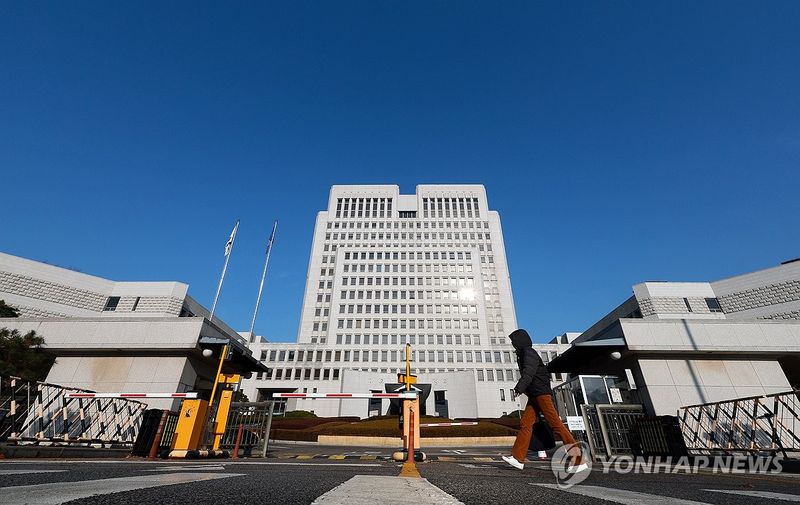
Legal sources said on the 15th that the Supreme Court’s First Division, with Justice Cheon Dae-yeob as the justice in charge, overturned on the 27th of last month a lower court ruling against a physician who runs a pediatric clinic in an appeal of a lawsuit seeking to overturn an order suspending the physician’s license, brought against the Minister of Health and Welfare, and remanded the case to Seoul High Court. The first and second courts found no issue either with the grounds for the order or with the exercise of discretion, but the Supreme Court held that the grounds for the order themselves had not been established.
On Jan. 10, 2023, the doctor administered a dose of Hepamune, a hepatitis B vaccine, to a six-month-old infant one day after its expiration date. The doctor noticed this two hours after the injection, immediately contacted the guardian to advise a repeat vaccination, and did not conceal what had happened during an investigation by the Mapo-gu Public Health Center. No side effects occurred.
On July 3, 2023, the Minister of Health and Welfare classified the conduct as “unethical medical practice,” an act that damages professional dignity under the Enforcement Decree of the Medical Service Act, and imposed a three-month license suspension as prescribed by the administrative disciplinary rules. However, the Seoul Administrative Court overturned the order on April 12, 2024, citing an abuse of discretion, and the ruling became final on Oct. 10 that year. On Dec. 10, 2024, the minister reimposed the suspension, reducing its duration by half to one month and 15 days.
The issue was whether administering a vaccine once after its expiration date had passed by a day constituted grounds for suspending a license as “conduct that seriously harms a medical professional’s dignity.”
The Seoul Administrative Court, ruling at first instance, dismissed the claim on Sept. 25 last year. It reasoned that prescribing an expired medication carries a risk of adverse effects on health in and of itself and damages a doctor’s professional standing, and that gross negligence was established because the medication had a 36-month validity period but was not properly managed. It also said there was no abuse of discretion, as the suspension had been reduced to half the original penalty. The Seoul High Court, ruling at second instance, also dismissed the appeal on April 9 this year.
The Supreme Court began from the broad scope of “unethical medical practice.” The court said that the concept was “broad and abstract,” whereas license suspension was limited to cases involving serious harm to professional dignity. Accordingly, it said, “not every act falling within the broad definition of unethical medical practice can automatically be deemed an act that seriously harms a medical professional’s dignity.” The court listed as relevant factors the nature of the medical practice; the actor’s awareness of and involvement in it; whether it was repeated; its effects on public health and patient safety; how the impropriety came to light; and the actor’s conduct and remedial steps afterward.
Applying those criteria led to a different result. The vaccine was administered less than 24 hours after its expiration date and caused no side effects; the violation occurred only once; and it appeared to have involved an error in the sorting process by a staff member responsible for managing the medications, rather than an intentional act. Considering these factors together, the court concluded that, although the conduct “could be viewed as an act that harms a medical professional’s dignity,” it was difficult to find that it had seriously harmed that dignity to the extent of constituting conduct “substantially at odds with” the purpose of the Medical Service Act and the expectations and trust of the general public.
[email protected] Kim Dong-gyu Reporter