Arterial Express Buses to Run from Seoul’s Outskirts to Downtown Starting Tomorrow
- Input
- 2026-11-15 13:33:07
- Updated
- 2026-11-15 13:33:07
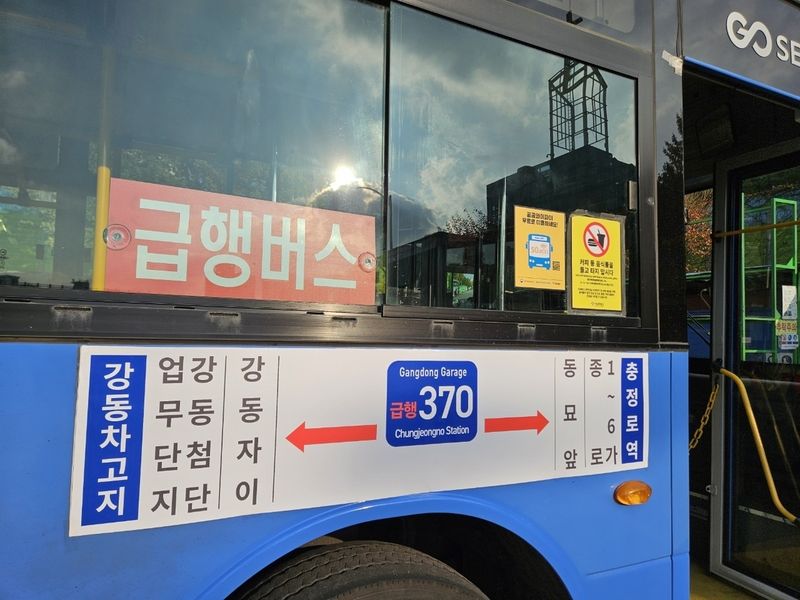
[Financial News] Four arterial express bus routes offering faster trips from Seoul’s outskirts to major business districts downtown will begin operating on the 16th. Seoul Subway Line 9 will also increase express train services, with peak congestion during commuting hours expected to fall by up to 20.4 percentage points. Rather than introducing new vehicles, the plan focuses on adjusting how existing public transit operates to reduce travel times and improve transport efficiency.
The Seoul Metropolitan Government said on the 15th that it would fully implement the “Public Transit Express Service Plan,” announced last month, starting with the first service on the 16th.
Arterial express buses will follow the same routes as existing arterial buses but stop only at major stops. They are expected to cut travel times by about 10% by reducing the number of stops by an average of 45.8% compared with regular buses. The aim is to serve long-distance commuters from outlying areas of Seoul, where express transit services such as the Great Train eXpress (GTX) and metropolitan express buses are relatively limited.
The four pilot routes are Express 150 (Dobong Bus Garage–City Hall Station), Express 370 (Gangdong Bus Garage–Chungjeongno Station), Express 470 (Sangam Bus Garage–City Hall Station), and Express 605 (Gangseo Bus Garage–Yeongdeungpo Station). Each route will run three times a day on weekdays: once in the early morning and at 7 a.m. and 7:30 a.m.
Existing regular buses will continue to operate as before. However, since the express buses will run only three times a day on weekdays and will skip some stops, they are intended more as an additional option during the morning commute than as a complete replacement for regular buses. After the pilot, the Seoul Metropolitan Government plans to analyze actual travel times and ridership demand before considering whether to expand the routes.
Seoul Subway Line 9 will also change its service pattern. From 5:40 a.m. to 7 a.m., the ratio of express to local trains traveling from Gaehwa Station to VHS Medical Center station will change from 1:1 to 2:1. The start of the intensified deployment of trains during the morning rush hour will move 50 minutes earlier, from 6:30 a.m. to 5:40 a.m.
As a result, the number of weekday train services will rise by eight, from 492 to 500. Express train services will increase by 10, from 232 to 242, while local train services will decrease by two, from 260 to 258. Express train capacity during the morning hours will expand by 12.5%, from 110,640 to 124,470 passengers.
A key feature of the changes is that capacity will be increased by adjusting operating schedules and the ratio of express to local trains, without adding new subway cars. However, as local train services will be reduced somewhat while express services increase, the effects on convenience for passengers at each station should also be examined.
The Seoul Metropolitan Government expects peak congestion on express trains toward Gaehwa and Gimpo Airport during the morning rush hour to fall by 20.4 percentage points, from 192.5% to 172.1%. During the evening rush hour, peak congestion in the same direction is also expected to ease by 20.2 percentage points, from 180.5% to 160.3%.
The projected improvement in congestion is based on the revised service plan, and the actual effect may vary depending on how passengers redistribute after implementation and on train operating conditions. The Seoul Metropolitan Government plans to keep two reserve trainsets on standby and strengthen real-time monitoring.
Yeo Jang-kwon, head of the Seoul Metropolitan Government’s Transportation Office, said, “Commuting is part of citizens’ everyday lives, repeated day after day, so creating a faster and more convenient travel environment is an important change that improves quality of life,” adding, “We will closely monitor operations in the early stages of implementation and do everything possible to manage services on the ground so the new service pattern can take hold smoothly.”
[email protected] Lee Seol-yeong Reporter