Beyond Procurement, Linking Donations and Tourism: Food Industry Evolves Into Loconomy 2.0
- Input
- 2026-11-20 08:25:08
- Updated
- 2026-11-20 08:25:08
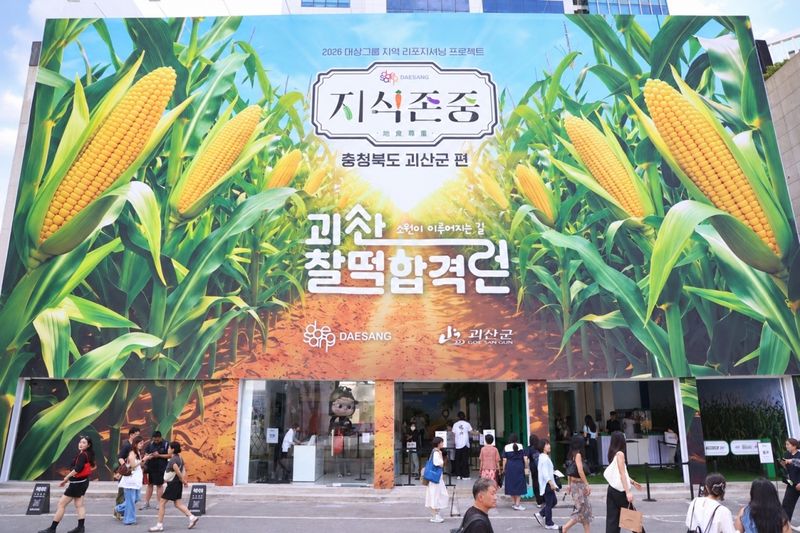
[Financial News] Models for cooperation between the food and restaurant industries and local communities are evolving. The industry is moving beyond “Loconomy 1.0,” which was limited to purchasing local specialties for one-off use in limited-edition products, and advancing toward “Loconomy 2.0,” which combines the Hometown Love Donation Program, job creation, and even local-government rebranding.
According to industry sources on the 20th, food companies are stepping up loconomy activities that respond to the need to revitalize local economies, moving beyond cooperation based simply on purchasing local specialties.
Since 2021, McDonald’s Korea has annually encouraged donations to local governments while purchasing local ingredients through its “Taste of Korea” project. By using ingredients produced in Korea, it brings vitality to local farms and offers customers new flavors. It has continued its community-focused efforts by reimagining excellent agricultural products from across the country—including Changnyeong garlic, Boseong green pork, Jindo green onions, and Jinju peppers—as McDonald’s menu items. Its efforts also go beyond simply developing products. Last year, it ran promotions tied to the Hometown Love Donation Program with Iksan City and Changnyeong County, and this year it did so with Chungju City. It also opened a pop-up store in partnership with Chungju’s old downtown youth mall and supported the merchants there.
Nongshim also signed a memorandum of understanding (MOU) with Anseong, Gyeonggi Province, where its production plant is located, and Didim Social Cooperative, becoming the first company to supply return gifts for the Hometown Love Donation Program. Building on its ties to the area, where it has operated the Anseong factory since 1982, the company offered a set of 32 ramen products, including Ansungtangmyun and Shin Ramyun, as a return gift. It also added a job-creation benefit by employing local people with developmental disabilities in product packaging and delivery.
Efforts to directly support the branding and tourism of local governments at risk of disappearing are also gaining momentum. Lotte Wellfood is continuing its “Delicious Korea Win-Win Road” project in partnership with the Ministry of the Interior and Safety and local governments in areas with declining populations. Following Buyeo chestnuts and Gochang County honey sweet potatoes, this year it launched a 15-item lineup, including Moncher Cream Cake and Kko-Kkal-Corn products made with Gunwi apples. The front of the packaging features the phrase “Gunwi apples are here!” in the local dialect, while the back tells the story of the local specialty.
Through its “Jisik Jonjung Project,” which spotlights areas at risk of disappearing as places people want to visit, Daesang Group recently ran a “Goesan Chaltteok Hapgyeok Run” pop-up store in Seongsu-dong, Seoul, to promote Goesan County in North Chungcheong Province. It recreated local attractions such as Yeonpung Saejae and Suokpokpo Waterfall and offered unusual foods made with Daehak glutinous corn, drawing about 12,000 visitors over nine days. Starbucks Korea developed a “Sangju Shine Muscat Ade” using Shine Muscat grapes grown in Sangju, North Gyeongsang Province, in partnership with the Korea Commission for Corporate Partnership. It provided the ingredients for 60,000 cups and the recipe completely free of charge to around 120 independent small-business cafes nationwide, helping expand sales channels for farms and boost sales at neighborhood cafes at the same time.
The industry attributes its increased focus on loconomy activities in part to the rise of value-based consumption, with consumers increasingly treating environmental, social, and governance (ESG) management as an important factor in their purchasing decisions. It also expects these structural models of cooperation with local communities to expand further.
A food industry official said, “Loconomy used to be a form of marketing that made one-off use of local specialties, but it is now evolving in a direction that strengthens the self-sufficiency of local economies. Beyond simply purchasing raw ingredients, we are continuing to build mutually beneficial partnerships through various approaches that combine tourism promotion, donations, and support for small businesses.”
[email protected] Park Kyung-ho Reporter