Diplomatic Maneuvering Intensifies Amid Sharply Divergent Outlooks on North Korea-U.S. Summit... Korean Peninsula Denuclearization Agenda Is Key
- Input
- 2026-11-15 11:55:13
- Updated
- 2026-11-15 11:55:13
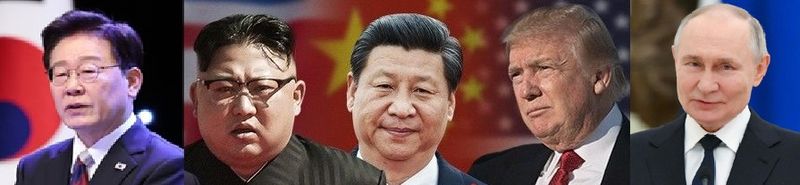
According to diplomatic sources on the 15th, strategic maneuvering among neighboring countries over the Korean Peninsula denuclearization agenda is unfolding at a breakneck pace ahead of the Asia-Pacific Economic Cooperation (APEC) summit and trilateral U.S.-China-Russia talks, to be held in Shenzhen, China, on the 18th and 19th.
Foreign Minister Cho Hyun attended the second G7 Foreign Ministers’ Meeting in Paris, France, on the 9th and 10th (local time), where he met with the foreign ministers of allied countries, including U.S. Secretary of State Marco Rubio, and secured support and consensus on denuclearization of the Korean Peninsula. Cho then held talks with Chinese Foreign Minister Wang Yi in Beijing on the 13th, focusing on the situation on the Korean Peninsula. Calling the Korean Peninsula issue “a vital interest for the Republic of Korea,” Cho urged China to play a role in bringing North Korea back to dialogue.
South Korea’s diplomatic team for relations with the United States is also working at a busy pace. Second Vice Minister of Foreign Affairs Kim Jin-ah will visit the United States from the 15th to the 18th and hold bilateral talks with Jacob Helberg, the U.S. State Department’s Under Secretary for Economic Growth, Energy, and the Environment. Kim plans to strengthen the foundations of support for bilateral relations amid the changed political environment following the U.S. midterm elections.
North Korea is also countering external pressure by strengthening ties with China and Russia, its blood allies. Jo Yong-won, a secretary of the Central Committee of the Workers’ Party of Korea and considered one of Kim Jong Un’s closest aides, visited Moscow, Russia, on the 14th, leading a party and government delegation. The move is seen as an effort to further consolidate high-level cooperation and strategic coordination between North Korea and Russia ahead of major diplomatic events, including a trilateral summit among the United States, China and Russia. Earlier, when Kim Jong Un visited China on the 24th of last month, crossing the New Yalu River Bridge, he also met Wang Huning, China’s fourth-highest-ranking official and chairman of the Chinese People’s Political Consultative Conference (CPPCC), and Chinese Foreign Minister Wang Yi.
North Korean Foreign Minister Choe Son-hui also immediately protested the reference to “the complete denuclearization of North Korea” in the G7 foreign ministers’ joint statement on the 12th, asserting the legitimacy of North Korea’s possession of nuclear weapons.
Diplomatic circles are offering sharply divergent views on whether a North Korea-U.S. summit will take place on the sidelines of this APEC meeting in Shenzhen. Officials at the South Korean presidential office and the White House generally see the chances of a summit as low, saying, “There are no plans to meet Chairman Kim during President Trump’s trip to Asia.”
On the other hand, some still see a chance of contact between the North Korean and U.S. leaders after APEC concludes, depending on whether the two leaders, President Trump and Chairman Kim Jong Un, make a “sudden decision.” The possibility remains that President Trump could make an unexpected visit to North Korea on his way home after APEC ends.
[email protected] Kim Kyung-soo Reporter