Regulatory Risks from Hungary Put Korean Battery Makers on Alert... Is 10 Trillion Won in Investment at Risk?
- Input
- 2026-11-15 11:13:50
- Updated
- 2026-11-15 11:13:50
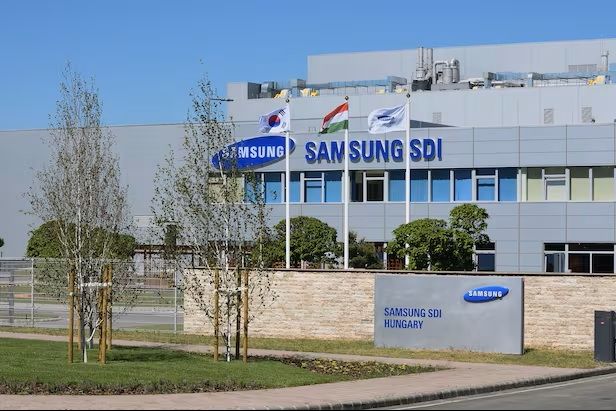
[Financial News] Hungary, Europe’s largest battery production hub, is significantly tightening environmental and safety regulations, putting South Korea’s battery industry on alert. As penalties mount against Korean companies operating there, including Samsung SDI and SK On, uncertainty is growing despite investments of more than 10 trillion won. If regulatory risks persist, they could stifle new production-line expansions and follow-on investments, prompting calls for a diplomatic response from the government.
According to industry sources on the 15th, Hungary has been tightening environmental and safety regulations, particularly for battery and electric-vehicle plants, since Péter Magyar took office as prime minister in May. Following the first change of government in 16 years, the focus of industrial policy has shifted from the previous pro-business approach toward regulation.
Since the 25th of last month, the Hungarian government has raised the cap on fines for violations of environmental permit conditions at large-scale facilities by 2.5 times, from 2 billion forints (about 8.1 billion won) to 5 billion forints (about 20.3 billion won). It is also moving to establish an agency dedicated to environmental permitting for industrial facilities.
Korean battery companies are already feeling the effects of tighter regulations. SK On was fined 100 million forints in each of August and September for violations of environmental regulations, among other offenses. Samsung SDI was also penalized 5 million forints last month for violating environmental permit conditions.
EcoPro BM, a battery materials company, was fined 2 million forints and ordered to suspend work at some facilities in September for violating safety management regulations. It resumed production after taking corrective measures.
Chinese companies are no exception. CATL was fined in August for violating waste management regulations, and some work was halted over the risk of workers’ exposure to nickel. Chinese separator maker Semcorp was also ordered to suspend production over concerns about soil and groundwater contamination.
What the industry is watching is not the fines themselves so much as the effect tighter regulations could have on medium- and long-term investment. Battery plants require substantial upfront investment, and it takes a long time to recoup the costs, making policy predictability essential. Analysts say that if regulatory compliance costs and production disruptions recur, decisions on new expansions or additional investment will inevitably be delayed.
The South Korean battery industry has invested more than $8 billion (about 10.6 trillion won) in Hungary. Battery manufacturers, as well as materials, components and recycling companies, have entered the market and built a local supply chain.
This could also weigh on Hungary’s economy. According to the European Commission, the battery and automotive industries account for at least 30% of Hungary’s manufacturing sector. If Korean companies scale back investment or move production facilities to other European countries, local employment and the industrial ecosystem could also be affected.
The government has also begun responding. Park Jeong-seong, chief trade negotiator at the Ministry of Trade and Industry, visited Hungary on the 9th and conveyed the difficulties facing Korean companies in meetings with the local deputy prime minister and ministers responsible for economy and energy and for regional development, among others.
Industry voices are calling for greater predictability around regulatory changes, provided environmental and safety standards are met. In particular, there are calls to go beyond one-off high-level meetings and establish an ongoing consultation channel between the two governments to support the stable operation of Korean companies’ businesses in Hungary.
A battery industry official stressed that companies may reconsider their new investment plans if policy uncertainty persists, and that continued communication and support from the government are needed.
[email protected] Kim Dong-ho Reporter