Basaltic Jeju Province Produces 21 Tonnes of Rice Again This Year... Paddy Area Plunges Over 44 Years
- Input
- 2026-11-15 11:10:45
- Updated
- 2026-11-15 11:10:45
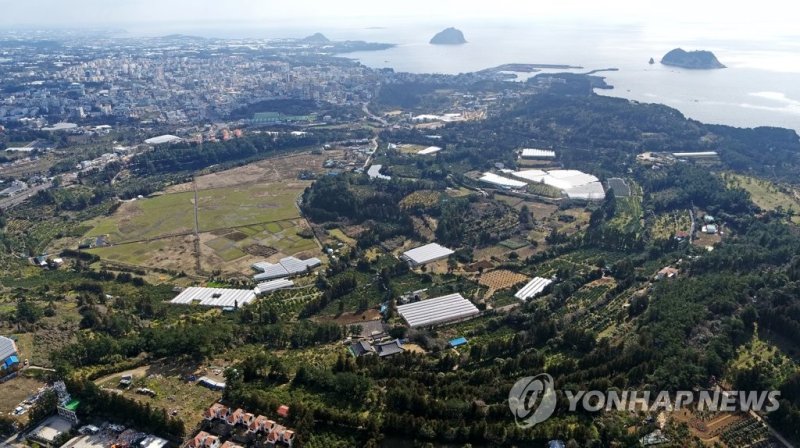
【Financial News, Jeju = Reporter Jeong Yong-bok】 The basaltic volcanic island of Jeju, where water drains away easily, produced 21 tonnes of rice again this year. The area under paddy rice cultivation, which once exceeded 1,000 hectares, has shrunk to about 5 hectares. But rice farming with a 500-year history continues at Hanon Crater in Seogwipo City.
On the 15th, the National Data Agency reported in its “2026 Rice Production Survey Results” that the area under paddy rice cultivation in Jeju Province was about 5 hectares and rice production totaled 21 tonnes. Compared with last year, the cultivated area increased by 16.3% and production by 10.8%.
The fact that paddy farming continues in Jeju is notable given the volcanic island’s geological characteristics. Cracks and cavities are widespread in Jeju’s basaltic strata, allowing rainwater to seep underground easily. This is why dry-field farming, growing crops such as barley, foxtail millet, buckwheat and beans, developed more than paddy farming, which requires water to be held in the fields.
But Hanon Crater, on the boundary between Seohong-dong and Hogeun-dong in Seogwipo City, was different. A lake formed inside the crater through volcanic activity, and thick sediment accumulated on its floor. Abundant spring water also emerged, creating conditions suitable for rice farming.
Hanon is a maar crater formed by an explosion when groundwater and magma met. About 500 years ago, people cut through a low-lying area of the crater to drain the water and then created paddies. Since then, they have brought spring water in through channels to grow rice.
The history of rice farming in Jeju dates back to the Joseon Dynasty. The “Geographical Treatise of the Annals of King Sejong,” compiled in 1454, contains a record of paddies in Jeju. The “Sinjeung Dongguk Yeoji Seungnam,” completed in 1530, also mentions Hanon’s paddies. The “Tamna Sunryeokdo,” which documents Jeju magistrate Yi Hyeong-sang’s inspection tour in 1702, marks Hanon as “daedap,” meaning “large paddy.”
Paddy farming in Jeju was not always as rare as it is today. According to research published in 2018 by researchers at the National Institute of Agricultural Sciences under the Rural Development Administration, the area under paddy rice cultivation across Jeju peaked at 1,112 hectares in 1982. It then fell sharply as improved transportation expanded the supply of mainland-grown rice and rice farming became less economically viable.
This year, the area under paddy rice cultivation in Jeju is less than 0.5% of its 1982 level. But as the cultivated area grew from last year, production also rose, from 19 tonnes to 21 tonnes.
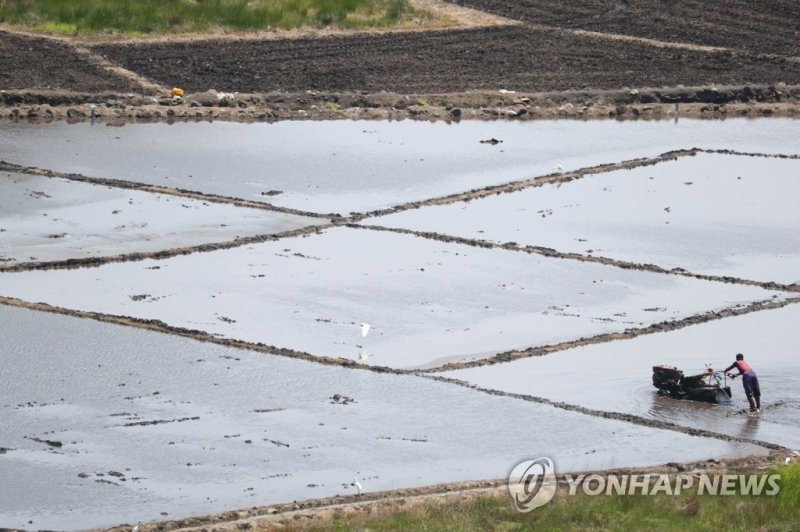
Yield per unit area fell. Rice production per 10 ares (1,000 square meters) in Jeju declined from 423 kilograms last year to 403 kilograms this year, down 4.7%. That was also below the national average of 524 kilograms.
National rice production totaled 3,508,000 tonnes this year, down 0.9% from the previous year. While the cultivated area declined nationwide, both the area under paddy rice cultivation and production increased in Jeju.
By contrast, upland rice, once a pillar of Jeju’s traditional agriculture, followed a different trend in the statistics. Known in Jeju as “sandeui” or “sandi,” upland rice is grown in dry fields rather than paddies where water is held. It has been part of Jeju’s agriculture and food culture, adapted to the volcanic island’s difficulty in securing water.
Last year's National Data Agency survey estimated that Jeju had 19 hectares of upland rice fields and produced 74 tonnes of rice last year. But this year’s official statistics include no figures for either the area under upland rice cultivation or its production in Jeju. Total rice production in Jeju, combining paddy and upland rice, fell 77.7%, from 93 tonnes last year to 21 tonnes this year.
Hanon’s paddies also have ecological value beyond rice production. Researchers at the National Institute of Agricultural Sciences surveyed Hanon’s paddies, field banks, waterways and fallow fields from 2015 to 2018, identifying 225 plant taxa.
The researchers assessed Hanon as a paddy ecosystem where rice farming has continued for about 500 years in Jeju, with high ecological and sociocultural value. Residents’ experience managing paddies and waterways and farming using water is also part of the region’s agricultural culture.
Jeju’s share of national rice production is extremely small. But the paddies that remain at Hanon show the history of agriculture sustained by residents who adapted to the natural environment of a volcanic island where water is difficult to secure. The 21 tonnes of rice produced this year embody both the present state of paddy farming in Jeju and its long agricultural heritage.
[email protected] Jeong Yong-bok Reporter