Cheating Penalties Where 'No Take-Backs' Won't Fly... 'Use AI and You Could Go to Prison' [Seocho Junction]
- Input
- 2026-11-15 15:45:27
- Updated
- 2026-11-15 15:45:27
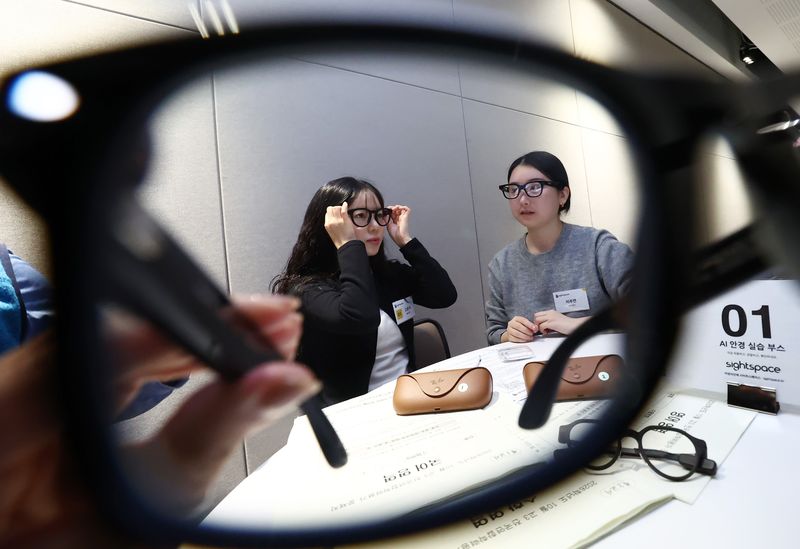
[Financial News] As high-tech devices such as miniature cameras and AI smart glasses make their way into exam rooms, concerns have been raised that they are fueling the so-called “no take-backs” expectation that once you pass, there is no going back. Unlike in the past, AI now makes it possible to cheat alone without a separate accomplice. Legal experts have repeatedly warned that if cheating is discovered even after the fact, candidates could not only have their passes revoked but also receive actual prison sentences.
According to legal circles on the 15th, attention has turned to the severity of post-exam penalties and possible disqualification after Han, identified only by surname and nicknamed “Tax Kitty,” recently turned themself in to police for cheating on the tax accountant exam. Han was the top scorer in the 63rd tax accountant exam.
Cases of cheating are on the rise as AI advances. This year, five cases of cheating with smart glasses were uncovered in national technical qualification exams administered by the Human Resources Development Service of Korea—including the Fire Protection Systems Engineer, Information Processing Engineer, and Industrial Engineer (Electricity) exams in May, and the Gas Technician exam in June—and were referred to prosecutors and summarily indicted. Cases have also been uncovered in regular TOEIC tests and university early-admission essay exams, including a case involving two University of Seoul test-takers who were the subject of a complaint for obstruction of business and barred from taking exams for three years. The Ministry of Education has also vowed to respond forcefully, including with criminal penalties, to smart-glasses cheating during the 2027 CSAT, scheduled for the 19th.
Penalties for cheating are not limited to invalidating exam results or barring candidates from taking exams. Cheating in the CSAT and civil service exams, which are supervised by public officials such as teachers at national and public schools, is subject to the offense of obstruction of official duties by deceptive means, punishable by up to five years in prison or a fine of up to 10 million won. In qualification exams and university essay exams supervised by non-public officials, such as public corporation employees or university staff, the offense of obstruction of business by deceptive means applies, punishable by up to five years in prison or a fine of up to 15 million won. In national technical qualification exams, suspects may also face charges of violating the National Technical Qualifications Act.
Past rulings show that the judiciary has consistently taken a tough line on conduct that undermines the fairness of exams. The Supreme Court of Korea has ruled that obstruction of business is established when conduct creates a risk of undermining fairness, even if no actual disruption results.
The fact that a person acted alone using AI does not affect whether an offense has been committed. In the case of a proxy CSAT exam for a junior soldier during the 2020 academic year, the defendant was sentenced to one year in prison despite turning themself in later and withdrawing from the university they had been admitted to. In an earlier case in which cellphone cheating during the CSAT was discovered after the fact, the court ruled that invalidating the candidate’s score was justified, since the public interest in ensuring exam fairness took precedence over protecting test-takers’ trust.
The burden of proving cheating, however, lies with the body administering the exam. In cases of solo AI-assisted cheating, investigative authorities may need to conduct searches and seizures and digital forensics to obtain app records and other evidence. Some say that proving the misconduct can be difficult if the person accused actively denies it, unlike in the tax accountant exam case that ended with a confession.
Institutions with upcoming exams are working on countermeasures. The Ministry of Justice is drawing up smart-glasses guidelines for test-takers and proctors ahead of the 16th bar exam next January. Its policy is to confiscate devices and suspend the exam when cheating is detected, and, if necessary, suspend eligibility to sit the exam and file criminal complaints.
Ten organizations entrusted with administering national technical qualification exams, including the Human Resources Development Service of Korea and the Korea Chamber of Commerce and Industry, will convene a meeting this month to discuss countermeasures. The measures are expected to be extended to national professional qualification exams, including those for tax accountants, certified labor attorneys, and licensed real estate agents.
[email protected] Chang-hoon Lee Reporter