LG Energy Solution Targets AI Data Center Power Market, Moving Beyond Batteries to Become an Energy Platform
- Input
- 2026-11-15 10:59:47
- Updated
- 2026-11-15 10:59:47
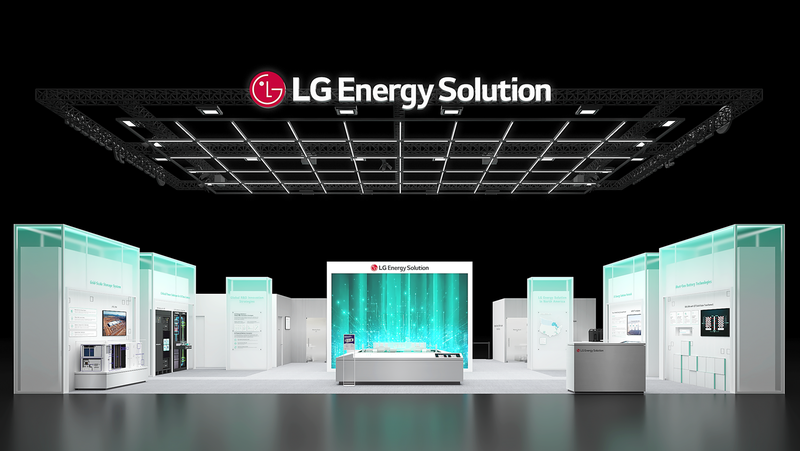
[Financial News] LG Energy Solution is stepping up its push into the AI data center power market. Going beyond battery supply, it is expanding its business in North America with integrated energy solutions that encompass power storage and supply, as well as system construction and operation. The strategy is to make rising power demand driven by the growth of the AI industry a new engine for growth.
LG Energy Solution announced on the 15th that it will take part in RE+ 2026, North America's largest renewable energy exhibition, to be held in Las Vegas, Nevada, from the 17th to the 19th (local time). This year's exhibition theme is “Energy for the Future of AI—Stability, Resilience and Intelligence.” The company has also expanded its exhibition space by about 20% from last year, to 279 square meters. It is the largest such space among Korean battery companies.
The key offering is an integrated solution that connects the power infrastructure needed by AI data centers. LG Energy Solution will showcase “AIDC Integrated Power Infrastructure,” combining a battery energy storage system (BESS), an uninterruptible power supply (UPS), a battery backup unit (BBU) and an energy management system (EMS).
The system is designed to reliably supply the power needed to operate data centers and respond to outages and fluctuations in power loads. The company will also highlight its recent selection as a partner in NVIDIA's “DSX Ready BESS” program.
The company will also unveil “JF3 AC LINK,” an energy storage system (ESS) for next-generation power grids. Based on lithium iron phosphate (LFP) batteries manufactured in the United States, it increases energy density per unit of site area by about 26% compared with existing products. By storing more energy in the same area, it can improve space utilization and cost-effectiveness for data centers and large-scale power grids. The system also incorporates digital twin and AI-based power stabilization technologies.
For next-generation battery technology, the company will exhibit a system combining sodium-ion batteries with a solid-state transformer (SST). The system pairs the advantages of sodium-ion batteries in raw-material supply chains and thermal stability with power conversion technology based on power semiconductors. It is designed to supply power reliably despite frequent charging and discharging and sudden changes in power loads.
The company will also showcase its next-generation “JP6 UPS rack system” and cylindrical 2170 BBU products. They are designed to provide backup power to servers immediately in the event of an outage while making more efficient use of data center space.
LG Energy Solution plans to leverage its North American local production base as a competitive advantage in its integrated energy business. It currently has at least 50 GWh of battery production capacity in North America alone. By combining this with Vertech, an ESS-specialized company, and its integrated software platform “AEROS Suite,” the company is broadening its business scope from system design and construction to operation, optimization and asset management.
The strategy is seen as an effort to secure new revenue streams in the AI data center market by expanding the company's business model beyond battery manufacturing and supply to cover power infrastructure as a whole.
Kang Chang-beom, executive vice president and head of LG Energy Solution's ESS Battery Division, said, “The growth of the AI industry is creating demand for new energy solutions that encompass the reliable storage and supply of power as well as efficient operations.” He added, “By combining our competitive local production capabilities in North America and differentiated technology with our system construction and intelligent operations capabilities, we will accelerate our growth as an energy platform company that supports the stable growth of the AI industry of the future.”
[email protected] Kim Dong-ho Reporter