“Buy Now: A Peak or an Opportunity?”... Next Year's Seoul Metropolitan Area Home Prices: ‘Up 3.0%’ vs. ‘A Shift to Declines,’ as Experts Disagree
- Input
- 2026-11-16 05:10:00
- Updated
- 2026-11-16 05:10:00
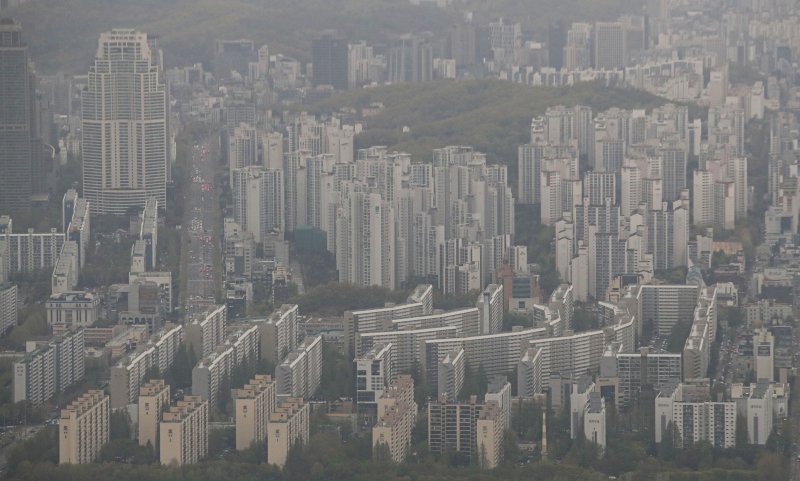
[Financial News] Research institutions and market experts are divided over the outlook for the Seoul metropolitan area's real estate market next year. A “moderate-rise” view—that lower move-in volumes will lead to a jeonse crunch and demand in prime locations will support home sale prices—is locked in a close contest with the “broad downtrend” view that the current rebound is only a temporary illusion and a prolonged bear market is imminent.
According to the “2027 Construction and Real Estate Market Outlook” released on the 15th by the Construction Economy Research Institute of Korea (CERIK), home sale prices in the Seoul metropolitan area are expected to rise 3.0% next year, continuing their upward trend, though at a slower pace than this year's forecast of 4.8%. The analysis is that high mortgage rates, limits on loan amounts and the possibility of a heavier tax burden will constrain buying, but robust housing demand in Seoul and large performance bonus payouts in the semiconductor industry will support prices.
CERIK forecast that nationwide jeonse prices will rise 4.5% next year, a steeper increase than this year's 3.6%. It expects the sharp drop in housing starts, triggered by the fallout from distressed real estate project financing (PF) in 2023, to translate into a cliff in move-in supply next year and worsen the shortage of jeonse homes. “Rising jeonse prices put a floor under home sale prices, making it highly likely that instability in the rental market will spill over into the home sales market,” CERIK said.
On-the-ground indicators also show a clear imbalance between jeonse supply and demand in the Seoul metropolitan area. According to a Korea Real Estate Board survey, Gyeonggi Province's jeonse supply-demand index stood at 110.7 in the second week of November, its highest level in more than five years since the first week of August 2021 (111.3), when the jeonse crunch was at its worst. The West Coast region (117.0), Gyeongbu Area 1 (116.2) and Incheon (110.4), as well as Seoul at 120.2, are all well above the baseline of 100, keeping the market tilted in favor of landlords. Nam Hyuk-woo of Woori Bank Real Estate Research Institute explained, “With few new jeonse listings available, tenants who have the financial means are either switching to buying homes or being pushed into nearby areas.”
Meanwhile, some are growing wary of the recent home-price rebound in parts of the Seoul metropolitan area's outskirts and the semiconductor belt, calling it a “dead-cat bounce”—a temporary price spike before the market enters a full-fledged downturn.
Lee Hyun-cheol, head of the Apartment Cycle Research Institute, appeared on the YouTube channel Pyoyoungho TV on the 13th and warned, “The current uptrend on the outskirts of Seoul and in some parts of the Seoul metropolitan area is a temporary phenomenon occurring while market momentum is severely weakened. The rise will stop soon, and the market will enter a prolonged downturn lasting as long as four to five years.”
Lee strongly criticized the risks of chasing the market with excessive borrowing. “Once you enter the market with a loan, you can only stay afloat if home prices keep rising. If a downturn lasts for several years, you may be unable to bear the interest burden and face ruin,” he said. He advised, “During the corrections that followed past booms, even so-called ‘one good home’ in areas such as Gangnam fell without exception. Now is the time to stop overextending yourself and set realistic criteria for buying a home.”
Meanwhile, the government says that market stabilization on a downward trend is spreading, citing continued declines in Seoul's three Gangnam districts (Gangnam, Seocho and Songpa) and a drop in home sales. It nevertheless plans to carry out its Housing Stability Plan without a hitch to head off instability in the jeonse and monthly rental markets. The plan includes move-ins of 44,000 housing units in the Seoul metropolitan area and the supply of 100,000 public housing units by the end of the first quarter next year.
[email protected] Moon Young-jin Reporter