Financial Authorities: “Don’t Repay the Interest or Principal on Loans With Rates Above 60%”
- Input
- 2026-11-15 12:00:00
- Updated
- 2026-11-15 12:28:08
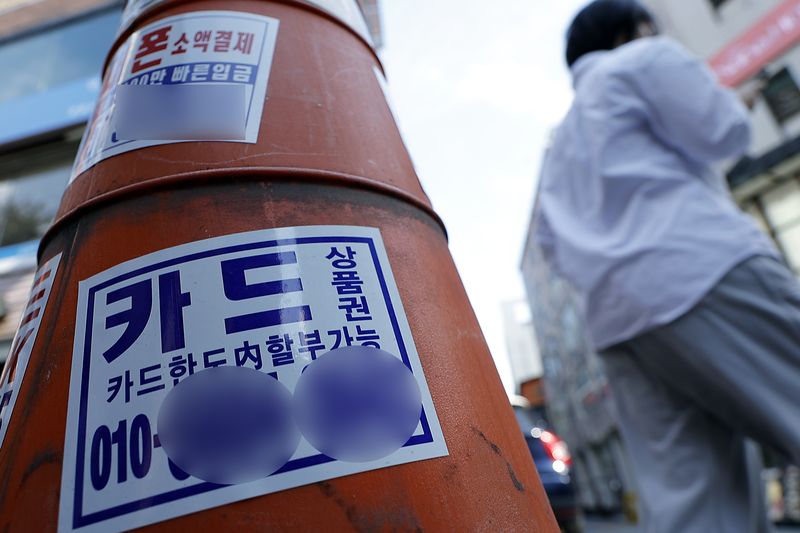
The Financial Services Commission said on the 15th that it would begin accepting online applications for support for victims of illegal private lending on the 16th. An application portal will be set up on the Credit Counseling and Recovery Service (CCRS) website and app, allowing people to apply 24 hours a day without visiting a One-stop Credit Support Center. Previously, financially vulnerable people had to visit a center and be assigned a caseworker to receive comprehensive, dedicated one-stop support for victims of illegal private lending. The government expanded the number of dedicated centers to 22 nationwide, but distance from people’s workplaces and homes remained a barrier. Victims who were especially anxious about unlawful debt collection were reluctant to visit a center.
Online applicants can verify their identity and submit information about the illegal lender and the amount of their losses. Those who do not know how to file a report can get guidance tailored to their situation from the CCRS call center. Assigned caseworkers help victims complete their reports by phone and text message, and ask lenders to stop collection efforts and close the debts. As with in-person applications, support includes free appointment of a debtors’ representative, legal consultations, issuance of certificates confirming invalidity, referrals to police for investigation, debt adjustment, and connections to financial, employment and welfare services. Consultations and support are free of charge.
According to operating figures released by the Credit Counseling and Recovery Service, between February 23 and October 31, 1,239 people received consultations, and 987 of them reported 7,231 illegal debts. That was an average of about 7.3 cases per person. The CCRS requested that collection stop and the debts be closed in a total of 5,469 cases, and secured agreements to close 776 of them. A total of 186 victims were connected with services including debt adjustment, policy-based financial services for low-income people, and employment and welfare counseling.
The Financial Supervisory Service issued 192 certificates confirming invalidity, and all the debts covered by those certificates were invalidated. A total of 2,623 debtors’ representatives were appointed through the Korea Legal Aid Corporation, and 1,178 illegal private lenders for whom specific evidence of suspected crimes had emerged were referred to police for investigation. Requests to suspend the use of phone numbers and social media accounts totaled 215, while requests to freeze accounts totaled 116. Financial companies were notified of a total of 321 accounts used for illegal private lending transactions, including cases reported to the FSS and excluding duplicate entries.
A representative victim-relief case involved A, a basic livelihood security recipient in their 40s. With medical expenses leaving them short of living costs, A borrowed a total of 1.8 million won in three separate loans on Telegram and repaid 3.1 million won. When A had difficulty repaying an additional 800,000 won loan, they requested support. The lender accepted the caseworker’s demand, and the remaining debt of 1.35 million won was closed. A was subsequently connected with an application for personal bankruptcy (expedited discharge) and counseling at a Mental Health Welfare Center.
B, a day laborer selling products in their 40s, also turned to illegal private lending while preparing for a wedding. Through loan rollovers, the number of lenders grew to 21 and the borrowed amount reached 9.7 million won. B applied for support after the lenders threatened to tell B’s prospective spouse about the debt. On the day of the consultation, the caseworker asked all the lenders to close the debts and return the excess amounts collected, but they did not agree. B was then connected with procedures for appointing a debtors’ representative and obtaining a certificate confirming invalidity.
The revised Loan Business Act, which took effect last July, made both principal and interest invalid under antisocial loan contracts involving annual interest rates above 60%, or entered into because of debt collection involving sexual exploitation, or because of assault or threats. Even when the annual interest rate is 60% or less, interest under a contract with an illegal private lender is invalid. Amounts deemed invalid do not have to be repaid, and if they have already been paid, borrowers can seek their return.
The Financial Supervisory Service issues certificates confirming invalidity in the name of the FSS governor to victims of antisocial loan contracts entered into since last July. Applications can be made through one-stop support or via the “Illegal Private Lending One-Stop Victim Report” section of the FSS website. The certificates can be used to refuse repayment, demand an end to collection efforts, seek the return of unjust enrichment, and support investigations or trials. Free litigation support from the Korea Legal Aid Corporation is also available.
In September, the Daegu District Court found not guilty a victim who had borrowed money through a gift-certificate presale arrangement and was accused of fraud. Citing an FSS certificate confirming invalidity, the court found that the arrangement was illegal private lending disguised as a gift-certificate transaction.
Reports of victimization by illegal private lenders are handled by the Financial Supervisory Service, while consultations on excessive debt are available from the Korea Inclusive Finance Agency or the Credit Counseling and Recovery Service. The government plans to review online application and processing data and user feedback to improve the service. It also plans to assign police officers to the CCRS this December and revise procedures so that cases can be referred for investigation even at the consultation stage.
[email protected] Park Mun-su Reporter